Milan (AsiaNews) – On Wednesday 7 October, we will be hosting Father Franco Mella at the PIME Centre in Milan: this will be the first in a series of events dedicated to testimonies from missionaries in the field during the month dedicated to the missions.
Father Franco is a PIME missionary who was sent to Hong Kong in 1974, becoming a key figure in the city’s social, political and religious life. He has always been committed to social justice, human rights and freedom, first against colonialism and later against political oppression.
Franco Mella, known by his Cantonese name Kam Chai, is a figure who has entered the popular imagination of Hong Kong through his protests, countless sit-ins and hunger strikes, the ten years he spent living on a boat with the ‘boat people’, and his life shared with the homeless. But he is best known for his dedication to the poor, the oppressed, prisoners and refugees. Films, television programmes and books have been dedicated to him.
The title of the evening, ‘I Owe My Life to Freedom’, is a quote from Jimmy Lai, Hong Kong’s best-known prisoner of conscience, who was recently sentenced to 20 years’ imprisonment – effectively a life sentence, given his advanced age (79 in December) and fragile state of health.
The freedom to which Jimmy Lai refers is the freedom that Hong Kong offered him, a 15-year-old boy who, like hundreds of thousands of people from mainland China, flocked to the city drawn by the opportunities for freedom and economic advancement it offered.
Now, however, what was once a haven of freedom for millions of people has become a city oppressed by the National Security Law, which since 2020 has put an end to its people’s aspirations for freedom and democracy.
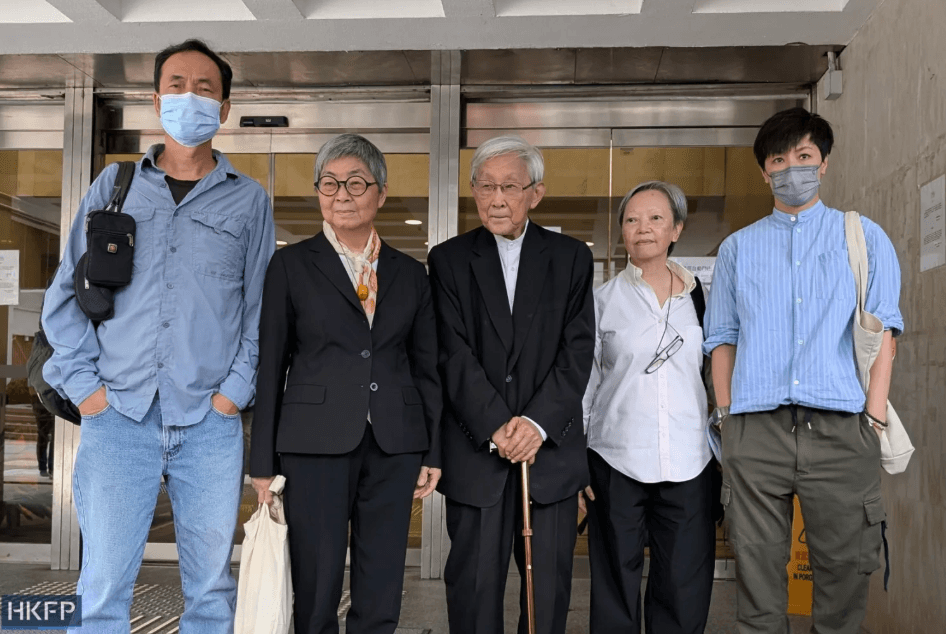
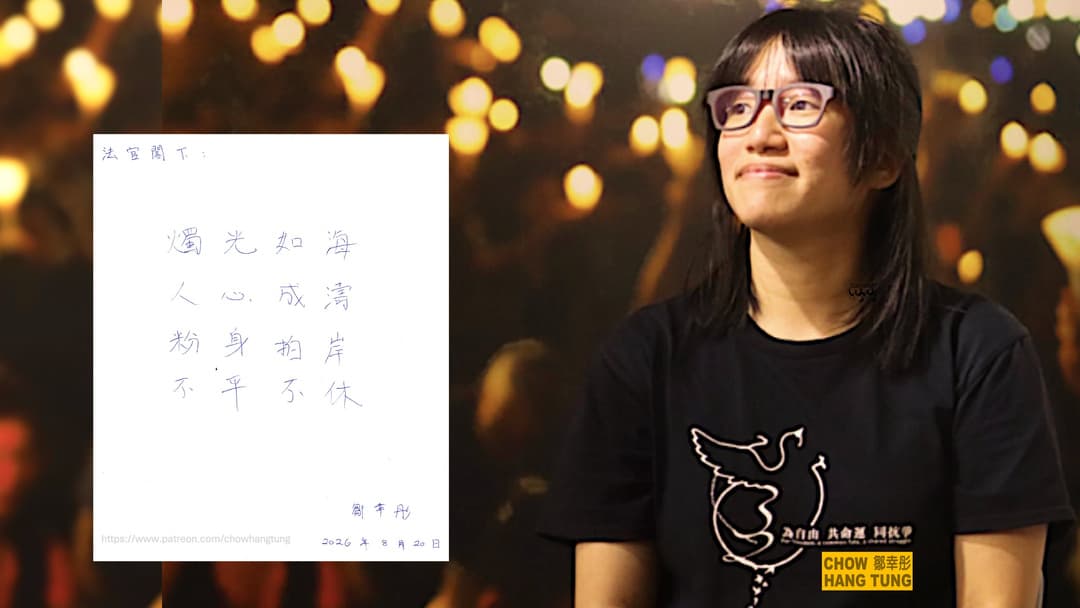
As you may recall, on 11 September last year, sentences were handed down to three other prisoners of conscience: the courageous young lawyer Chow Hang-tung, sentenced to seven years and three months’ imprisonment; the democratic leader Albert Ho, an elderly and ailing man, sentenced to five years and two months’ imprisonment; and the trade unionist Lee Cheuk-yan, sentenced to seven years’ imprisonment.
The sentences handed down were extremely harsh, particularly when compared with the grounds for the judgement: it is acknowledged that the three democrats never acted violently (indeed, they are inspired by the prophets of non-violence) nor did they plot to subvert the regime.
It is their very opposition to the communist regime that constitutes the offence of subversion, a crime introduced in 2020 under the repressive National Security Law. In other words, they have been convicted for their free and legitimate political opinions, expressed well before the law was introduced.
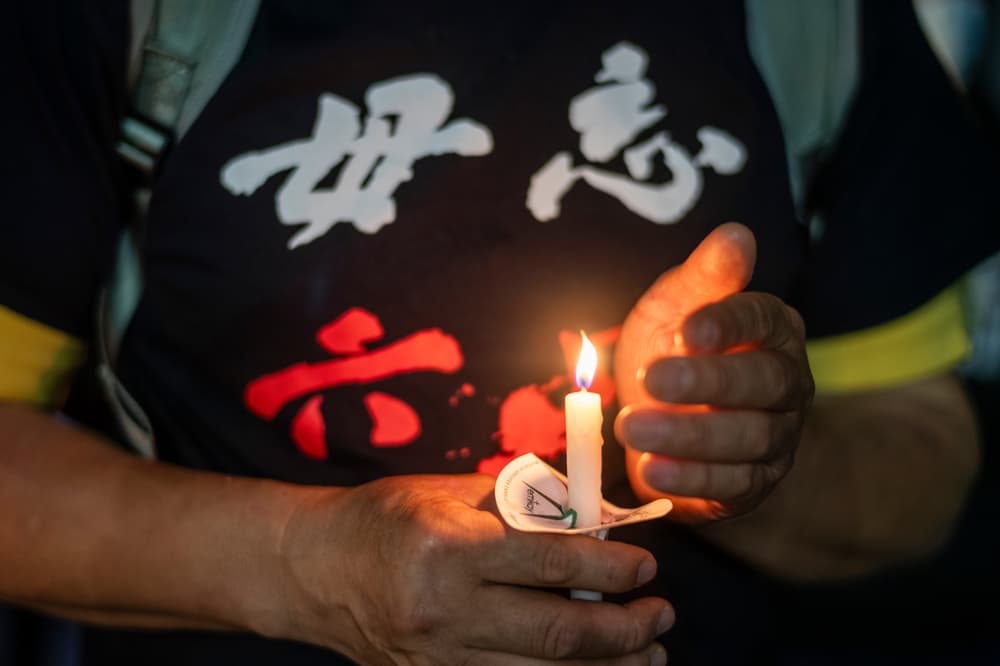
The charismatic Lee Chek-yan was the recognised leader of the massive vigils held in memory of the students and citizens killed in Beijing on 4 June 1989, in what is known as the Tiananmen Square massacre.
Over the years, whenever I have had the opportunity, I have recalled the value of Cheuk-yan’s witness: to me, he is not just a friend; I feel he is part of an ideal family of free men and women. Lee has been closely linked to the PIME missionaries for many years: ever since Father Adelio Lambertoni, a missionary from Varese, established a unique and exemplary extended family home.
Father Lambertoni’s ‘adoptive family’ includes Elisabeth Tang, Cheuk-yan’s wife, and her two sisters. Elisabeth Tang shared her husband’s ideals of social justice, freedom and democracy. Inspired by the Christian faith, the couple founded and led the trade unions in Hong Kong (precisely what Don Lorenzo Milani would have wanted from his pupils) and lived their lives as a commitment to others. In November 2019, Lee Cheuk-yan was also a guest at our PIME theatre, where he spoke about the popular protests then taking place in Hong Kong.
Following the ruling on 11 September, Lee was immediately transferred from Stanley Prison (in the southern part of Hong Kong Island, which is easily accessible) to Hei Ling Chau Prison, a remote and virtually uninhabited island.
In the last century, it served as a leper colony, later converted into a rehabilitation centre for drug addicts. Now that (almost) inaccessible island has become a prison to which ‘medium-risk prisoners’ are sent.
The mild-mannered Lee Cheuk-yan is therefore considered a ‘medium-risk’ prisoner… It is, in fact, more akin to ‘confinement’: his transfer bears an all too close resemblance to the measure of political confinement.
The prisoners’ isolated and difficult lives are made even more bitter by the rule limiting visits from family and friends to just twice a month. During his pre-trial detention, however, (brief) visits were permitted on a daily basis. I have been told that Lee Cheuk-yan is struggling to adapt to his new prison situation: this is understandable for a 69-year-old man who has led a life in the public eye, characterised by generous activism and a strong moral and civic reputation.
Lee is now drawing strength from his inner life: whilst in Stanley Prison, he had already received confirmation, completing his journey towards the Catholic faith, the same faith shared by his wife and daughter.
During my last visit to Stanley Prison, he told me that he would not plead guilty: he was facing his ordeal with courage, indeed even with serenity and a touch of humour. He was determined and optimistic, and aware of the political and moral value of his testimony.
The first time I was at Stanley, I was worried about what to say to him. Are there ever the right words to say to an innocent friend in prison? It was he who saved me from my embarrassment, giving the conversation a certain light-heartedness.
Meeting him was a moving and unforgettable experience. Lee Cheuk-yan is a prisoner of conscience, a free and strong man. “Remember those in prison, as though you were their fellow prisoners” (Letter to the Hebrews 13:3).
Next Wednesday’s event at PIME is dedicated to Hong Kong, to Stanley and to all the other prisoners fighting for freedom.