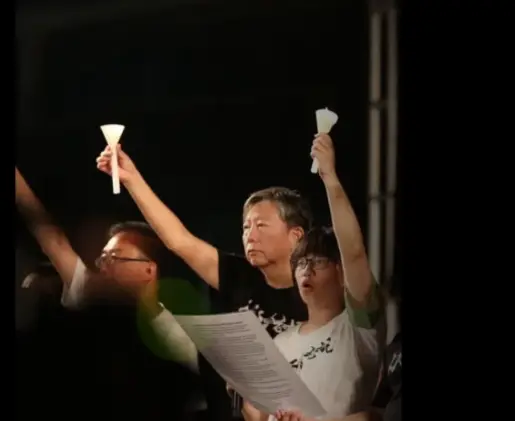
Hong Kong (AsiaNews) – Trade unionist Lee Cheuk-yan and lawyer Chow Hang-tung, long-standing pro-democracy activists who led the group organising the annual 4 June commemorations of the Tiananmen Square massacre in Hong Kong, were today found guilty of incitement to subversion under the National Security Law imposed by Beijing in the former British colony, which returned to Chinese sovereignty in 1997.
The verdict was handed down by three judges appointed to hear national security cases at the West Kowloon Court in the most high-profile trial since the one last December that sentenced the Catholic businessman Jimmy Lai, publisher of the pro-democracy newspaper Apple Daily, to twenty years’ imprisonment.
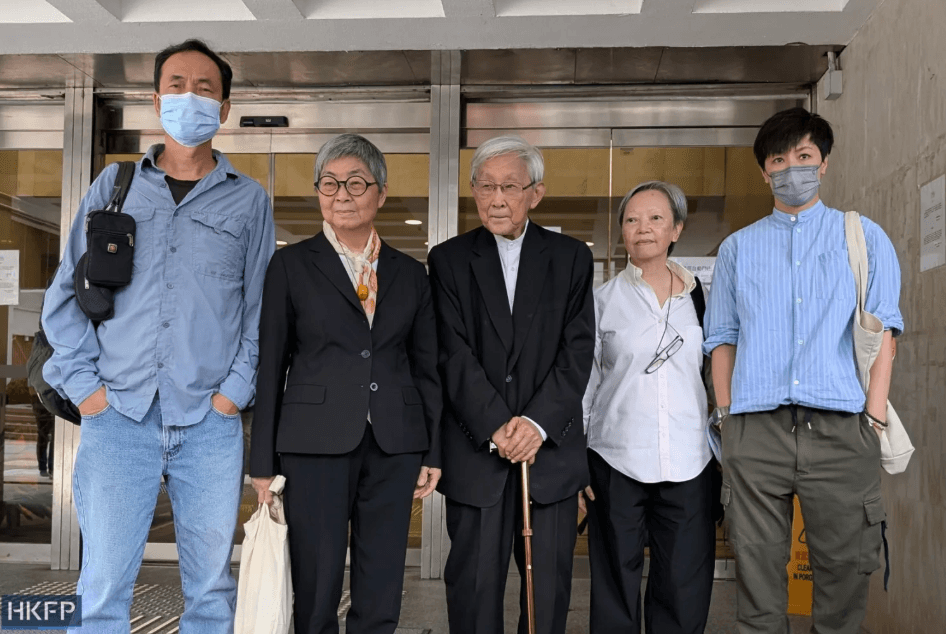
Lee Cheuk-yan (69) and Chow Hang-tung (41) have been in custody since September 2021 and now face up to ten years in prison under the notorious National Security Law. As is customary under Hong Kong’s judicial system, the sentence will be handed down following the sentencing hearing, which has already been scheduled for 28 August.
Alongside their cases, the situation of former MP Albert Ho will also be considered; he, too, is on trial for the Tiananmen vigils and, having adopted a different trial strategy, pleaded guilty at the start of the proceedings, thereby seeking a reduced sentence.
The vigils in Victoria Park
The 1989 pro-democracy protests in Tiananmen Square, Beijing, represented one of the greatest challenges to the Chinese Communist Party’s power. The government sent tanks into the centre of the capital and troops opened fire on the student-led demonstrations, in a bloody crackdown that left hundreds, perhaps thousands, dead.
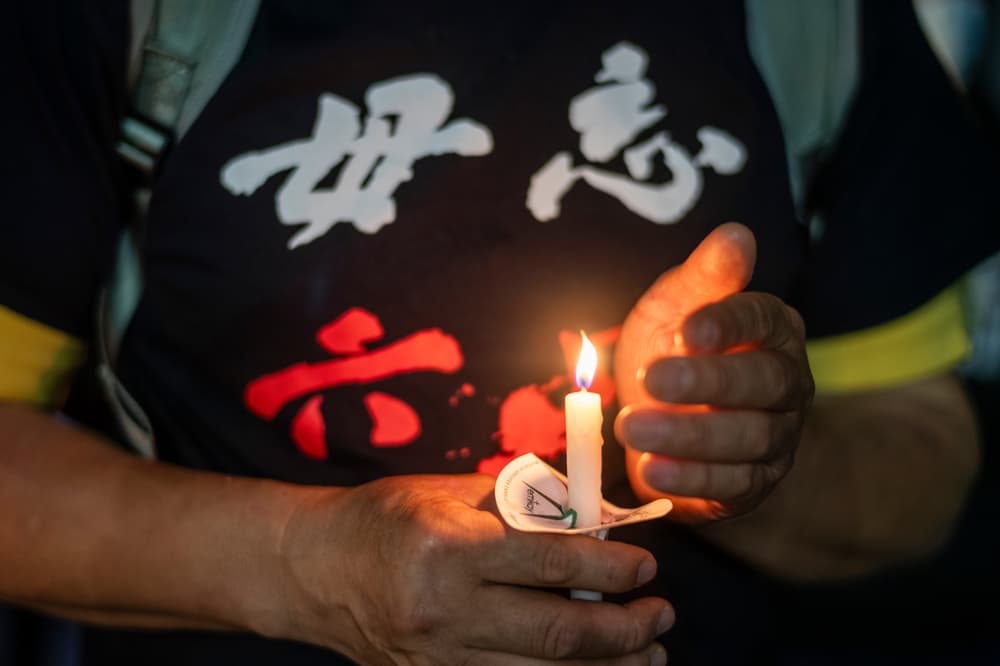
The event immediately became an official taboo in mainland China. In Hong Kong, however, the Hong Kong Alliance in Support of Patriotic Democratic Movements of China organised annual vigils in Victoria Park to keep the memory of the victims alive.
The authorities banned these public commemorations in 2020 during the pandemic, initially citing public health concerns. A few weeks later, Beijing imposed the National Security Law on Hong Kong, which was subsequently used to prosecute Lee, the alliance’s former chair, and Chow, its former vice-chair.
The grounds for the judgement
In the grounds for the judgement, the judges stated that Lee, Ho and Chow had “always been hostile to the Chinese Communist Party (CCP) and the central government under its leadership” and that they had maintained a stance of resistance without accepting compromise. After the National Security Law came into force, the three allegedly “refused to back down”, continuing to support the Alliance’s political line.
The court acknowledged that the organisation had never outlined specific methods or a timetable for bringing an end to the one-party system, nor had it advocated violence. However, the judges considered that the mere reiteration of that objective was sufficient to constitute an offence.
According to the judgement, the Alliance’s references to the 2019 Hong Kong protests and the Tiananmen movement had helped to fuel “the hostility of Hong Kong citizens towards the CCP”, undermining confidence in the central authorities.
The prosecution had also argued that the call to end one-party rule was incompatible with the Chinese Constitution, following the 2018 amendment which defines the CCP’s leadership as a fundamental element of the Chinese socialist system.
Chow Hang-tung, a lawyer and activist, chose to represent herself during the trial. In her closing statement, she vigorously defended the significance of the Alliance’s activities, asserting that what the court was being asked to ban and punish was, in fact, what “society and the law should encourage”.
According to Chow, these were “Hong Kong’s fundamental values” and ideals built up over generations. Lee’s lawyer, Erik Shum, had also asked the court not to limit itself to a formal recognition of human rights, emphasising that the trial directly concerned freedom of expression.
Amnesty: “Prisoners of conscience”
Outside the court, the day was marked by a heavy police presence. Some supporters embraced the defendants’ family members and showed gestures of solidarity. Following the verdict, Chow’s mother expressed the hope that “the environment will become healthy and that flowers of different colours will bloom”.
Amnesty International has strongly criticised the sentencing of Chow and Lee. According to spokesperson Fernando Cheung, Hong Kong’s National Security Law is being used to punish those who peacefully commemorate the 1989 crackdown.
Amnesty points out that Hong Kong was the only place on Chinese territory where large-scale public commemorations of Tiananmen could be organised, and regards the verdict as a further step towards erasing that memory. The organisation describes the two as “prisoners of conscience”, calling for the convictions to be quashed and for their immediate and unconditional release.