Seoul (AsiaNews) – The investigation into the Shincheonji Church's alleged involvement in South Korean politics is expanding beyond the conservative camp and now risks becoming yet another battleground between political groups.
After months of a probe into the relationship between the Evangelical religious sect, which has between 200,000 and 300,000 followers in South Korea, and the People Power Party (PPP), the party of jailed former president Yoon Suk-yeol, investigators are now looking into whether the group also tried to influence the ruling Democratic Party of Korea (DPK).
The case emerged in recent weeks in conjunction with the DPK primaries. The two main candidates for the party leadership, former Prime Minister Kim Min-seok and Jung Chung-rae, a former DPK leader, have accused each other of seeking support among followers of the Shincheonji Church, a group with a strongly apocalyptic vision that believes that all those who do not belong to the group will be denied forgiveness at the Last Judgment.
The team investigating the case said it had gathered evidence suggesting a mass enrolment of Shincheonji Church members into the DPK before the local elections held on 3 June. This operation was carried out with the aim of influencing certain real estate decisions to promote the interests of the religious community.
The main investigation initially involved only the People Power Party.
According to investigators, between 2021 and 2024, at least 56,000 believers were invited or forced to join the conservative party to influence the 2021 primaries and the selection of candidates for the 2024 legislative elections.
Since the operation allegedly took place during Yoon Suk-yeol's presidency, this fuelled suspicions about the connections between his entourage and the religious group's leadership.
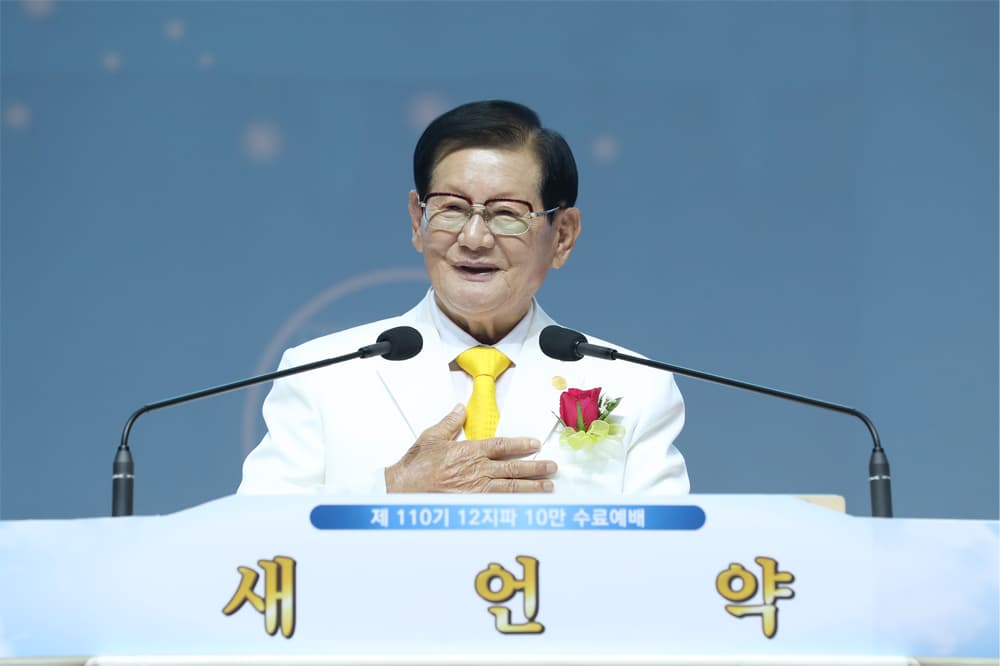
Because of these facts, Lee Man-hee, Shincheonji founder and spiritual leader, was arrested in June and charged on 13 July. At 95, Lee is one of the oldest prisoners in the country.
The prosecutor's office accuses him of orchestrating the mass registration of believers, violating the law on political parties and thus obstructing the proper functioning of political debate.
The court ordered his pre-trial detention, deeming the risk of tampering with evidence to be real.
His lawyers filed an appeal, arguing that, given the religious leader's age and health, less restrictive measures would have been possible. Lee continues to deny all charges and has not yet been convicted.
Lee's indictment followed serious accusations made by DPK members.
On 12 January, progressive President Lee Jae-myung, who succeeded Yoon Suk-yeol, met with leaders of the country's main religious denominations and publicly condemned the Shincheonji Church and other groups, arguing that the social harm they caused had gone unchecked for too long.
The following day, Prime Minister Kim Min-seok went one step further during a Cabinet meeting, calling such movements a social evil that must be eradicated and ordering a joint investigation.
This order gave rise to the task force, whose inquiry ultimately led to Lee Man-hee's indictment. The government is also reportedly considering legislative changes to expedite the dissolution of religious organisations deemed to violate electoral laws.
The founder of the Shincheonji Church had already been at the centre of a legal case following serious accusations voiced in South Korea’s public opinion.
During the COVID-19 pandemic, the authorities accused the religious movement of becoming one of the main hotbeds of infection in South Korea, sparking a wave of hostility towards it.
Arrested in 2020 on charges of obstructing epidemiological investigations, Lee was later acquitted by the Supreme Court of charges related to his handling of the pandemic, but was instead given a suspended sentence for embezzling Church funds.
These events still divide South Koreans today, between those who believe that the Shincheonji Church is the victim of political persecution and increasingly intense discrimination in society, and those who consider the movement an entity that lacks transparency and is capable of influencing national politics.
Founded in 1984, the Shincheonji Church claims to have more than half a million members worldwide and hundreds of thousands of students taking Bible courses. Its centralised structure has been cited as a cause for concern, but the movement rejects all accusations of political interference.
In a statement released after the latest reports, the Church maintains that its members' affiliation with political parties represents a free individual choice and that characterising such behaviour as political interference constitutes a violation of religious freedom. Regarding the accusations related to the DPK, the Church also denied any involvement.
The inquiry comes in a political climate already marked by the conflict between progressives and conservatives, which is turning an investigation into a new political battleground, with cross-accusations fuelling the general climate of mistrust.
Over the past few years, several investigations have focused on the relationships between politicians and religious movements.
The same task force established in January is also investigating the Unification Church, now known as the Family Federation for World Peace and Unification, whose leader Han Hak-ja (or Hak Ja Han) has been indicted for offering luxury items to former first lady Kim Keon-hee in exchange for political favours. The government is also reportedly considering revoking the movement's legal status.
The crackdown, however, has also drawn criticism from abroad. In January, the NGO Coordination des associations et des particuliers pour la liberté de conscience (CAP-LC), together with Human Rights Without Frontiers, submitted a written statement to the United Nations Human Rights Council in Geneva, calling the situation a crisis of religious freedom and arguing that the government's rhetoric echoes the language and logic of ancient anti-heresy campaigns.
Some observers have also challenged President Lee's assertion that Protestant churches have historically been alien to Korean politics, a claim that contradicts the country's history of activism, which began with the anti-Japanese independence movement in 1919 and the fight against military dictatorships.