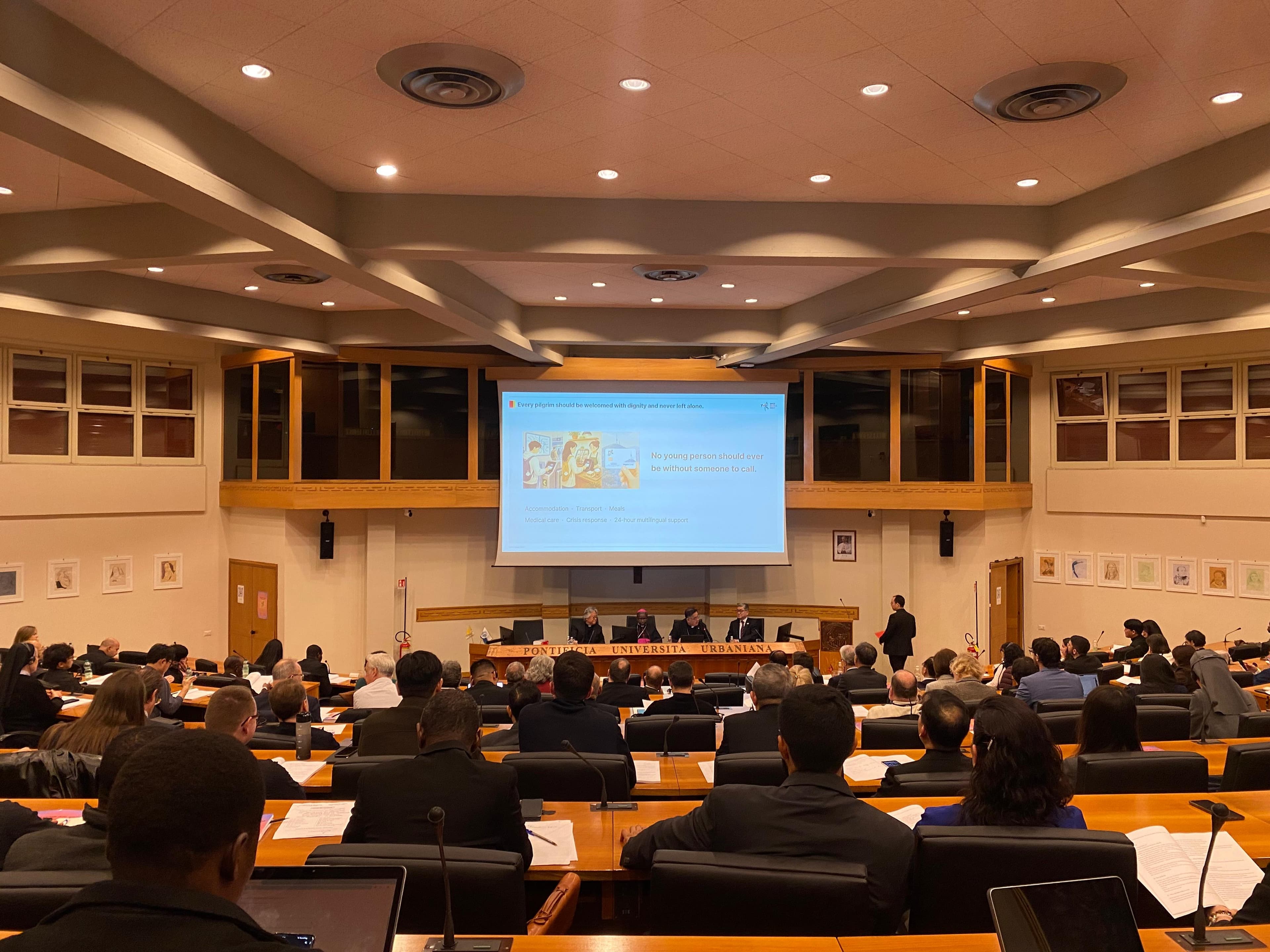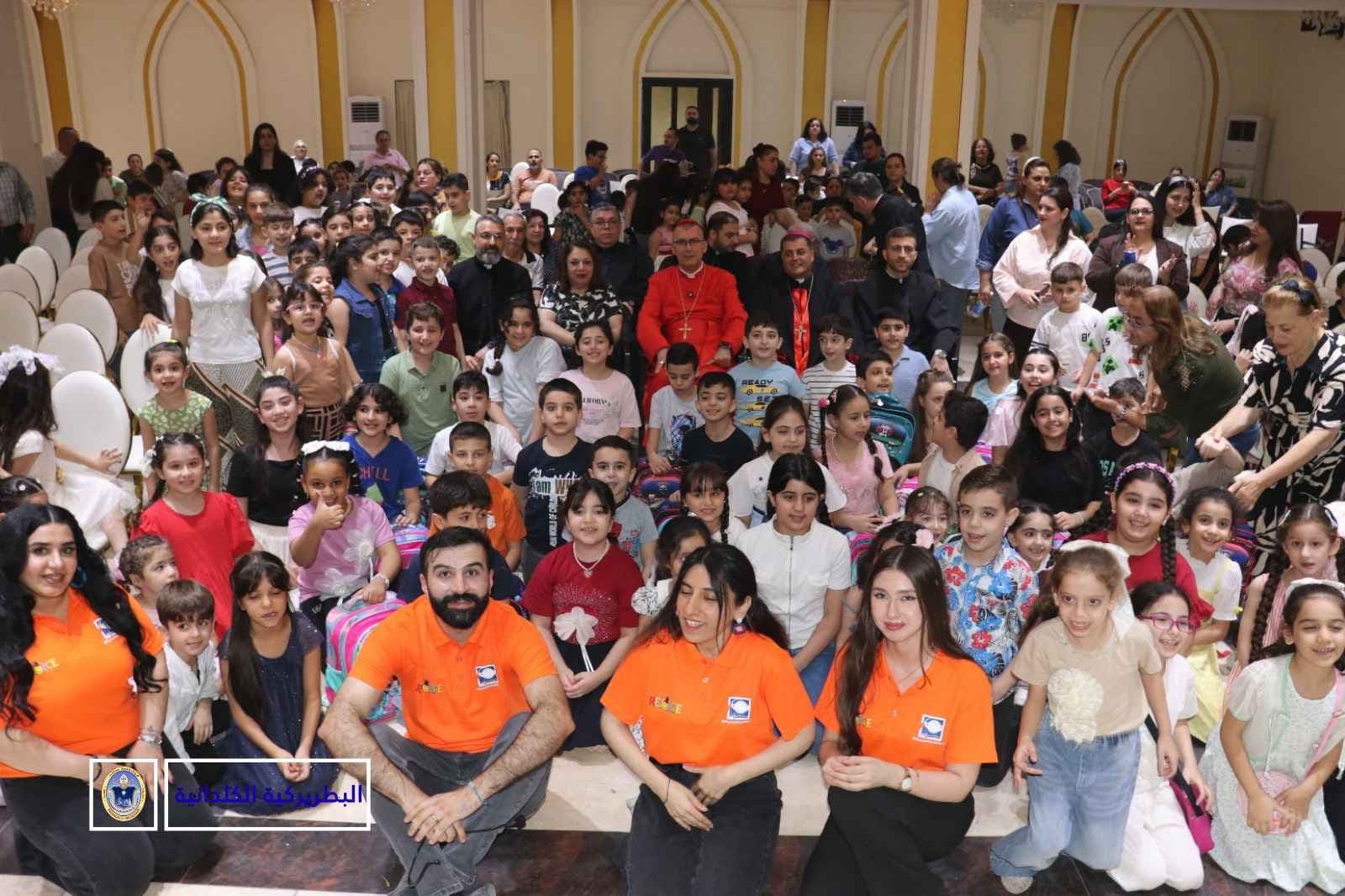
Baghdad (AsiaNews) – To coincide with World Youth Day, scheduled for 3–8 August 2027 in Seoul, South Korea – where Pope Leo XIV is also eagerly and anxiously awaited – the Iraqi Church has organised the first national youth gathering for young men and women from across the country. This occasion for prayer and celebration, intended to bring together young Iraqis from north to south, from Mosul to Basra, was announced in recent days by local church leaders at the conclusion of the meeting of the Catholic Bishops’ Council held in Baghdad. During the proceedings, which were also attended by the Apostolic Nuncio, Monsignor Miroslav Vakhoski, discussions centred on the challenges facing the local community: from the exodus to security issues; the election of the new president of Caritas Iraq and the heads of the Council’s committees; the approval of the unified ecclesiastical court and the opening of its new headquarters; and, finally, the creation of a single centre for Catholic media.
Young Christians united
In a statement issued at the conclusion of yesterday’s proceedings at the Chaldean Patriarchal See in Baghdad, and forwarded to AsiaNews for information, those present – led by the Primate, Mar Paul III Nona – emphasised the atmosphere of “fraternal communion and prayer” that characterised the day. In addition to the Patriarch and President of the Council, and the numerous bishops, the papal representative was also present; he conveyed “the greetings and paternal blessing” of Pope Prevost, who “holds Iraq close to his heart” and “follows the life of his Churches with love and concern”. Leo XIV, as Monsignor Vakhoski emphasised, “wishes every Iraqi believer to know that they are not alone and that suffering and uncertainty will not have the final say”.
The most significant aspect of yesterday’s meeting for the life of the Iraqi Church is undoubtedly the formal announcement of the “first national Catholic youth gathering”, scheduled for August next year. This event, taking place in conjunction with the World Youth Day in Korea, aims to bring together young Iraqis with their peers from around the world, who will fill the streets of Seoul to pray and meet the Pope. “The decision,” explains the bishops’ statement, “stems from the bishops’ assertion that young people constitute the present and the future of the Church, and from the importance of providing opportunities for young Catholics across the country to meet, communicate and deepen their faith.”
Subsequently, the Bishops’ Council, led by Patriarch Nona, elected Monsignor Nizar Sam’an as president of Caritas Iraq, emphasising once again the importance of the work carried out by the Catholic charitable organisation in the country “in the service of the poor and needy”. The participants then discussed the rules of procedure of the Unified Ecclesiastical Court and approved them in preparation for submission to the Holy See for confirmation. In this context, the bishops announced that the inaugural opening of the new building which will house the court’s headquarters will take place on the morning of 5 December in the city of Baghdida, presided over by Patriarch Paul III Nona. Finally, the meeting laid the foundations for the establishment of a Catholic media centre, which will serve as a point of reference in the sector, officially articulate the positions of the Bishops’ Conference, and help convey the Church’s message to society through the media and publications.
Prayers for stability
The Bishops’ Conference concluded with a “prayer for peace and stability” for Iran, a nation which, since the fall of the ra’is Saddam Hussein in 2003 following the US invasion, has experienced wars, sectarian violence and the devastation wrought by the Islamic State (IS, formerly ISIS). This escalation of death and terror has driven the vast majority of Christians to leave the country, to the extent that the original population of 1.5 million has fallen to fewer than 400,000 believers in two decades. Hence the prelates’ appeal for the intercession of the Virgin Mary, with a special focus on “those who suffer and those in need”, thereby renewing the work in the service of the Church and humanity. Meanwhile, a bitter standoff is unfolding in the country between the central government, led by Prime Minister Ali al-Zaidi, and the authorities of Kurdistan – the semi-autonomous region in the north – over crude oil and borders. The Prime Minister has ordered the Ministry of Energy to take over the management of the oil fields under Kurdish control, a risky move destined to further strain relations with the semi-autonomous region. At the same time, the head of government has also launched a crackdown on Kataib Hezbollah, Tehran’s most powerful allied militia in Iraq, and on senior officials accused of having run, for years, an illicit trade that has yielded hundreds of millions of dollars through the theft of oil.
The campaign against smuggling and the attempt to gain control over the northern oil fields place the 41-year-old prime minister – a multimillionaire businessman – on a direct collision course with two of the most influential and deeply entrenched groups that have been challenging central authority for decades: the militias aligned with Iran and the Kurdish leaders. Last week, he ordered the armed forces to stand ready to enter a town controlled by Kataib Hezbollah, following an investigation which revealed that the group was running an illegal oil trafficking operation in the area. Initially, the pro-Iranian militia put up resistance, but subsequently agreed to the troops’ entry as part of a compromise brokered by Shia political figures.
Tension between Baghdad and Erbil
Yesterday, al-Zaidi’s office ordered the Federal Ministry of Oil to take control of the oil fields currently under the control of Kurdish security forces; an issue that has long been a point of contention between Baghdad and the semi-autonomous region of Kurdistan. “Prime Minister Ali al-Zaidi’s decisions are bold,” commented Hamza Mustafa, a Baghdad-based political analyst. “With these choices,” the analyst continued, “the Prime Minister has moved away from the logic of political compromise and patronage. He does not seem interested in securing the support of these political forces with a view to a possible second term.” “However, however important they may be,” Mustafa concluded, “these decisions require concrete mechanisms to be implemented.” The order, announced on 24 November, concerns the oil fields in the provinces of Diyala, Kirkuk, Salahuddin and Nineveh, and follows an investigation into smuggling at the North Oil Company.
In a further move that directly challenges the Kurds’ decade-long attempt to manage their own affairs autonomously, Zaidi has ordered the border authority to take control of all border crossings in the Kurdistan Region, which borders Turkey, Iran and Syria. The Prime Minister has also directed the Kurdistan Regional Government to approve exports of crude oil and petroleum products exclusively through the federal Ministry of Oil. Meanwhile, he has also removed the head of the border crossing authority and suspended the director-general of the North Oil Company, along with his deputies, pending further investigations.
The judiciary also intervened yesterday on the border issue, with a ruling by the Federal Supreme Court of Iraq which established that Baghdad may deploy forces along all international borders, including the autonomous region of Kurdistan. This ruling lends further legitimacy to the Prime Minister’s actions aimed at strengthening the central government’s control over the periphery – particularly the Kurdish region in the north – and the oil fields. What is certain is that the actions taken in Baghdad have set off more than a few alarm bells amongst the Kurds, whose leadership – Nechirvan and Masrour Barzani of the KDP, and Bafel Talibani of the PUK – currently appears keen to avoid an open confrontation. Many still recall what happened in 2017, when Baghdad sent tanks to Kirkuk, forcing the Kurdish Peshmerga to abandon the area. Moreover, as well as being able to rely on the army, the Prime Minister appears to enjoy the support of US President Donald Trump via the US Special Envoy for Iraq and Syria, Tom Barrack. Masoud Barzani, a leading figure in the Kurdish movement, observed that “for some time now, we have been witnessing worrying developments and increasingly aggressive actions within Iraqi decision-making circles directed against the Kurdistan Region. These include attempts to undermine the principles of federalism and the Constitution, to disregard the rights of the people of Kurdistan, and to put forward reckless and ill-considered proposals”.