Beirut (AsiaNews) – With the start of the next academic year due by the end of July – the deadline for the tacit renewal of contracts or the dismissal of teaching staff – a difficult period lies ahead for schools, teachers, school staff and families.
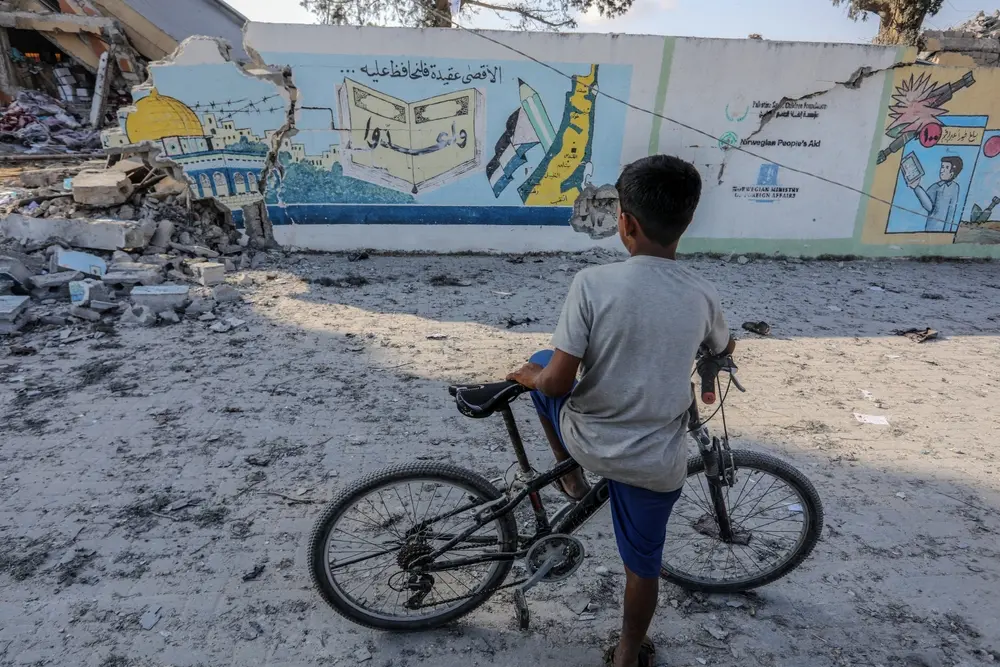
In recent days, in fact, the UN Children’s Fund has sounded the alarm: the education of at least 100,000 Lebanese children will be severely compromised for the 2026/27 academic year, mainly due to the failure to rebuild schools damaged during the war between Israel and Hezbollah.
In particular, UNICEF refers to a report by the Ministry of Education which lists 340 damaged school buildings, 17 of which have been completely destroyed. The most extensive damage has been recorded in the districts (cazas) of Nabatiyeh, southern Lebanon, the Bekaa and Baalbeck-Hermel.
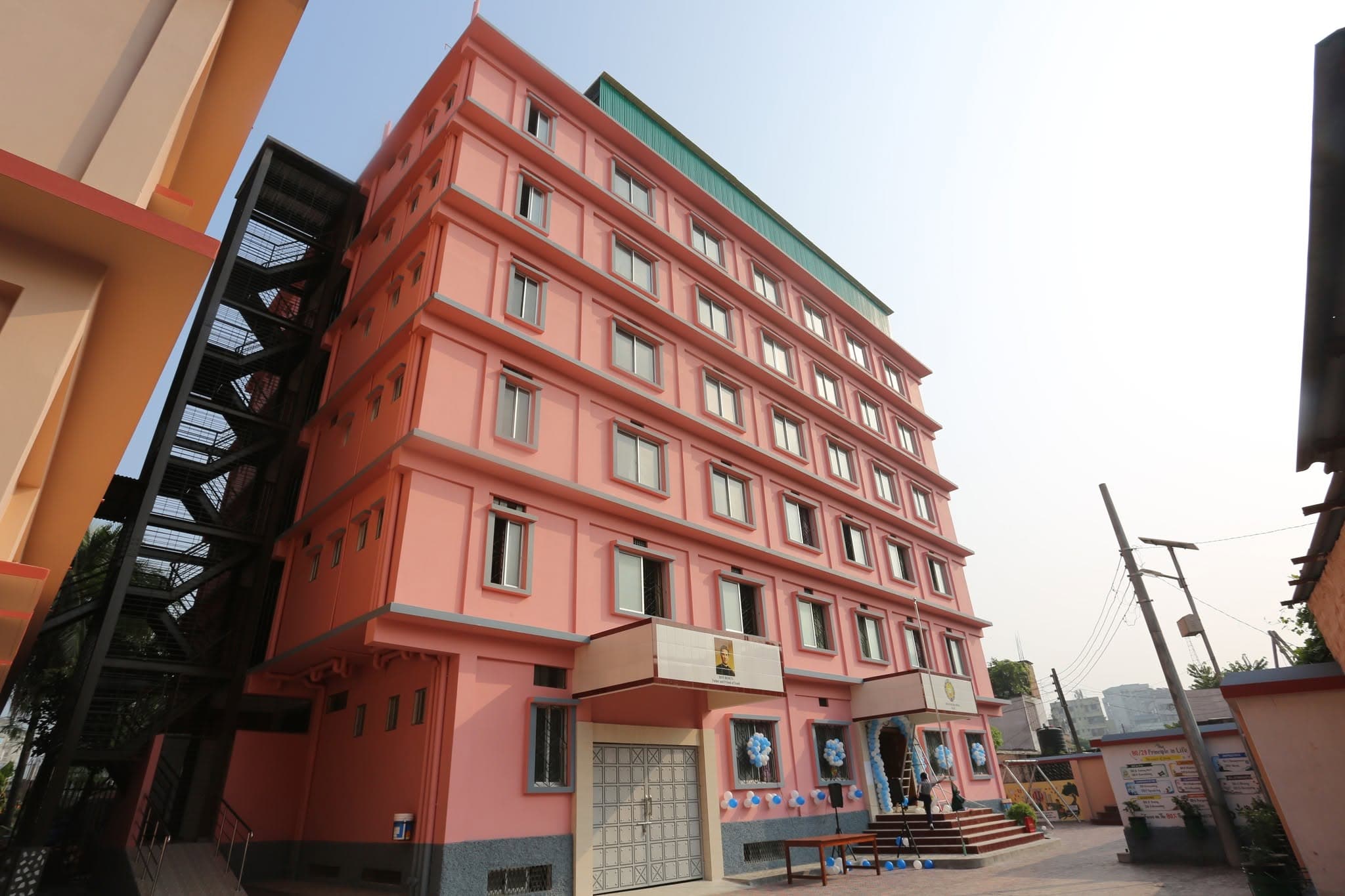
The decision to close the large Evangelical school in Nabatiyeh (pictured), announced earlier this week, illustrates the crisis in education in its own way. Its 1,200 pupils will therefore have to be placed in other schools, whilst the hundred or so teachers will be forced to find other schools or, in all likelihood, face unemployment. On television, the pupils’ parents expressed their bewilderment and disapproval at a decision that affects their children’s future and which the school’s management has neither explained nor justified.
The closure of this large school poses a problem: it is by no means certain that the other schools still open will be able to accommodate the pupils left without a classroom in which to study, as there is a real risk that they will be overcrowded.
Added to this are the logistical difficulties linked to the movement – and displacement – of the population and the occupation of part of the south. In other words, the effect is systemic: when one school closes, many others must take in its pupils, which quickly leads to overcrowding and problems with transfers. Many schools resort to a shift system to cope with overcrowded classrooms, but this in turn poses a problem for the teaching staff.
These figures relate primarily to state schools, emphasises Anne-Marie Hage, an expert on the subject at the daily newspaper L’Orient-le Jour (LOJ), interviewed by AsiaNews. In addition to the issue of school capacity, the analyst attributes the high school drop-out rate to instability and distance learning.
“Many children,” she observes, “are discouraged by this situation and end up unable to regain the mindset essential for learning. This is how they end up becoming apprentices in the labour market. Their parents,” she adds, “resign themselves to this all the more because they are often unemployed themselves.”
Permanent displacement
In reality, the displacement of the population of southern Lebanon has been a permanent feature for months. Due to the war, numerous civilian infrastructures and essential public services have been destroyed, preventing tens of thousands of Lebanese from returning to their homes. Even though their homes are still standing, the inhabitants cannot return due to a lack of water, electricity, telecommunications and healthcare facilities.
Furthermore, the inhabitants of some thirty villages situated beyond the ‘yellow line’ drawn by the Israeli army know they are condemned to a long-term exile. “The shops and restaurants,” exclaims Ali H., a resident of Nabatiyeh, “have disappeared; the banks have disappeared; the grocery shops have disappeared; all the pharmacies have disappeared. “No one can return now – how and where could they possibly live?”
Of course, not all schools are closing. For example, at the Franco-Lebanese High School in Habbouche (Nabatiyeh), founded by the Mission laïque française, enrolment is open for the 2026–2027 academic year. “Whatever the situation may bring, we are ready,” the school assures us, “to welcome and support our pupils under the best possible conditions, whilst ensuring the continuity of their education.”
However, like many schools, and despite the optimism expressed, the school administration does not know how many pupils will be present at the start of the school year, how many will pay their fees, or how many teachers it will be able to count on. Above all, it does not know what the future holds given the ongoing fighting between the Israeli army and Hezbollah.
Meanwhile, the UNESCO office in the capital has highlighted another significant aspect of the crisis: 431 schools have been converted into reception centres, affecting over 250,000 pupils.
Putting these two analyses together, it becomes clear that the start of the 2026/27 school year depends on two essential conditions: the rapid restoration of damaged schools and the gradual release of buildings being used as shelters, so that they can resume their educational function.
Christian schools on the brink
Christian schools, too – which account for 20 per cent of the education sector – are on the brink, assures the Secretary-General of the Catholic Schools, Fr Youssef Nasr. “Do not think that the case of the Evangelical school is an exception. Many Catholic schools,” he confides, “are tempted to do the same.”
The priest cites the example of the school in the Christian village of Alma el-Chaab, run by the Sisters of the Holy Family. “Under what conditions,” he asks, “can this school reopen, knowing that its community has been forced to abandon it?”
Lebanon has 320 Christian schools, 90 of which are partially free, attended by just under 200,000 pupils. These institutions, as in the public sector, face difficulties in recruiting teachers, as well as uncertainty regarding enrolment figures.
“There are foundations, such as L’Œuvre d’Orient, which help Christian schools,” notes Fr Nasr, “but how much does this aid amount to? Just 1–2 per cent of the school’s needs. It is school fees that keep the schools running, and this is where the problem lies.”
To stem the loss of funding, Christian schools have set up a “solidarity fund”, inviting parents to supplement teachers’ salaries with dollars. “A bonus of between 50 and 350 dollars a month, depending on their location and the number of pupils,” explains Fr Youssef Nasr.
In order to keep secondary schools running, the administration is cutting costs. Whiteboards have thus disappeared from classrooms, marking the return of the blackboard and chalk. The cost of a pack of dry-erase markers (equivalent to $120) is, in fact, the same as two terms’ school fees.
The national debt
“We are caught between a rock and a hard place,” sums up Sister Marie-Antoinette Saadé, superior of the Congregation of the Maronite Sisters of the Holy Family. “We are experiencing,” she adds, “a bottomless fall. As things stand, we have no prospects.”
Founded in 1895 in Jbeil, 45 km from Beirut, the congregation educates 12,096 pupils across 23 schools, seven of which have semi-free school status and are supposed to receive state subsidies.
But in September, the school in Terbol, in the Bekaa, will close its doors, bringing to five the number of schools closed by the congregation since 2019 due to a lack of funds. Others, in isolated regions, are hanging by a thread.
“We can no longer keep them open: the vast majority of parents work in the public sector or in the army, on salaries in [Lebanese] pounds that are now worthless. They cannot pay,” laments Sister Marie-Antoinette Saadé. The nun makes no secret of her concerns for the future of “these schools that reflect Lebanon, as they welcome – she concludes – children of all faiths. If we close, where will they go?”.
There are 90 of these semi-free Christian schools that make up for the lack of state schools in certain regions. “The state,” explains Father Youssef Nasr, “has not paid any subsidies to these schools since 2017–2018; hundreds of billions of lire have not been disbursed.” “This money is now worthless due to devaluation” and would amount to only “10 dollars per child per school year”, compared with 700 dollars before 2019.
“The education sector is being undermined at its very foundations. NGOs and France are funding us in place of the state, but for how long?” asks Sister Marie-Antoinette. This is a justified concern for the director of L’Œuvre d’Orient in Lebanon and Syria. Vincent Gelot highlights, in fact, “donor fatigue, given the lack of response to the state’s neglect and the absence of a common strategy, despite the worsening crisis”. “With the country’s dollarisation, we will only be able to help half the students. Who will pay,” he asks in conclusion, “the difference?”