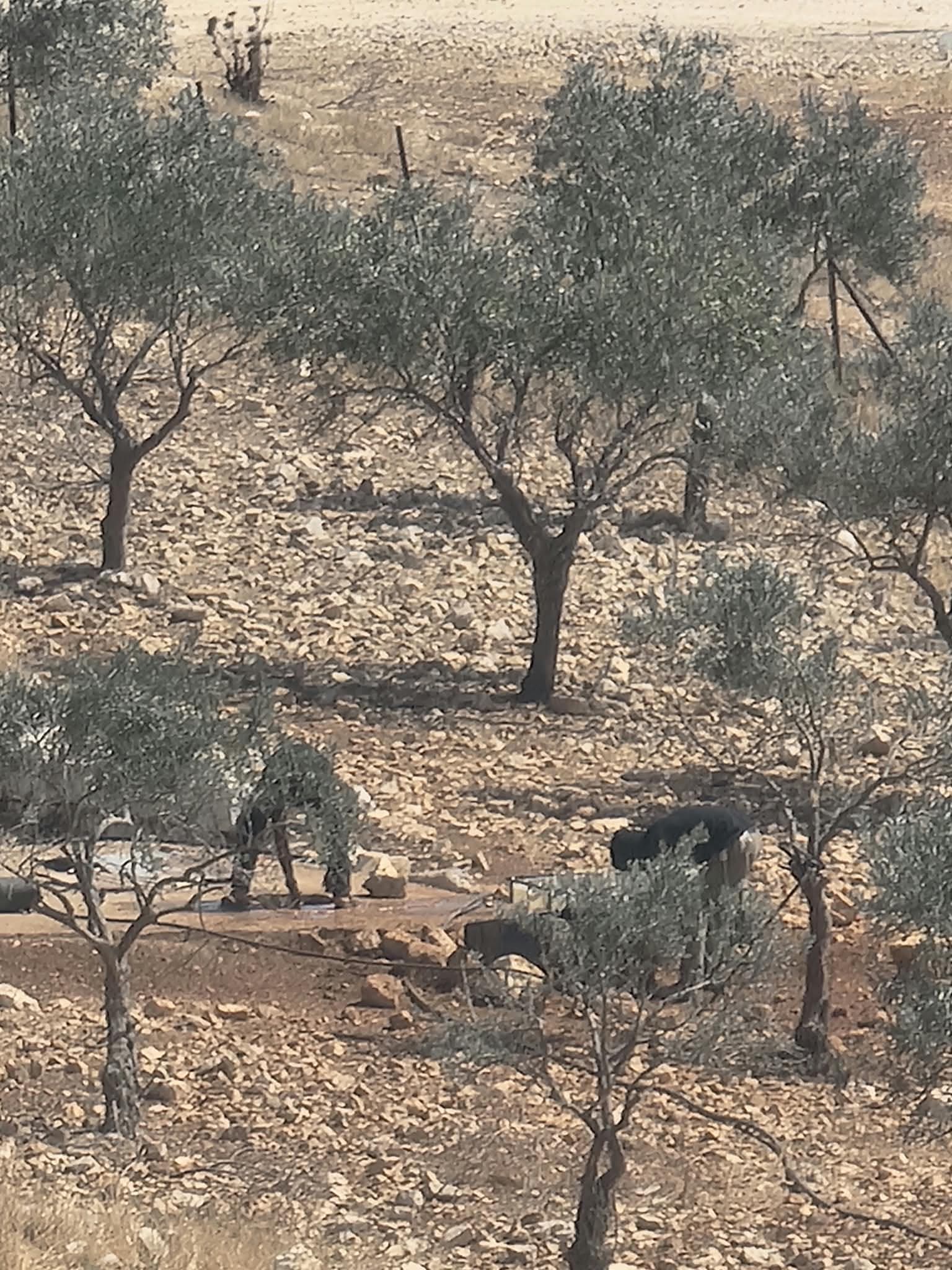
Milan (AsiaNews) – Just hours after the deaths of two Christian women in Gaza, the Latin community of Taybeh in the West Bank raised a new alarm after another violent attack by Jewish settlers, who invaded some olive groves and stole olives from the trees.
Father Bashar Fawadleh, the Roman Catholic parish priest, reported the incident in a statement sent to AsiaNews, emphasising how the situation calls for immediate intervention and “effective protection throughout the harvest season.”
In the Palestinian town, residents fear new raids by Jewish extremists. In view of the situation, the priest calls upon the faithful not to give in to fear, telling especially young people, “do not allow fear to steal your dreams.”
Land in the crosshairs
“Since early this morning, Sunday, October 4, 2026, settlers have been moving through agricultural land east of the town, entering olive groves belonging to Taybeh residents and picking the fruit,” said the clergyman in his message sent yesterday.
Father Bashar noted that, “The area remains under declared military closure, according to the order previously announced as a measure intended to protect residents and curb attacks.” Yet, “landowners are afraid to reach their own olive groves, or are unable to do so safely, while others (settlers) are able to enter the same land, [and] move through it”.
“Last night, the Israeli police came and arrested three settlers who were staying in the Dar Jasser farm house (according to witness accounts), and an official complaint was filed with the Israeli police.”
Located 30 km north of Jerusalem, east of Ramallah, Taybeh is home to some 1,500 people, all Christians, from different denominations. More than 600 are Latin Catholics, while the others are Greek Orthodox and Melkite Greek Catholics, each with its own church.
In the past, it was the victim of repeated attacks by Jewish settlers, with home invasions, stolen livestock, and houses set on fire.
Last July, the Latin Patriarch of Jerusalem, Cardinal Pierbattista Pizzaballa, and the Greek Orthodox Primate, Theophilos III, visited the town to express their solidarity with the residents; however, the attacks have continued with the complicity of the Israeli army and police.
Young people, do not be afraid
In yesterday’s Sunday Mass homily, Father Bashar urged the faithful to bear witness to the faith, even in the face of severe hardships, and to stand firm and strong against the violence.
“Our faith must become visible,” he said, “in our homes, in our work, in the way we treat our neighbours, in our love for the poor, in our support for those who are struggling, in our ability to forgive, and in our determination to hold on to hope” in dark times.
Turning to “young people,” he said: “do not allow fear to steal your dreams. This town needs you. It needs your ideas, your creativity, your work, and your prayers.”
Indeed, “Every small project, every new home, every child who receives an education, every young person who finds a job, and every olive tree we care for is a fruit that says: We are here, and we choose to build a life here” in order to stem the exodus of Christians that threatens to empty the Holy Land of one of its indigenous populations.
“Perhaps you cannot change the whole reality around you,” noted Father Bashar in his homily, “but you can change something small within your reach. You can encourage someone. You can help a person in need. You can reconcile with someone. You can serve your parish. You can care for your land. And you can give your children hope instead of fear.”
The olive “war”
What is causing concern at present is the upcoming olive harvest, an event that, just like in the previous three years, could once see more violence, attacks, and threats by settlers.
In fact, over the past few years, “many families faced repeated difficulties in reaching their land safely and harvesting their olives,” the parish priest explained, and now “the same fears are returning”.
For some time, landowners have been unable to access their olive groves, whereas extremists can move through them freely and harvest the fruit.
“For Taybeh, olives are far more than an agricultural crop,” the priest said. “According to local farmers, community representatives and the local church, the town has more than 16,000 dunums[*] planted with olive trees. Its production once met not only the needs of local families, but also provided olive oil that was sold beyond Palestine.
“Here, the olive tree represents a family economy, an inherited tradition and a daily relationship with the land passed down through generations. Today, families who own hundreds of olive trees may find themselves forced to buy olive oil for their homes because they cannot safely reach their trees and harvest the fruit.
“As a parish priest, I see what this means not only in the fields, but in the homes and lives of the families entrusted to our care. They are losing not only their oil, but an entire year's harvest, seasonal income and the supply of olive oil they would normally keep for their homes, at a time when the cost of living continues to rise.”
However, “the danger goes beyond the loss of a harvest. When families repeatedly cannot safely reach, cultivate or harvest their own land, their relationship with that land is placed under growing strain. Over time, what is lost is not only agricultural production, but part of the practical ability of families to remain on their land and sustain their lives there.
“Taybeh is not asking for special treatment,” the clergyman insisted. “Its people are asking for something far more basic: to reach their own land, harvest their own olives safely, and return home with the fruit of trees planted by their parents and grandparents.”
Ultimately, “Protecting the olive harvest in Taybeh is not simply about protecting a crop. It is about protecting the land, livelihoods, dignity and the right of people to remain on their land.”
[*] 1,600 hectares.