Milan (AsiaNews) – In today’s Syria, a discussion about schooling can quickly turn into a debate on religion, women, authority and identity. This happened on 14 September, during a session of the People’s Assembly on education. As you may recall, this Assembly is not elected by direct popular vote, but through a mechanism that has given the executive broad influence over its composition. Consequently, this institution’s views on education cannot be separated from the broader question: who represents whom in the new Syria?
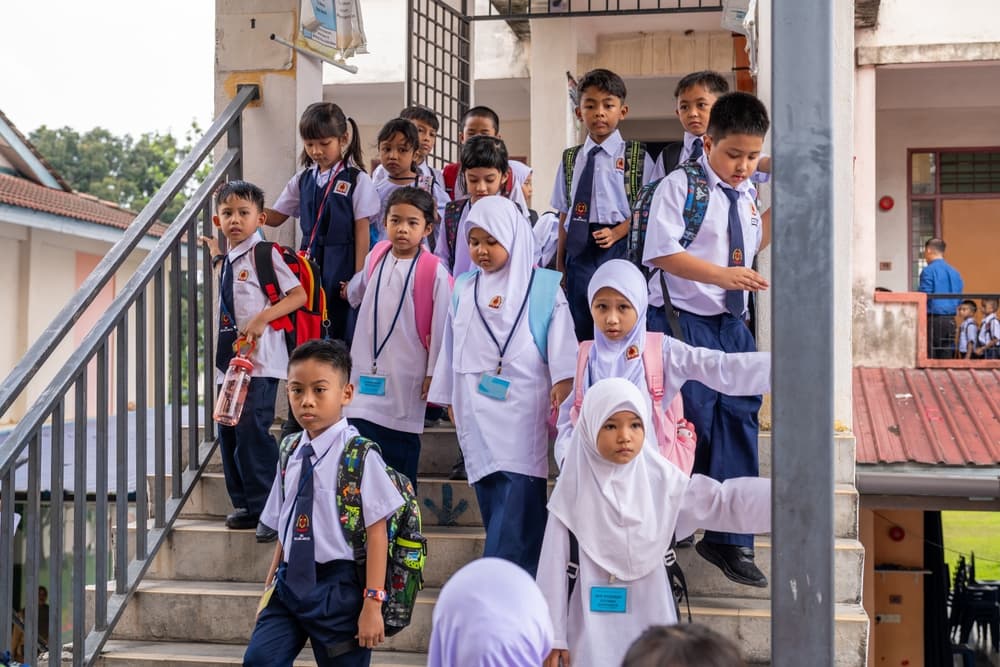
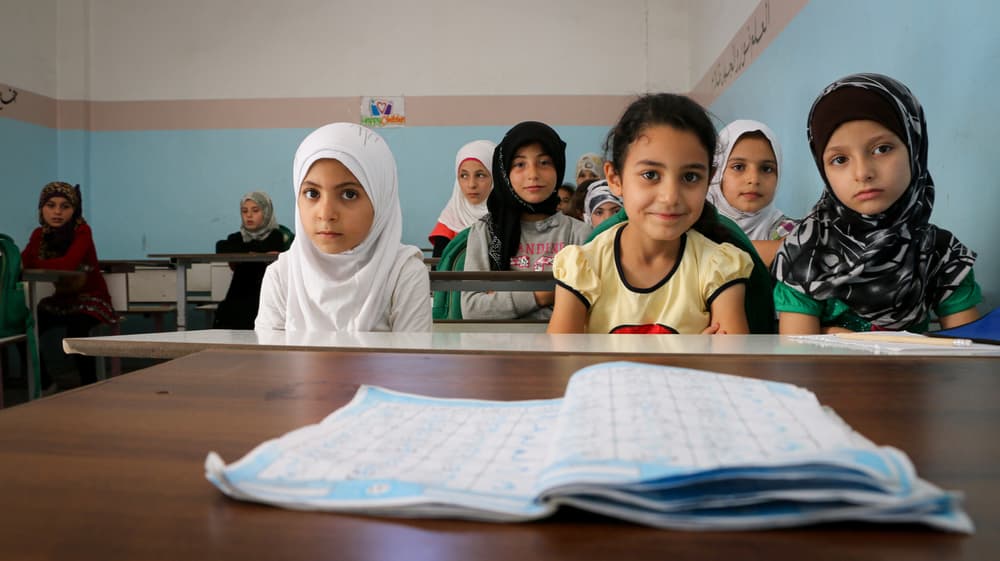
The Ministry puts the number of pupils at 5.291 million; Minister Mohammed Abdul Rahman Turko estimates that around two million pupils have dropped out due to poverty and, in some areas, the lack of schools. Instead of addressing these issues, however, part of the parliamentary debate took a different turn.
One member of the Assembly denounced the ‘feminisation of education’, attributing ‘the weakness of pupils’ to the high number of female teachers. Another called for the reintroduction of corporal punishment, declaring himself in favour of beatings because, in his view, they constitute a ‘prophetic educational sunna’. The reference was to a well-known hadith: ‘Command your children to pray when they are seven years old and beat them for it when they are ten; and separate them in their beds’.
Turko rejected the proposal: “Beating disciplines, it does not educate.” No decision has therefore authorised corporal punishment. Yet after the footage of this debate was circulated, I saw a video of a mother from Aleppo: she recounts that a few hours later, her seven-year-old son, in Year 1, was severely beaten by his teacher. When she protested, the reply was: “Go and complain wherever you like.”
An individual case does not prove a state policy. It does, however, highlight the gap between “it is forbidden” and what a child or a parent can actually do when the opposite happens.
When female teachers become a problem
The issue of the ‘feminisation of education’ also raises another question: why are there so many women in the Syrian education system? After more than a decade of war, displacement and poverty, teaching staff have not been trained under normal conditions. Economic hardship has forced many young people to leave their studies and take up work. But the alternatives have not been the same for men and women. In many parts of Syria, a boy who left school could enter the labour market early, even if the work was hard or precarious. For many girls, the options were limited. Studying, and then teaching, has become one of the few paths to an accepted profession, an income and independence. The alternative might have been early marriage, domestic work or economic dependence on the family.
On the Syrian coast, the issue takes on further significance. For decades, for many families in Latakia and Tartous – particularly in poor Alawite villages – education has been a route to social mobility. There are no recent figures to prove that the coast has the highest proportion of female teachers, but authoritative sources confirm an Alawite over-representation in the teaching profession under Assad.
Moreover, in 2025, six female pupils from the best school in Latakia achieved top marks in their A-levels; 85 pupils scored over 98 per cent. This does not mean that one community is more capable. But it serves as a reminder that behind terms such as ‘surplus’ and ‘feminisation’ lies human capital that cannot be rebuilt quickly.
Following Assad’s fall, controversies arose over the dismissals and redeployment of teachers. During the uprising, the Assad government sacked many teachers for protesting or opposing the regime. In February 2026, the ministry announced the reinstatement of 14,645 of them, whom it claimed had been unfairly dismissed. Restoring their jobs rectifies a real injustice. But can this be done without creating another one?
The EU Asylum Agency reports that post-Assad dismissals have disproportionately affected Alawites and cites women in education who are said to have lost their jobs due to their husbands’ links to the former security apparatus.
This does not mean that every dismissal was sectarian: Assad’s regime relied on patronage and political loyalty; a new administration is right to review irregular appointments and accountability. But vetting an employee is different from holding them accountable for their community or family.
A teacher reinstated after years of political dismissal should not become a rival to a colleague who now fears losing her job. Both need to be judged by the same criteria: competence, conduct and the law, not religious affiliation, alleged political loyalty or a spouse’s occupation. Otherwise, the rule does not change. Only those who pay the price change.
From portraits of Assad to a thousand Quran memorisers
Another increasingly visible trend is the public presence of religious education. In September 2025, the Authority for Religious Affairs (Awqaf) in Latakia honoured 833 students from Quranic schools. Sixty had memorised the entire Quran; there were 80 halqa operating in the province where this teaching takes place. On 5 September 2026, at the Latakia stadium, a further 1,000 men and women who had memorised the entire Qur’an were honoured in the presence of the Minister of Awqaf and the governor.
Memorising the Qur’an does not make one an extremist, nor does religious education equate to radicalism. However, as this sphere expands, questions regarding curricula, qualifications and supervision become increasingly important: who teaches? What is taught apart from memorisation? Who determines the interpretation of the texts? What safeguards prevent an educational setting – whether religious or political – from conveying exclusionary or extremist ideas?
This does not imply that the halqa produce such ideas; there is no basis for generalising in this way. The issue is not families’ right to choose religious education, but the place of this sector within the Syrian project and its relationship with the formal school system.
Assad’s school system was not neutral: portraits of the president, the Ba’ath Party, youth organisations and slogans were part of the children’s daily lives. It is necessary to break free from that legacy; the challenge is not to replace one form of indoctrination with another.
In which language should they learn?
In Sweida this year, 13,500 pupils were unable to sit their national exams because Damascus and local Druze forces failed to reach an agreement, blaming one another. For them, an unresolved conflict means losing an entire year of their lives.
In 2026, Damascus recognised Kurdish as a national language and permitted its teaching in areas with a strong Kurdish presence. The new regulations provide for three weekly lessons in Kurdish and some subjects taught in that language, but maths and science remain in Arabic. Students who had studied for years almost exclusively in Kurdish have protested. For them, it is not just a subject: it is the language in which they have learnt to think and study.
The question extends to Syriacs, Armenians, Turkomans, Circassians and others: can Syria build a shared identity without asking its citizens to leave a part of themselves at the school gates?
Perhaps this is precisely the thread that ties everything together: what does a child learn about authority when Parliament debates whether he or she can be beaten? What does a girl learn when the presence of too many female teachers becomes a problem? What does citizenship mean to an Alawite teacher if going to school becomes a source of fear? What does a reinstated teacher make of it when they see a new injustice befall a colleague? And what does the student from Sweida make of failing their exam, or the Kurdish child whose language is allowed in the classroom, but only within pre-set limits?
Millions of Syrian children will grow up with little memory of pre-2011 Syria; some with no real memory of Assad at all. The Syria they will know will, for the most part, be the one that schools show them today. The issue of education, therefore, is not a marginal question in the transition: it is a question about the Syria that will come after.