Milan (AsiaNews) – “I hadn't realised how deep my pain was." These are not merely the words of a mother coming to terms with her teenage daughter’s suffering; but also the words that Liang Hong, a mother but also a professor at Renmin University of China in Beijing, starts the preface to her latest book, Let There Be Light (Yao you guang).
Published in September 2025, the book explores the anguish many Chinese families experience as never before as they navigate the complex dynamics of their relationships with their children.
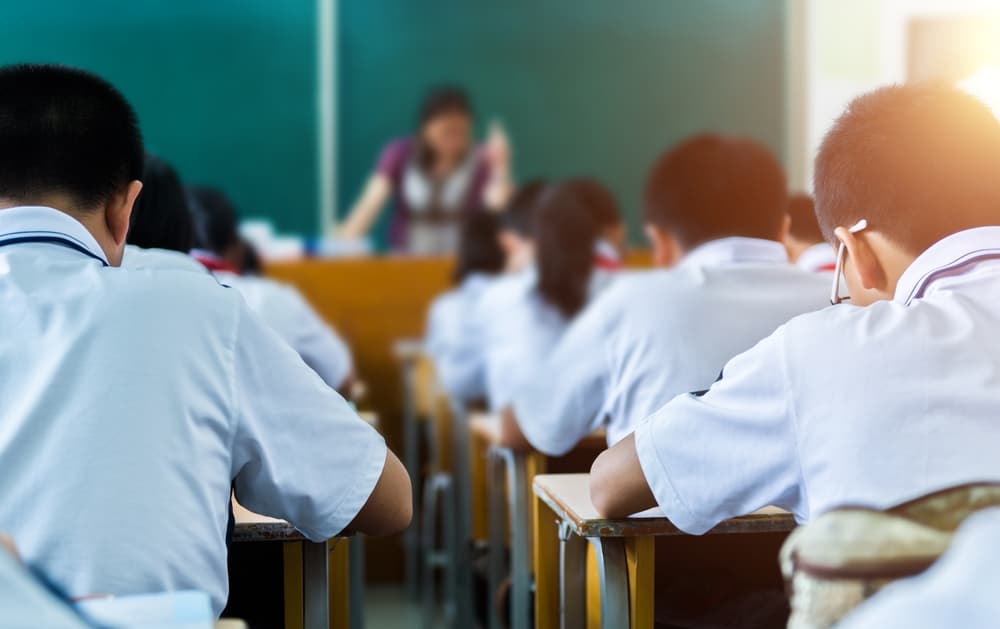
During adolescence, young people may find themselves facing significant psychological distress, often fuelled by pressures from their environment, which can drive them towards drastic decisions, such as dropping out of school.
A research report published in 2025 by the Institute of Psychology at the Chinese Academy of Sciences and Duguo, an online platform providing psychological support, reveals that among the teenagers surveyed who had a confirmed diagnosis of an emotional disorder, 53.85 per cent had dropped out of school. The average age at which they first stopped attending school was 13.
More recent data, also by Duguo in 2026, indicate that as many as 74.9 per cent of the high school students who took part in the portal’s survey had considered refusing to go to school.
Young people’s stories
For the author, the issue raises one question: In an era of relative material abundance, why are so many young people struggling with various forms of emotional distress?
To find an answer, Liang embarked on a three-year journey across China, during which she gathered accounts from young people, parents, teachers, psychiatrists, and psychological counsellors.
One of the cases that struck her most was that of a promising middle school student who was assigned extra English homework every week, a subject in which he was not very strong, so that his teacher could monitor his progress.
The study load, however, became so heavy that, even by staying up late into the night, he was unable to complete the exercises, since he was completely exhausted.
The sense of being overwhelmed, combined with the fear of disappointing his teacher, began to trigger anxiety attacks. Eventually, his distress became so severe that he stopped attending school and later transferred to a different school.
This boy’s experience is very similar to that of Xiaomi, another subject featured in Let There Be Light. During the summer before her third year of middle school, she studied with private tutors for up to eight hours a day.
By the time the first school bell rang, she already felt so weak that it seemed as though her entire body was giving way. Furthermore, she was obsessed with the opinions of her teachers, a concern that her mother also encouraged.
“Will it be like this for the rest of my life?” she began to wonder, filled with anguish. “I can barely cope with the third year of middle school. High school will be even harder, then there’s university, and after that, how will I ever find a job?”
When the pressure becomes unbearable, many young people, like Xiaomi, go so far as to ask their parents what is the point of living, and why they were brought into the world in the first place.
In her book, Liang Hong cites a conversation she witnessed between a Beijing teenager named Wu Yong and his mother.
Weary of spending his school years solving repetitive exercises, all aimed solely at passing the national university entrance exam, the now infamous Gaokao, the boy shared a troubling thought with his mother one night: “My trauma is the trauma of the entire society, of our entire civilisation. […] It isn’t just the trauma of a teenager from Haidian [a district in Beijing], and it’s not something that can be cured with therapy.”
In these disarming words, Liang Hong found a key to interpreting the psychological distress afflicting the younger generation. As the author put it, “It’s not a matter of asking, ‘What happened to my child?’ or ‘What did I do wrong?’ It’s about the difficulties and unresolved issues of society as a whole. We need to look at this problem from a broader perspective.”
The suffering experienced by Chinese teenagers often originates within the family and is deeply rooted in the culture that characterises many East Asian societies.
“Rigid hierarchies, a strong sense of authority, and the power to arbitrarily judge or belittle one’s children come into profound conflict with how young people born in the 2010s perceive their own lives,” the author notes.
Affective misalignment
Affective misalignment stems from an inability to view one’s children as complete, independent human beings, which becomes particularly evident when their academic performance falls short of parental expectations.
In such cases, many parents react with harshness or anger, sometimes even resorting to physical punishment, without ever considering the situation from the child’s perspective.
The expression of love is thus reduced to a mere transaction: "We provide you with food and shelter; your only job is to get good grades."
This occurs because many parents, who forged their own professional paths through academic success, often despite difficult economic circumstances, tend to judge their children based on their own personal experiences, expecting them to follow the same trajectory.
For the author, imposing rigid social standards on one’s children can have harmful and counterproductive effects on their personality.
Telling a child, who has yet to fully develop the capacity to perceive the world around them or discover the beauty of life, things like, "If you don’t get into a prestigious university, you won’t land a good job; if you don’t have a good job, you won’t find a good partner; and if you don’t find a good partner, you will never have a happy life," ultimately places an overwhelming, crushing pressure upon them.
Furthermore, Liang Hong points out that, at times, it is the parents themselves who hinder the reform of the school system.
When some regions introduced a policy allowing high school students to have Saturdays off, it was the parents who were the first to object, arguing that the children would only waste their time playing video games.
Responses (and speculations)
Liang Hong is well aware that shifting a cultural paradigm is a long and complex process. She therefore hopes that those working in the field of education will, in the meantime, adopt a more humane approach towards students.
Although the relevant authorities are investigating the problem of school dropout among adolescents and trying to identify appropriate measures, numerous practical obstacles remain.
A fear of hospitals, a lack of energy stemming from depression, the dread of being labelled "mentally ill" after a diagnosis, and a general lack of familiarity with psychological counselling make it hard to persuade young people to seek medical help.
Consequently, many remain confined to their rooms, sometimes even neglecting their own personal hygiene and avoiding all human contact, sinking into a state that, in psychological terms, is described as a regression in daily functioning and social skills.
In the absence of adequate healthcare support, parents often turn to specialised centres that claim to help teenagers return to school; however, these facilities tend to charge huge fees.
In recent years, various organisations have emerged that exploit the distress of families, drawing them in with low-cost or free introductory courses, only to pressure them into purchasing expensive educational packages.
Ultimately, many questions remain regarding the future of teenagers who drop out of school: once they return, will they receive the support needed to catch up with the curriculum? Will assessment methods become more flexible? Could a psychiatric diagnosis negatively impact their future career prospects?
These are all new challenges that schools and educational authorities must address.