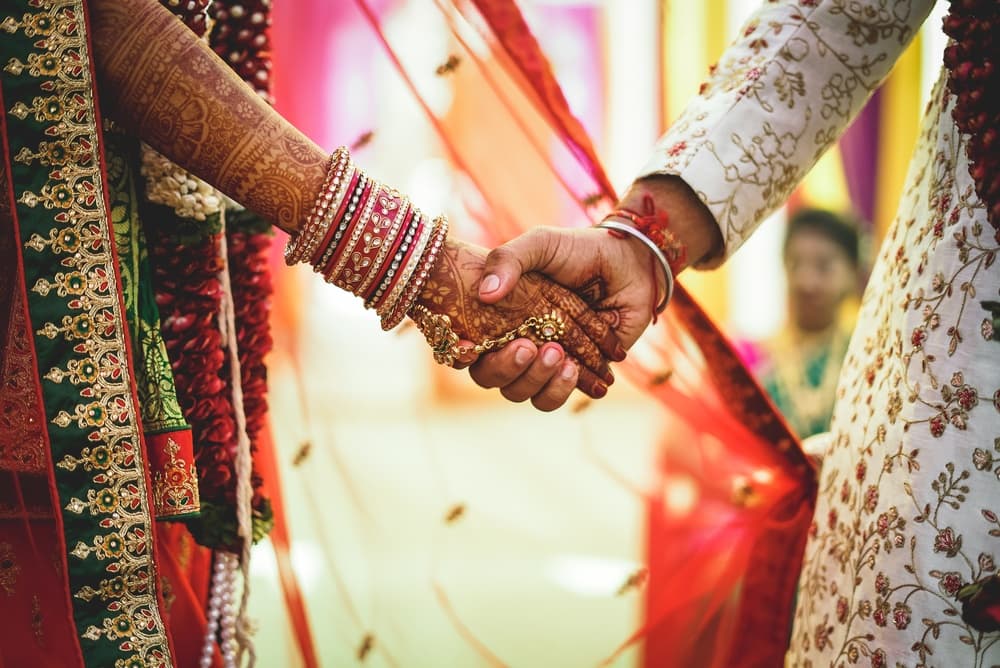
Delhi (AsiaNews) – In Aryanagar, a village in the Hisar district of the Indian state of Haryana, a social panchayat – an informal assembly of elders with no official judicial powers – has approved a resolution against marriages chosen independently by young people. The decision, adopted on 20 September during a meeting reportedly attended by around 1,000 elders, provides for a social boycott of couples who personally choose their own partners, extending this to their families and anyone who offers them support.
The measure was adopted following three weddings recently held in the village without the families’ approval: two between people from different castes and one within the same caste. The elders justified the measure by arguing that they wished to preserve the social fabric and local customs, according to which young people from the same village are considered ‘symbolically brothers and sisters’.
The legitimacy of the decision has been challenged by lawyers, who argue that it interferes with the individual freedoms protected by Article 21 of the Indian Constitution, which guarantees the right to life and personal liberty. Women’s rights organisations have also criticised the resolution, interpreting it as a form of patriarchal control, particularly over the autonomy of young women.
According to a report in theHindustan Times, a villager, Bhajan Lal, said that the villagers regard the village girls as their own daughters and that the new practice of self-chosen marriages would be contrary to local customs. Activists counter that this rhetoric, centred on protection and collective ‘honour’, can result in control over adults’ marital choices and in social, economic and psychological pressure on those who do not conform.
The official Gram Panchayat – the duly elected local administrative body – and the sarpanch, Ratan Lal, have distanced themselves from the decision. The social panchayat, however, is reported to have set up its own committee tasked with going door-to-door to raise awareness amongst residents and encourage them to support the ban.
Civil society organisations have called for intervention by state authorities and the police, highlighting the risk that such conflicts could escalate into ‘honour’-related harassment or violence. The Superintendent of Police in Hisar, Siddhant Jain, has stated that he will look into the matter and that the police will ensure the safety of the couples involved.
Sociological studies conducted in Hisar show that the real crux of the issue is the demographic imbalance created by the preference for male children, which is also perpetuated through illegal medical practices such as selective abortion. The desire to ensure male offspring stems from traditional laws of lineage and issues relating to land inheritance. When a demographic imbalance leads to a severe shortage of brides, the response of local patriarchal councils is often to impose arranged and strictly controlled marriages to protect local agricultural and social capital.