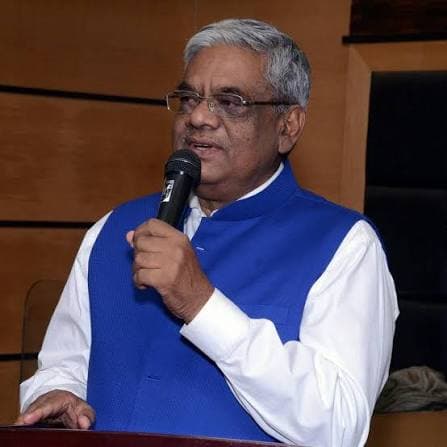
Raipur (AsiaNews) – Arun Pannalal, president of the Chhattisgarh Christian Forum and a well-known activist for the rights of the Christian minority, has been arrested in Raipur, the capital of the Indian state of Chhattisgarh.
The 75-year-old was detained overnight Friday after a complaint was filed by a member of the Bharatiya Janata Party (BJP) for a comment posted on Facebook deemed offensive to the Hindu religion.
According to police, Pannalal wrote a "highly objectionable” comment under a post dedicated to the worship of the Shivling (Shiva Lingam), a symbol associated with the god Shiva.
BJP spokesperson Amit Chimnani reported the incident.
Raipur police filed a First Information Report (FIR), the formal procedure by which criminal proceedings are initiated in India with charges based on provisions in the new Indian Penal Code (Bharatiya Nyaya Sanhita), which came into force in 2024.
Specifically, Article 196 concerns the promotion of enmity between different groups, Article 299 punishes deliberate and malicious acts aimed at offending religious sentiments, and Article 352(2) refers to intentional insults with the aim of provoking a breach of the peace.
Pannalal was arrested on Friday, and appeared before a magistrate the following day, who ordered his judicial custody.
On the night of his arrest, members of the Bajrang Dal, one of the most radical Hindu organisations, held a rally outside Pannalal's home in Raipur. Police intervened to disperse the protesters and kept a presence in the area.
The incident sparked protests from human rights organisations and civil society groups.
In a letter released yesterday, several activists, including John Dayal and Jesuit Cedric Prakash, expressed "deep concern" at the arrest, calling it an attempt to silence a voice committed to defending minorities.
The authors of the letter called for Pannalal's release on bail and for a transparent judicial process free from political pressure.
“Chhattisgarh's Chief Minister Vishnu Deo Sai has already pronounced Pannalal guilty in public, calling his remarks objectionable to Sanatan Dharma before any court has examined the matter,” the letter says.
“When the head of a state government pre-judges a criminal case against a minority activist within hours of his arrest, the presumption of innocence has already been buried, and judicial custody becomes a formality,” it goes on to say.
Finally, “This arrest cannot be read in isolation. It comes as Chhattisgarh operationalises its amended anti-conversion law with growing severity, as Odisha honours those associated with anti-Christian violence in Kandhamal, and as state after state tightens the noose around minority faith practice and dissent,” references to inter-communal violence in 2008 in Odisha and the recent decision to name a hospital after a Hindu extremist who was killed in clashes.
Pannalal is among the figures who have most frequently spoken out against pressures and attacks against Christians in Chhattisgarh, particularly in rural and tribal areas.
In recent years, Chhattisgarh has seen rising tensions surrounding Christian communities. In several parts of the state, extremist groups have disrupted Christian services and challenged the activities of house churches, accusing them of encouraging forced conversions, a theme long used by the far right against religious minorities.
In May, in Sukma district, a group of more than 60 Christians were attacked during a Sunday service when a crowd of about a hundred people stormed their church, demanding that the faithful renounce their faith. Approximately 30 people were injured.
The issue of conversions has become even more sensitive following the passage of Chhattisgarh's new religious freedom law.
The measure, which came into force in April, introduces stricter rules against conversions obtained through force, fraud, coercion, undue influence, or inducements.
It also requires prior notification to the authorities and imposes particularly severe penalties in the most serious cases, including mass conversions.
Christian organisations have challenged the measure, arguing that some definitions are too broad and simply risk encouraging further abuses against minorities.