Kathmandu (AsiaNews) - “To be a doctor for everyone, serving the poorest in the most remote villages”. Sister Lenita D’Souza, 57, from Mangalore in India, says this has been her “greatest desire” ever since her novitiate. She is now fulfilling this on the roads of Nepal, which were submerged on 26 August by floods caused by the Bhotekosh River bursting its banks.
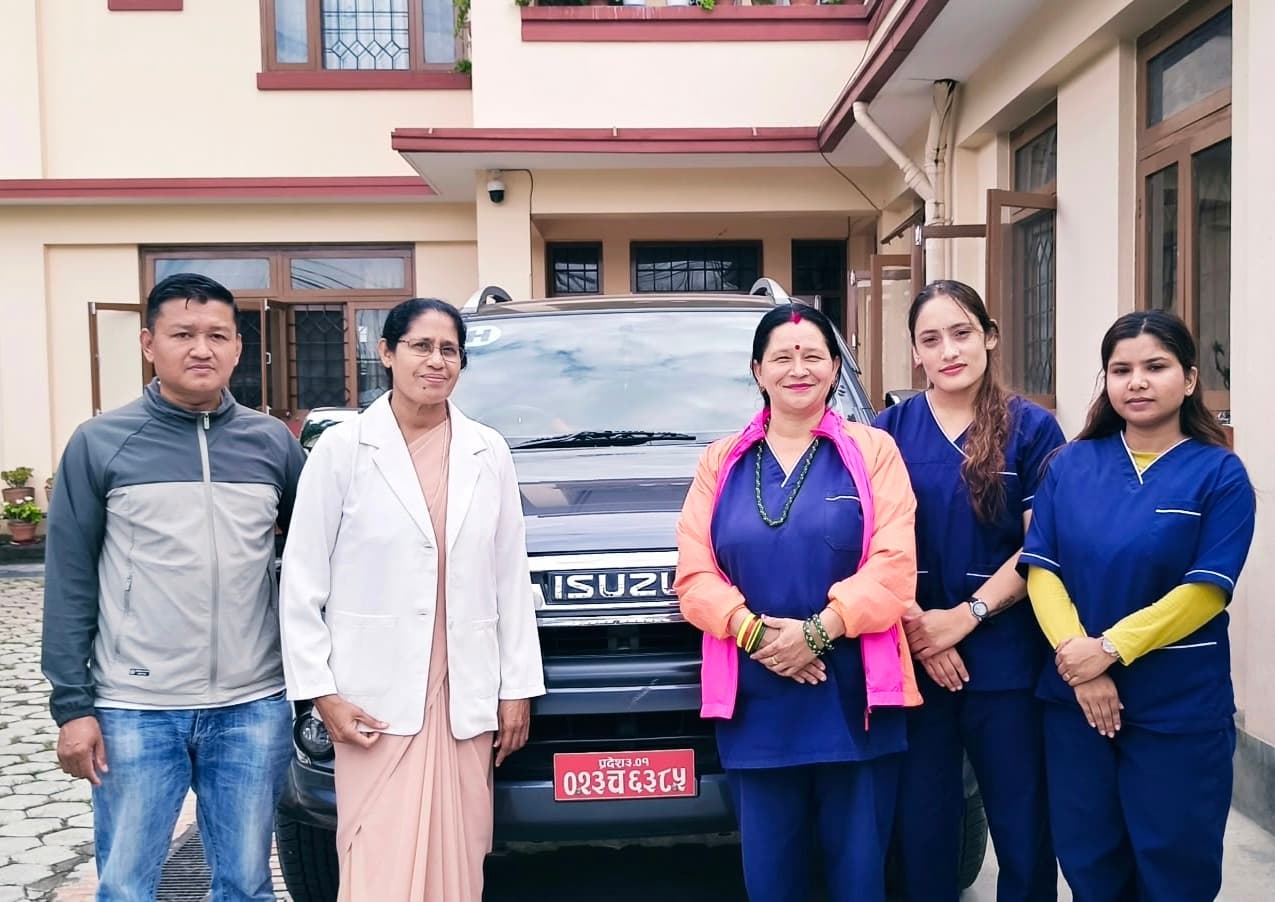
A member of the Sisters of Charity, better known as the Sisters of Maria Bambina, Sister Lenita is also a gynaecologist, and since 2024 has been practising her profession in the mountains of Nepal, travelling in her mobile clinic: a specially equipped vehicle with which she reaches remote villages lacking medical care. During the floods, she did not wait for the rains to stop before setting off with her team of three nurses, her driver and a government health official; by 3 September, she had already managed to reach the communities still cut off in the hardest-hit area of Rasuwa, in the north of the country – a region where, until then, only army helicopters had managed to reach – travelling for sixteen hours along roads flooded with mud and debris whilst all other vehicles turned back.
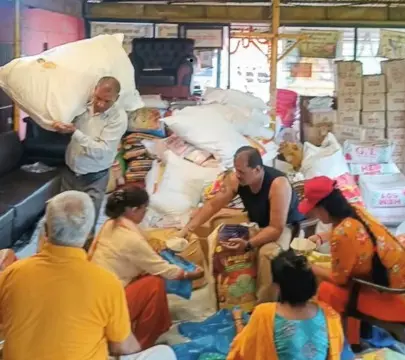
“I didn’t set off with large quantities of aid supplies,” says Sister Lenita, “but thanks to the support of one of our donors, I was able to purchase basic medical supplies and essential care equipment, as well as some food and non-food essential items. On the way, we saw the river in flood and met people affected by the flooding. We spoke to them, asking them to tell us about their experiences. Listening to their stories was heart-wrenching and, as a doctor, what I witnessed was very painful,” continues the nun from the Sisters of Maria Bambina. “I saw people being carried on stretchers, with fractures, and many were suffering from secondary complications: fever, respiratory infections due to the cold in the shelters, and high blood pressure caused by stress and trauma. The helicopters and the Nepalese army did an excellent job in the rescue operations. Seeing that aid had already arrived in some areas at the request of the local government in Rasuwa, I continued my journey for several more hours along a very rough road to reach the village of Uttargaya, where only minimal aid had reached. There, houses were buried under one and a half metres of silt, and the roads and bridges were damaged. Those families have lost everything: their homes, their harvests in the fields, and their hope.”
Children are the most vulnerable
One month on from the extreme weather event that struck the country, Sister Lenita’s assessment is positive regarding the aid that has reached the population: “I am pleased to say that the whole world has stood by Nepal and offered tremendous support. Seeing over a hundred vehicles travelling along the roads laden with aid, food and essential supplies, I felt that enough was being done. I sensed that humanity still exists as one great community.” “In most areas, essential services have been restored,” the nun continues. However, for a full recovery, urgent needs remain: first and foremost, adequate roads – not just the main arteries, but also the local roads – safe drinking water and housing.”
Children are the most vulnerable: “We have reported cases of children left alone without parents, so that they could be taken to a hostel in the city to be protected and helped to find their families. But the schools are damaged and the books have been destroyed. How can they study whilst living in school buildings or in tents? If we do not get them back to school soon, even in temporary facilities, we will lose an entire generation. We must rebuild not only homes, but also lives. If we provide them with a safe school today, tomorrow they will be the ones to rebuild Nepal”.
The mission of the Sisters of Maria Bambina
The Institute of the Sisters of Maria Bambina, founded in Lovere, Italy, in 1832, is present in Nepal with 20 sisters of various nationalities spread across six communities, active in Kathmandu (Kathmandu, Baniyatar), Palpa (Tansen, Gorbandha), Chitwan (Khairahani) and Banke (Kohalpur). The communities, which are part of the Institute’s New Delhi religious province, operate in the civil sphere through the Nepal Karuna Seva Samaj, a society founded in 2000 under the supervision of the Apostolic Prefect, with the aims of providing education, healthcare and social development. The mission in Nepal was established in response to the Church’s appeal on the occasion of the Great Jubilee of 2000, in a country marked by severe poverty and a very limited Christian presence.
In Nepal, the sisters provide services in the educational, healthcare, social and pastoral sectors, in a country where Christians make up 1.76 per cent of the population. In Palpa, the heart of their mission, there is a school with over a thousand pupils, a dispensary, a mobile clinic, childcare centres, shelters for children, and facilities dedicated to women’s empowerment. In Kathmandu, the sisters work in collaboration with the local Catholic Church and the national Caritas office, providing shelter, vocational training, healthcare services and pastoral support. In Chitwan, there is an educational and vocational training centre, with an adjoining hostel for girls from the villages.
The idea for the mobile clinics came 35 years ago from a Jesuit, Father Eugene Watrin, who died in 2004 after spending 50 years in Nepal. Today there are five fully equipped vehicles, two of which are run by the Sisters of Charity through the Nepal Karuna Seva Samaj association, in collaboration with the Nepal Jesuit Society – an organisation founded by the Jesuits – and Caritas Nepal.
“Many mountain communities have no health centres or medical facilities and, in some places, not even a road,” explains Sister Lenita. “Thanks to the mobile clinic, we can deliver medicines, dressing materials and emergency medication; we carry out check-ups and refer serious cases to hospitals. In addition, we run health education programmes in schools, focus on the health of women and children, promote health awareness amongst the local population and provide home care for bedridden patients.”
In emergencies such as the current one (though Nepal is also frequently hit by earthquakes), this flexible approach proves particularly useful: “During floods, local health facilities are damaged or swept away. A mobile clinic can reach places others cannot, even reaching the very last person, perhaps perched on a hilltop.”
“Compassion heals the heart”
Sister Lenita’s mission does not involve preaching, but all her work is carried out in the light of her dual identity as a doctor and a nun: “During our missions, even more than providing medicines, we listen to people’s stories and stand by their side in difficult times. Sometimes, the simple act of listening is a cure in itself. We offer treatment completely free of charge, with love and a caring presence. As a doctor, I believe that medicine heals the body, but compassion heals the heart”.
“During the flood, I managed to make my way along roads that seemed impassable because I felt supported by my community and my order, who were praying for me,” confides Sister Lenita. “When I arrived, an elderly mother from Uttargaya took my hand and said: ‘The water has swept everything away. My fields are submerged. But you have come to see us, risking your life.’ At that moment, I realised that my difficult journey had truly been worth it.
Another family told me: ‘We’ve been without electricity for nine days. An hour after you arrived, the power came back on. You’ve brought us a blessing.’ On our return, I learnt that, half an hour after we’d left, the power had gone out again. And I’ll never forget the children at the shelter set up in the school: they’d lost their books and school uniforms, yet they were still smiling and asking, ‘Sister, when will the school reopen?’. In their eyes, despite having lost everything, the hope of being able to study still shone brightly. It is precisely that hope that gives us the strength to carry on.”