Lahore (AsiaNews) – The controversy surrounding the Pakistani Muslim cleric Hafiz Muhammad Tahir Mehmood Ashrafi has intensified in recent days, following the revocation of an interfaith award bestowed upon him in London by the Archbishop of Canterbury. This decision contrasts with the Church of Pakistan’s subsequent decision to bestow upon him the “Global Peace Award”, which honours those committed to peace and coexistence.
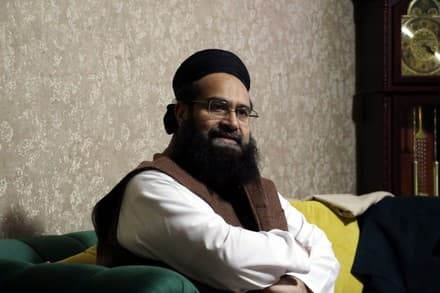
Ashrafi, president of the Pakistan Ulema Council and coordinator of the National Paigham-e-Aman Committee, had received the Hubert Walter Award for Reconciliation and Interfaith Cooperation from the Archbishop of Canterbury, Sarah Mullally, at Lambeth Palace on 11 September. This award, in recognition of his work towards reconciliation and cooperation between different faiths, was presented to him on a significant date: the 25th anniversary of the attacks on the heart of the United States, from the Twin Towers in New York to the Pentagon in Washington.
Lambeth Palace stated that the award was intended to recognise Ashrafi’s long-standing support for religious minorities in Pakistan, particularly the Christian community. Six days later, on 17 September, the Palace announced that the award had been revoked due to ‘previous statements’ made by Ashrafi himself, although he reiterated his commitment to interfaith dialogue and cooperation.
Specifically, the decision to withdraw the award came after a re-examination of certain statements made by Ashrafi in 2007 regarding the then leader of al-Qaeda, Osama bin Laden. The British media reported that Ashrafi had stated his intention to confer upon Bin Laden the title of “Saifullah”, meaning “Sword of God”, during a period of protests and tensions following Britain’s decision to knite the writer Salman Rushdie. The writer and essayist of Indian origin was the subject of a fatwa issued by Ayatollah Ruhollah Khomeini, Iran’s Supreme Leader, due to the content of his famous 1988 work *The Satanic Verses*.
In response, and as a partial justification for their stance on bin Laden, Ashrafi’s representatives argued that these statements had been taken out of context and did not constitute an endorsement of terrorism. The controversy subsequently escalated following an investigation by the Telegraph on 24 September, which reported allegations concerning Ashrafi’s brother, Hassan Muawiya Ashrafi. The newspaper claimed that the latter was linked to a network accused of exploiting blasphemy charges to kidnap, torture and blackmail men, with the likely involvement of corrupt officials.
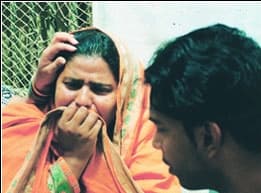
The British newspaper reported that, according to documents in the possession of investigators, Muawiya Ashrafi was linked to at least 26 blasphemy complaints over a four-year period. It also cited allegations that social media traps – based on seduction – were being used to lure men into sharing material that could then form the basis for the charges. Furthermore, relatives of the alleged victims told the newspaper they feared reprisals and asked to remain anonymous.
Tahir Ashrafi is reported to have defended his brother, who is at the centre of the controversy, rejecting allegations that either of them was part of a gang engaged in extortion or in exploiting the blasphemy charges. Ashrafi challenged his critics to prove that he or his brother had extorted money from the victims, and it is clear that these are mere allegations which cannot be regarded as criminally established facts in the absence of a court ruling.
Against this backdrop, the Church of Pakistan nevertheless chose to present Ashrafi with a Global Peace Award in Lahore. The local Anglican bishop, Azad Marshall, president of the Church of Pakistan, stated that Ashrafi has consistently worked to protect the rights of non-Muslim citizens and to promote interfaith dialogue, peace and harmony between faiths. In response, Ashrafi thanked the Church and reaffirmed his commitment to peace, dialogue and the rights of all Pakistanis.
These conflicting decisions have drawn criticism from some Pakistani Christians and human rights activists. Speaking to AsiaNews, Faraz Pervaiz, a resident of Lahore, harshly criticised Bishop Marshall’s decision, arguing that Christian leaders should “reconsider their relations with figures whose actions and public statements have been the subject of serious controversy”. “His remarks,” he added, “reflect his personal position and do not represent an official stance of the Church of Pakistan”.
The incident has therefore raised broader issues concerning interfaith dialogue, the protection of religious minorities, the misuse of blasphemy charges and the due diligence required of religious institutions before conferring international honours. For the local Christian community, the controversy also highlights the difficult balance between maintaining dialogue with influential Muslim religious leaders and the need to ensure that such engagement remains consistent with the principles of human dignity, religious freedom, justice and the protection of vulnerable communities.