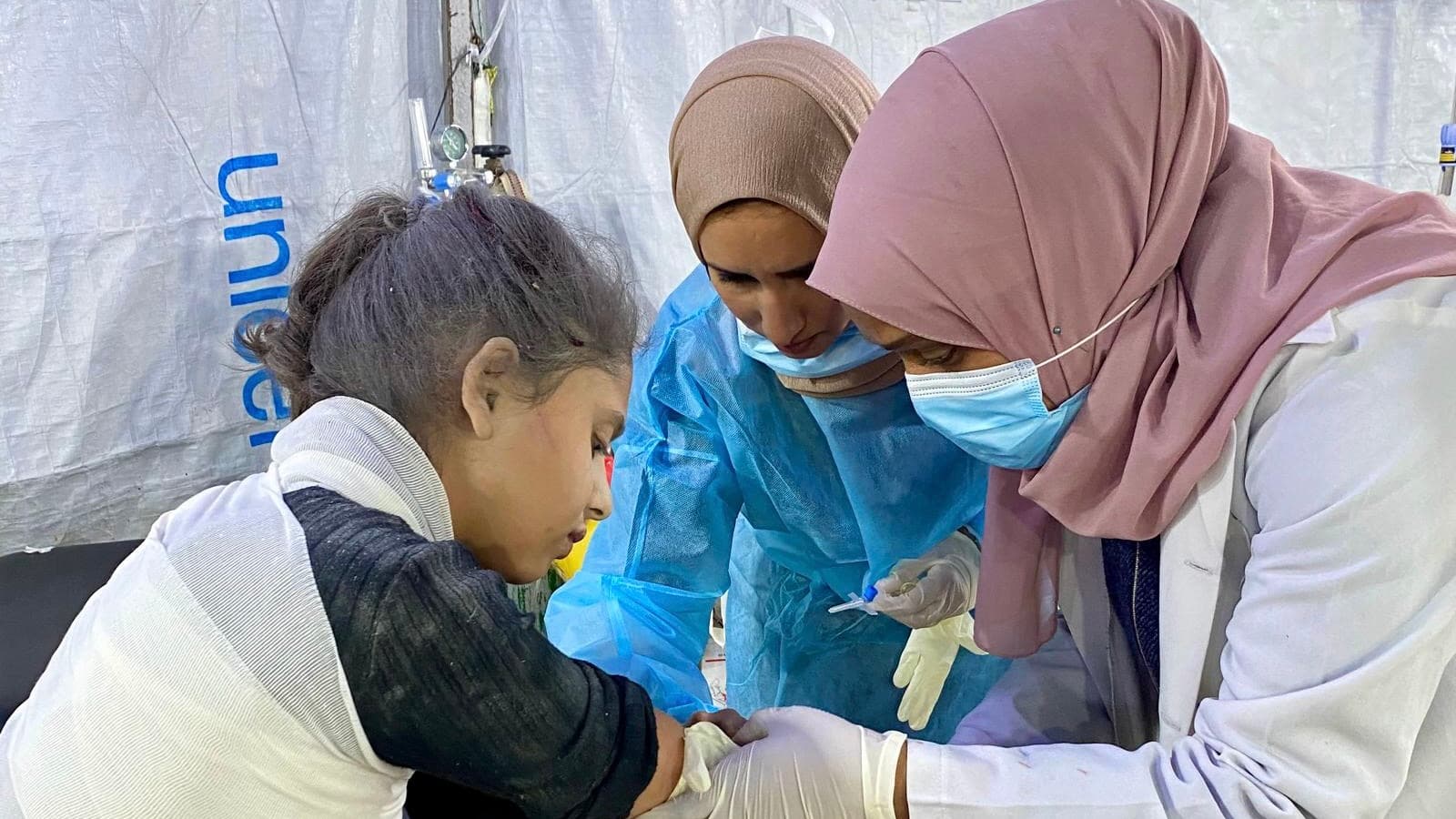
Karachi (AsiaNews) – When 17-month-old Muhammad was admitted to Kulsoom Bai Valika (KBV) Hospital in Karachi with a fever, his mother, Aysha Kamran, expected doctors to diagnose a common childhood illness. Instead, she received life-changing news that, she says, she could never have imagined.
The doctors told her that her son had tested positive for HIV. "I had never even heard of this disease," she said. "They told me that my son had almost a million copies of the virus in his blood."
The diagnosis marked the beginning of a painful journey, not only lifelong medical treatment, but also social rejection. According to Ms Kamran, the landlord of their rental home forced them to leave after learning of their son's condition.
Neighbours stopped allowing their children to play with him, and every time the boy left the house, the parents quickly called their children back inside. "My son is innocent," she protests. "He doesn't understand why people avoid him. We just want justice and proper care."
His story is one of many to emerge from the HIV outbreak linked to Karachi's Kulsoom Bai Valika Hospital, administered by the Sindh Employees' Social Security Institution (SESSI).
What began as a public health crisis has morphed into a humanitarian tragedy, exposing not only alleged deficiencies in infection control but also the deep stigma that continues to surround HIV in Pakistan.
According to Sindh's Minister of Labour and Social Welfare, Saeed Ghani, 120 people have tested positive for HIV so far after a widespread screening campaign in and around Valika Hospital. Of these, 78 are children. Six children have died since the issue came to light.
The provincial government says more than 10,500 residents have been tested since the first cases were reported in October 2025. Another 2,000 people were screened at SESSI's Landhi Hospital, where 10 more HIV-positive cases were identified.
Authorities believe the infections were contracted before October 2025. The investigation is focusing on allegations of unsafe medical practices, including the possible reuse of contaminated syringes. Two commissions of inquiry were set up to examine the incident.
Their findings have led to the issuing of notices of investigation against 37 doctors and hospital staff. The government announced that those found responsible will not only be dismissed but also face criminal prosecution.
The Sindh High Court has also demanded an explanation from the provincial government regarding the spread of the disease, emphasising the seriousness of the situation and the need to determine who is responsible.
As legal proceedings continue, affected families face daily challenges that extend far beyond the courtroom. Fear and misinformation about HIV have left many parents struggling with discrimination in schools, neighbourhoods, and even among relatives.
Children who need treatment and emotional support instead find themselves isolated, while parents must protect their families from stigmas about HIV transmission.
Recognising the long-term nature of HIV treatment, the Sindh Employees' Social Security Institution (SESSI) has established a Rs 2 billion endowment fund to support the medical care and well-being of affected children. The government says all identified patients are receiving free treatment at five major hospitals in Pakistan and has promised to expand support if needed.
To protect victims from further discrimination, authorities have also pledged to keep the identities of infected children confidential, in accordance with the Sindh HIV and AIDS Control, Treatment, and Protection Act of 2013.
Health policy experts say the tragedy highlights systemic failings that extend beyond individual hospitals.
The founder of the Indus Hospital and Health Network, Dr Abdul Bari Khan, called HIV and hepatitis C major public health challenges that require coordinated countrywide action.
Dr Faisal Mahmood, an infectious disease specialist at Aga Khan University Hospital, also stressed that rigorous infection prevention and control measures must be implemented in all healthcare facilities, including private clinics.
For families like Aysha Kamran's, however, justice will not be measured solely by commission of inquiry reports or disciplinary measures. It will also depend on society's ability to replace fear with understanding and on the ability of the healthcare system to rebuild deeply damaged trust.
The families involved continue to demand accountability, compassion, and a future where a diagnosis no longer leads to exclusion. Their request is simple: that no other child should ever experience the same tragedy.