Abu Dhabi (AsiaNews) - The war in the Persian Gulf waged by Israel and the United States against Iran last February, with the gradual involvement of countries in the region – not least the escalation of tensions between Riyadh and the Houthis in Yemen – is also causing extremely serious environmental damage in the region’s waters.
Satellite images released in recent days by Copernicus Sentinel-2 show a vast oil slick approaching the coast of the United Arab Emirates. A large black (and toxic) slick, which is in all likelihood the result of a spill from a damaged oil tanker – yet another casualty of the armed conflict in the region. Experts fear for the safety of local communities and marine life throughout the area, which is already experiencing rising levels of marine pollution.
The Persian Gulf is home to an ecosystem teeming with life and is the habitat of several species of sea turtles, hundreds of fish and the world’s second-largest population of dugongs, also known as sea cows. Within this fragile balance, the war is releasing pollutants into the air and the sea.
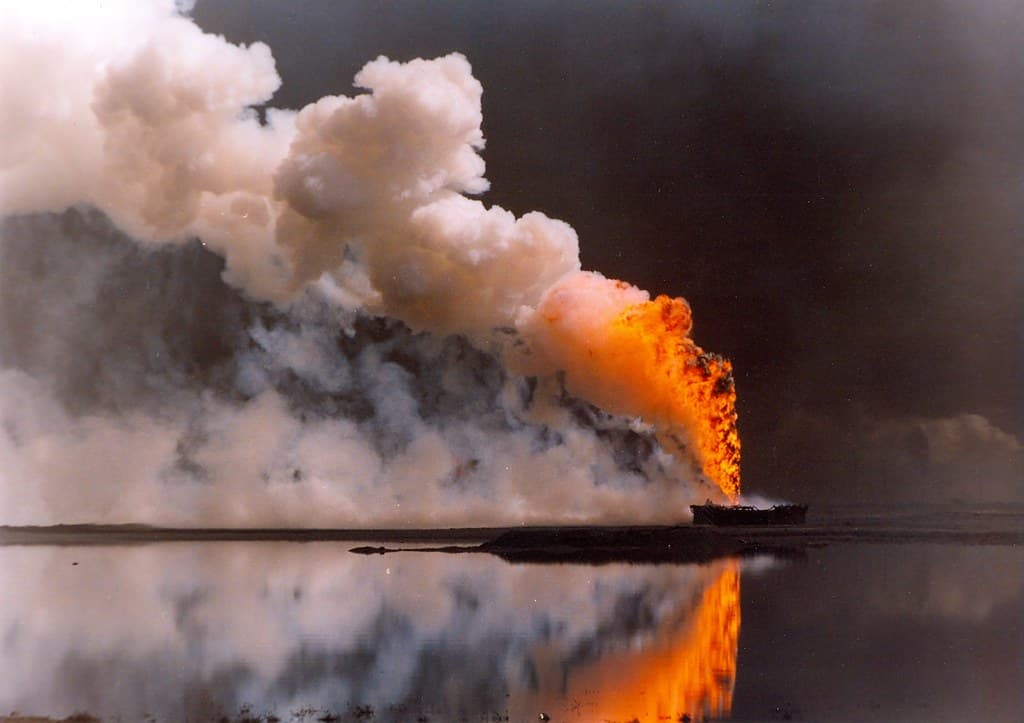
Bombs and missiles have released heavy metals and harmful chemicals into the atmosphere, whilst attacks on oil facilities have caused fires that have enveloped Tehran in a thick blanket of black smoke and a rain saturated with oil.
The resulting pollution could have long-lasting repercussions on the health of millions of people.
Massive spill
Attacks on oil tankers and infrastructure have also caused crude oil spills visible even from space. On 19 October, residents of the emirate of Sharjah began complaining of a strong, unpleasant odour in the air. Despite the efforts of regional and federal authorities, it was not possible to identify the source of this odour.
It was not until 23 October that the United Arab Emirates’ (UAE) Minister of Climate Change and the Environment officially reported an oil spill from a damaged tanker in the waters of the Persian Gulf. The following day, satellite images provided to Reuters by the Copernicus services showed a dark slick, covering an estimated area of 160 km², approaching the coast.
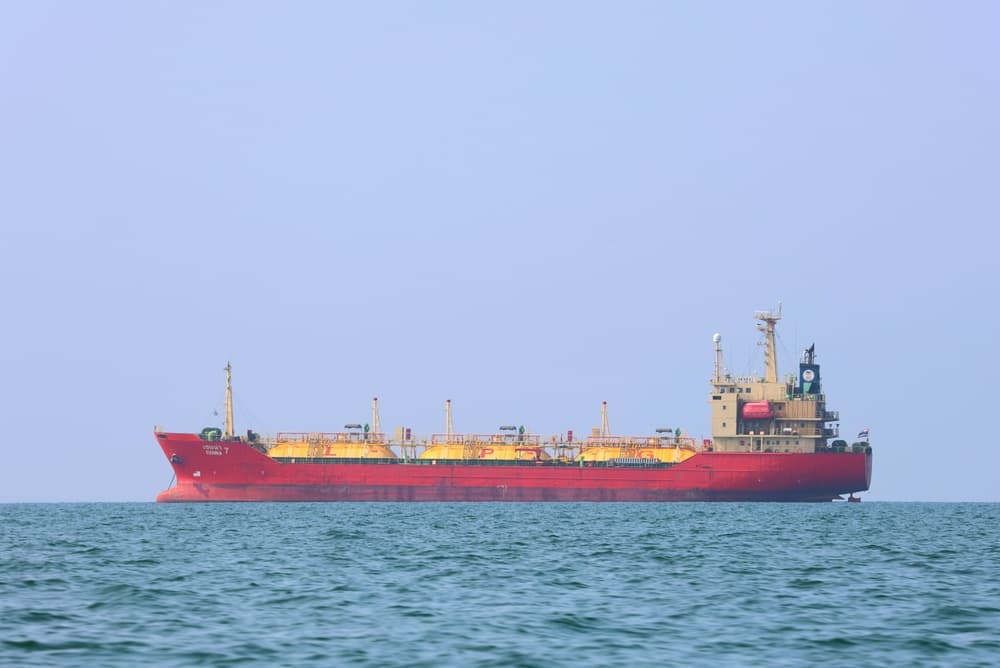
According to analysts and experts, the source of the spill is believed to be the tanker Gem No. 2, which was damaged during a series of Iranian attacks between 9 and 10 October. The UAE authorities have not yet confirmed this information, whilst satellite monitoring shows that the oil slick continues to spread.
The dark, oily substance has already reached the coast, forcing the UAE authorities to close beaches in the emirates of Umm al-Quwain, Ras al-Khaimah and Sharjah. Intensive operations have also been launched to physically remove the oil from the shoreline and coastal waters.
Marine life under threat
Environmentalists are deeply concerned about the potential consequences of the spill, as highlighted by Aseel Takshe, Dean of the Faculty of Health Sciences, Digital Innovation and Sustainability at Canadian University Dubai.
According to the academic, the extent of the damage will depend on the wind, tides, currents and wave action – factors that determine how the oil moves and the likelihood of it reaching particularly vulnerable lagoons and islands. Furthermore, the type of crude oil involved, the speed with which it is contained by the response teams and the accuracy of the clean-up operations along the coast will also be decisive.
These concerns are shared by Steve Widdicombe, director of the Sharjah Marine Research Centre (United Arab Emirates), who told BBC Verify that the negative consequences of the incident are “inevitable”.
Oil pollution poses a particular threat to the shallow, semi-enclosed waters of the Persian Gulf, which are home to around 500 species of great value. Dr Takshe adds that, even after the oil has been removed, the safety of the natural environment “will not be guaranteed”. Oil can, in fact, persist in seabed sediments and sheltered bays, compromising fish restocking, turtles’ foraging activities and the reproductive success of seabirds; the health of seagrass beds and mangrove ecosystems – which form the basis of a complex food web – is also at risk.
Record pollution
The analysis firm Windward warns of a further potential threat: ocean currents could carry the oil towards the water intakes of desalination plants in the Emirates, which supply over 40 per cent of the country’s drinking water. Contamination of raw water with petroleum compounds could necessitate further protective measures, modifications to water abstraction systems or even the temporary closure of the plants.
In many cases, the sequence leading from a vessel’s impact to environmental damage is clearly visible, says Brian Barnes, a member of a group of oceanographers specialising in satellite analysis at the University of South Florida, who is studying the effects of this war remotely. “For some of the main ships targeted, we can see long oil slicks extending for hundreds of kilometres from the point of impact,” the expert continued.
The Persian Gulf has long suffered from oil pollution, but research conducted by Barnes and other scientists, which compares March 2026 – a period marked by intense fighting – with the same period the previous year, highlights a marked increase.
Pollution in the Gulf poses particular challenges, given that this body of water is relatively shallow – the deepest points reach barely around 360 feet – and is relatively small, covering 93,000 square miles.
Furthermore, it has a single point of entry and exit to the open ocean: the Strait of Hormuz, which leads to the Gulf of Oman and, further on, to the Indian Ocean. Consequently, pollutants tend not to disperse or dilute easily.
For all these reasons, the Persian Gulf has emerged as one of the world’s most strategically sensitive marine areas, with pollution levels now double what they were in the past. On the one hand, it remains a strategic route for oil transport and a focal point where the military and economic ambitions of global powers clash.
On the other hand, around 160 million people live in the countries bordering the Gulf; their prosperity depends on scarce water resources and a climate crisis that is constantly worsening. Local communities and ecosystems have long been under severe environmental stress, and the conflict in the Middle East is intensifying the pressure, casting a shadow of uncertainty over the region’s future.