Taxila (AsiaNews)-The historic city of Taxila reflects centuries of cultural and religious encounters. Its Buddhist legacy, ancient centres of learning and traditional association with St. Thomas the Apostle offer an opportunity to promote Pakistan’s diverse heritage, interreligious dialogue and cultural tourism.
The ancient city of Taxila, near Islamabad, is gaining renewed attention for its extraordinary place in the history of Asian civilisation and its significance for Christians, particularly through the centuries-old tradition associating St. Thomas the Apostle with the region. Known internationally as a centre of Buddhist learning and Gandhara civilisation, Taxila also preserves an important chapter of early Christian heritage, connecting Pakistan with the first generations of Christianity.
According to Christian tradition, St. Thomas, one of the twelve apostles of Jesus Christ, travelled to the Indo-Parthian kingdom during the first century AD and visited the court of King Gondophares in Taxila. His missionary journey is traditionally associated with the spread of Christianity towards the Indian subcontinent.
The account is connected with the ancient Christian text "Acts of Thomas," which narrates the apostle's encounter with King Gondophares. According to the story, the king entrusted Thomas with money to construct a royal palace. Instead, the apostle distributed the resources among the poor, explaining that he was building a heavenly dwelling through acts of charity. The narrative describes how this eventually led to the king's conversion.
Although the account is part of early Christian tradition and cannot be independently established as a documented historical visit, the historical existence of King Gondophares is supported by numismatic and archaeological evidence. A study published in 2023 by Wajid Bhatti, a lecturer in archaeology at the University of the Punjab, examines the tradition and its significance for understanding early Christianity in present-day Pakistan.
For Pakistan's Christian community, this connection carries particular spiritual and historical importance. It challenges the perception that Christianity arrived in the region only during the colonial period and highlights the possibility of much older connections between the Christian faith and the lands that now constitute Pakistan.
The archaeological site of Sirkap in Taxila is particularly associated with this tradition. It has become a place of Christian remembrance and pilgrimage, where believers gather to honourSt Thomas and reflect on the early missionary history of the Church. In July 2026, hundreds of Catholics gathered at the historic site to celebrate the apostle's feast, demonstrating the continuing significance of this heritage for local Christians.
Beyond its Christian associations, Taxila represents a remarkable meeting point of civilisations. Its history reflects the influence of the Achaemenid Persian Empire, Greek campaigns under Alexander the Great, the Mauryan Empire and Indo-Greek and Indo-Parthian rulers. Its location along ancient trade routes connecting South Asia with Central Asia and the West encouraged exchanges of ideas, religious traditions, art and knowledge.
The city flourished as an important centre of Buddhist education and spirituality, attracting monks, scholars and pilgrims from different parts of Asia. Its monasteries, stupas and archaeological remains offer evidence of a society shaped by cultural interaction and religious diversity.
UNESCO recognized Taxila as a World Heritage Site in 1980. The archaeological complex includes the ancient settlements of Bhir, Sirkap and Sirsukh, together with Buddhist monasteries and other historic structures. UNESCO describes the city as an important centre of Buddhist learning between the fifth century BC and the second century A.D.
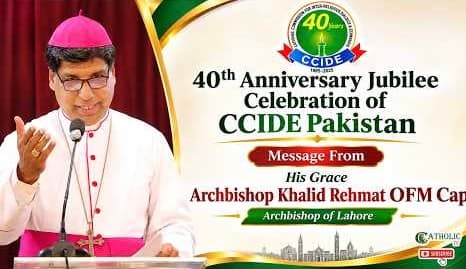
Rev. Fr. Shakeel Gulzar, Director of the Catholic Commission for Interreligious Dialogue and Ecumenism (CCIDE) of the Archdiocese of Karachi, emphasized that Taxila's historical significance transcends religious and cultural boundaries.
“Taxila's historical legacy is not limited to one religion or civilization. It represents a shared human heritage in which different faiths, cultures and traditions have contributed to the development of society. Its association with St Thomas the Apostle is particularly meaningful for Christians in Pakistan, reminding us that the roots of Christianity in this region are connected with the earliest centuries of the Church,” Fr. Gulzarsaid.
He also stressed that preserving such sites could strengthen religious understanding and promote peaceful coexistence.“When we protect Buddhist monasteries, ancient settlements and places associated with the early Christian tradition, we are protecting the history of all humanity. These places teach us that people of different religions lived, travelled, traded and exchanged ideas across cultural boundaries. This heritage should become a source of unity rather than division,” he added.
Fr Gulzar also called for greater investment in archaeological conservation, research and tourism infrastructure. “Pakistan has enormous potential to promote religious and cultural tourism. Taxila can attract Christian pilgrims, Buddhist visitors, international researchers and tourists from around the world. The government, religious communities and civil society should work together to preserve these historical treasures and make them accessible to future generations,” Fr. Gulzar added.
The preservation of Taxila is particularly important amid concerns about environmental exposure, uncontrolled vegetation, industrial expansion, quarrying and illegal excavations, which UNESCO has identified as threats to the site's integrity.
For Pakistan's Christian community, the traditional association of St Thomas with Taxila offers an opportunity to rediscover a deeper connection with the country's ancient history. For Buddhists, it remains an important centre of Gandharacivilization, while historians and archaeologists see it as an exceptional record of Asia's cultural evolution.
Taxila's significance ultimately extends beyond archaeological remains. Its history tells a story of encounters between different civilizations and religious traditions. Protecting this heritage could help Pakistan promote a more inclusive understanding of its past while encouraging peace, mutual respect and intercultural dialogue.
ECCLESIA IN ASIA IS THE ASIANEWSNEWSLETTER DEDICATED TO CHRISTIAN COMMUNITIES IN ASIA. WOULD YOU LIKE TO RECEIVE IT EVERY SUNDAY? TO SUBSCRIBE, CLICK HERE.