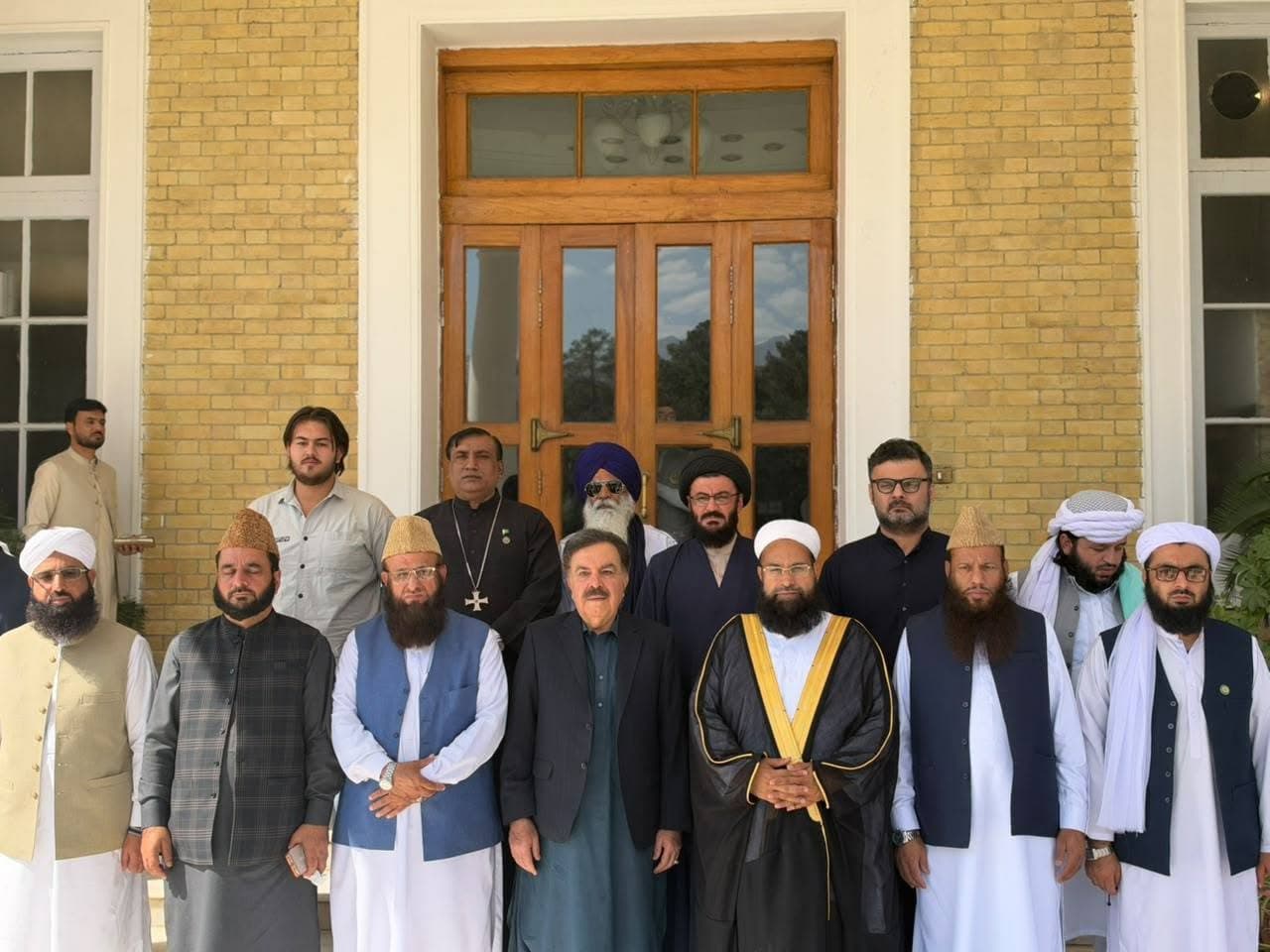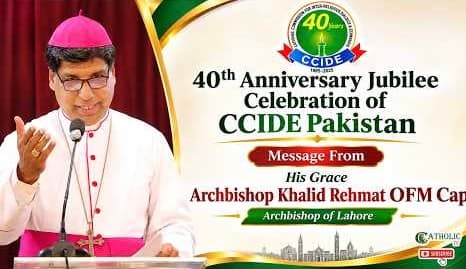
Karachi (AsiaNews) – In Pakistan local Catholic Church leaders and political representatives took part in celebrations marking the 40th anniversary of the Catholic Commission for Interreligious Dialogue and Ecumenism (CCIDE). During the meeting, participants said they want a stronger and more intensive interfaith dialogue, equal status in terms of citizenship, and respect for religious diversity in Pakistan.
As part of a broader series of initiatives marking this milestone, an international conference was held at St. Patrick’s High School, with the participation of Vatican representatives, as well as Cardinal Joseph Coutts, Archbishop Benny Mario Travas, and Bishop Yousuf Sohan, President of Catholic Commission for Interreligious Dialogue and Ecumenism (CCIDE) Pakistan.
Also in attendance were Naveed Anthony, Deputy Speaker of the Sindh Provincial Assembly; representatives of various religions. The Vatican delegation was led by Monsignor Indunil Janakaratne Kodithuwakku Kankanamalage, Secretary of the Dicastery for Interreligious Dialogue, accompanied by Father Markus Solo Kewuta.
The meeting also marked the 60th anniversary of Nostra Aetate, the historic declaration from the Second Vatican Council on the Catholic Church’s relations with non-Christian religions, promulgated by Pope Paul VI on 28 October 1965.
This document laid a new foundation for dialogue, mutual understanding, and cooperation among people of different faiths, a message that remains highly relevant today in the South Asian nation, which has been the scene of sectarian violence and anti-Christian attacks.
Naveed Anthony, the first Catholic, and first non-Muslim, deputy speaker of a provincial assembly in Pakistan, has underscored the importance of political representation and equal opportunities for religious minorities.
"The Church has consistently been promoting the culture of dialogue within Pakistan. Dialogues build bridges and peace builds nations," Anthony said. "I stand before you as the first non-Muslim, Catholic deputy speaker of a provincial assembly of Pakistan. It is about participating, it is about representation and it is about equal opportunities," he added.
His remarks underscore the importance of translating interreligious understanding into meaningful participation in public institutions and equal citizenship.
Cardinal Joseph Coutts reflected on the enduring relevance of Nostra Aetate in a world marked by armed conflict, religious divisions, and humanitarian suffering.
Explaining the historical significance of the declaration, he said that it represented a major shift in the Church’s approach towards other religions, moving away from a history of hostility and isolation in favour of dialogue, mutual respect, and cooperation.
Yet, more than 60 years after its promulgation, humanity continues to struggle with divisions, he noted.
“Today, with so many countries in conflict, some say that it is the start of World War III in slow motion," the cardinal said. “We are not making much progress in looking at each other as creations of one God,” he added, lamenting in particular the ongoing violence in Palestine and the international community’s inability to establish a lasting peace.
The cardinal finally noted that the United Nations was founded after the Second World War as a symbol of peace and international cooperation; however, ongoing conflicts show how much work remains to be done to build a world founded on human dignity and solidarity.
Bishop Yousuf Sohan of Multan, who chairs CCIDE Pakistan, emphasised that interfaith dialogue must go beyond conferences and become an integral part of daily social life, specifically through educational institutions and community engagement.
“Through our institutions and educational systems, we should acknowledge our differences and encourage solidarity," he said, adding that that recognising religious and cultural differences was essential to promoting tolerance and mutual respect, while also requiring the courage to confront discrimination.
The prelate called for a society in which people of all religious backgrounds can live together with dignity, stressing that diversity should be recognised as an opportunity for solidarity rather than a source of division.
Father Markus Solo Kewuta, an Indonesian priest of the Society of the Divine Word serving at the Dicastery for Interreligious Dialogue, explained that the purpose of his visit to Pakistan is to understand the challenges faced by various religious communities and to learn more about the mission of the CCIDE.
“For 20 years now, I have been working in the central office of the Catholic Church, which holds all Muslim brothers and sisters in high regard," he said. "Even if we belong to different religions, at least we share humanity," he added.
“You may look at us as pilgrims of hope from the Catholic Church who are here to work with you to promote peace and love,” the priest added, speaking about the Vatican delegation in Pakistan. “Let us unite our efforts and convictions for peace, which is always possible.”
Mgr Indunil Janakaratne Kodithuwakku Kankanamalage, secretary of the Dicastery for Interreligious Dialogue, reiterated that the Vatican’s work consists of identifying the root causes of human suffering and seeking peaceful solutions.
The prelate described interreligious conferences and dialogue as significant responses to divisions, stressing the need to reawaken human values through compassion, respect, and justice.
"A peaceful heart can build a peaceful world by awakening human values of compassion for giving respect and finding justice," he said.
Finally, the conference provided an opportunity to reflect on the legacy of Nostra Aetate in Pakistan, where religious minorities continue to seek equal rights, social acceptance, and protection against discrimination.
Participants emphasised that dialogue must be accompanied by concrete efforts to ensure justice, dignity, and equal opportunity for all citizens.
The CCIDE, an initiative of the Catholic Bishops' Conference of Pakistan, has been working for 40 years to promote understanding and cooperation among religious communities.
The anniversary served as an occasion to renew this commitment and strengthen cooperation between religious institutions, civil society groups, and government representatives.
The participation of a Vatican delegation further underscored the importance of the Church’s international commitment in favour of local initiatives for peace and interreligious cooperation.
For Pakistan, where religious diversity forms a major part of the social fabric, the message that emerged from the gathering was that peace cannot be achieved through tolerance alone.
To be real, it requires meaningful relationships, equal citizenship, the recognition of differences, and a shared commitment to human dignity.