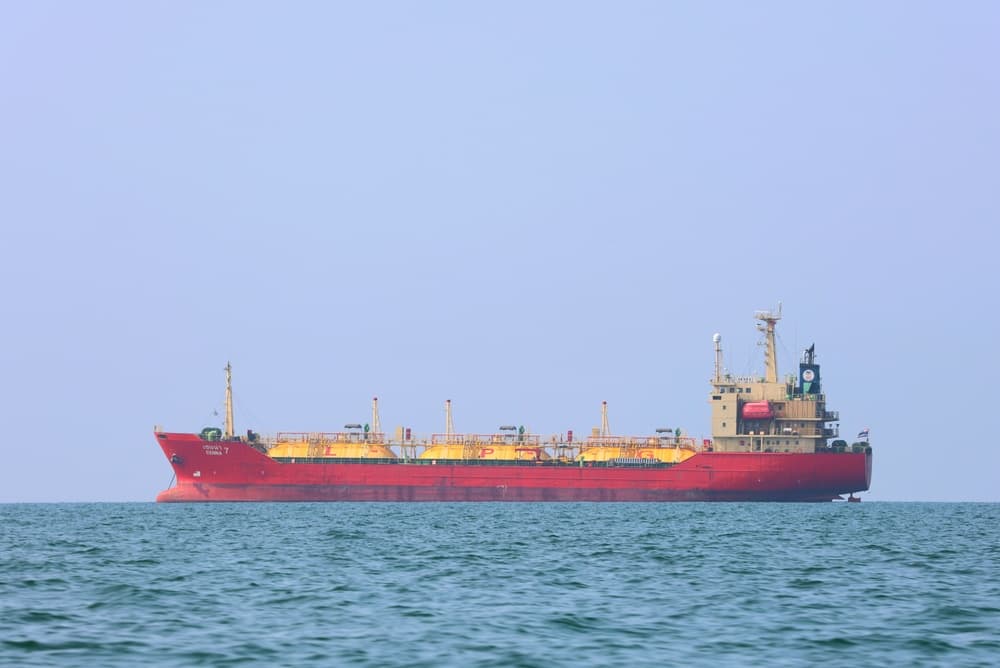
Colombo (AsiaNews) – Around 20 Iranian oil tankers are stranded at sea between Sri Lanka and Malaysia, with some ships dangerously low on supplies of food, drinking water, and fuel.
The Wall Street Journal recently reported the situation, noting that many of the vessels are likely empty and unable to return to Iranian ports due to sanctions and broader maritime restrictions.
Sri Lanka’s reliance on international shipping, US dollar-based finance, and foreign markets leave its ports and private companies increasingly exposed to the reach of US sanctions.
For the South Asian country, the greatest threat may not be the ships themselves, but the secondary sanctions and risks associated with any service provided to them.
Currently, Sri Lanka needs its ports to generate foreign currency and establish it as a competitive regional maritime hub; excessive caution could drive ships and shipping agents to bypass its ports in favour of facilities in India or elsewhere.
According to representatives of Sri Lanka's maritime sector, ships unable to secure local services are already turning to India.
Meanwhile, Sri Lankan authorities have begun sharing information about sanctioned vessels with service providers.
The Ministry of Ports and Civil Aviation has acknowledged the risks of secondary sanctions, while shipping agents have also expressed concern over the inability to provide routine services such as crew changes, food, and fuel.
“Under Article 98 of the United Nations Convention on the Law of the Sea (UNCLOS), coastal states have a duty to render assistance to any person or vessel in distress,” note maritime experts Nimalka Hewawitharana and Schin Mendis speaking to AsiaNews.
“However, since the government considers the vessels to be outside its territorial waters, it is not legally obliged to provide food and water to the stranded Iranian ships, as they are located within the Exclusive Economic Zone but not within the 12-nautical-mile limit of Sri Lanka's territorial waters.”
What is more, “the vessels are not in a life-threatening situation. Therefore, Sri Lanka has no binding legal obligation to provide them with supplies,” the scholars add.
The issue nonetheless raises broader maritime security concerns, as the Iranian vessels gathered near Sri Lanka are part of the disruption affecting the so-called Iranian shadow fleet.
A dozen Iranian oil tankers had previously been spotted near Galle (in the country's Southern Province) before moving into international waters. This situation places Sri Lanka at the centre of a geopolitical standoff, even though it plays no direct role in the US-Iran dispute.
The government thus faces three simultaneous challenges: protecting Sri Lankan companies from sanctions, upholding humanitarian principles regarding the crews, and safeguarding the country's reputation as a reliable maritime hub.
From a foreign policy perspective, the question is whether Colombo can maintain genuine strategic autonomy while avoiding economic retaliation from Washington.
"The answer," experts note, "will depend on whether Colombo establishes a transparent and legally defensible mechanism to handle sanctioned vessels, rather than allowing individual port officials, banks, and suppliers to make decisions based primarily on fear.”
In fact, “The tanker standoff is a warning: in today's global economy, geopolitical neutrality does not automatically guarantee economic immunity.”
According to international law experts Sampath Alwis and Prashanthi Dissanayaka, “UNCLOS does not create a general, unconditional obligation for a coastal state like Sri Lanka to refuel or service every foreign merchant vessel requesting supplies, especially if doing so conflicts with national laws, security interests, or the risk of international sanctions.”
Instead, “a state may take into consideration a genuine maritime safety or humanitarian emergency, including situations involving the safety of the crew's lives, that invokes distinct considerations based on maritime safety and humanitarian principles.”