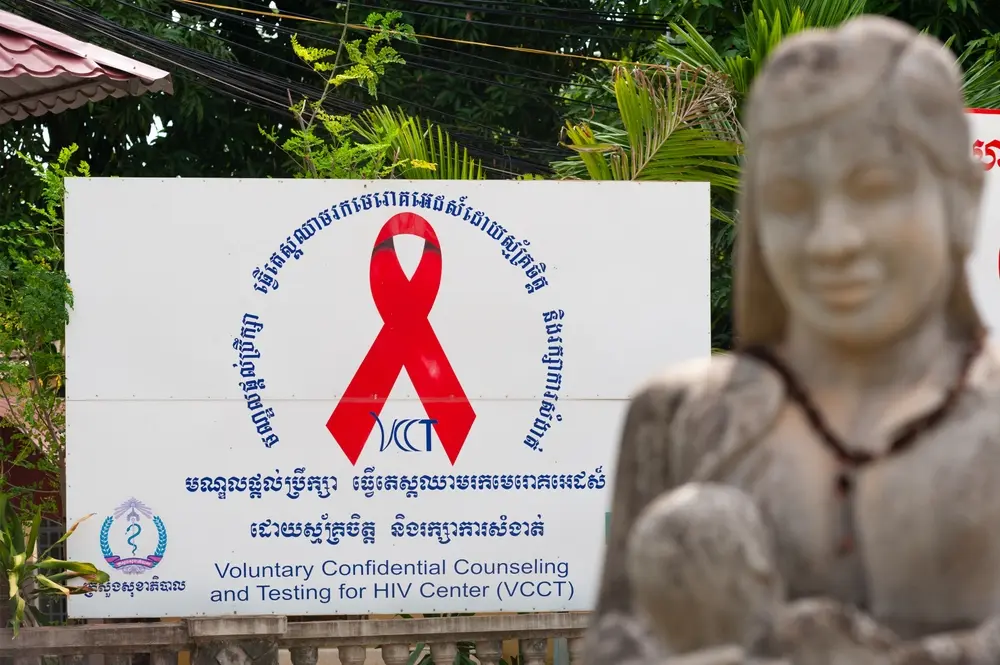
Phnom Penh (AsiaNews) – Cambodia, once one of Southeast Asia's most AIDS-ravaged countries, has transformed itself into a model of reform and compassion, becoming the first country in the region – and one of only a handful in the world – to hit every global UN HIV target. Sometimes even ahead of deadline.
It is now all but certain to hit the final UN target of ending AIDS as a public health threat by 2030 – bringing new infections down to 250 a year or less, from about 25,000 at the mid-1990s peak, in a country of 17.5 million people.
It is also only the seventh country in the world – and the first outside Africa – to hit the UN 95-95-95 benchmark of 95 per cent of people with HIV knowing they have it, are on antiretroviral therapy, and are virally suppressed – meaning they cannot spread it by sex.
“This reflects the collective action and sustained efforts of Cambodia’s multi-sectoral response to HIV and AIDS, which has been in place since the early years of the epidemic,” said Choub Sok Chamreun, executive director of Cambodia's Khmer HIV/AIDS NGO Alliance (KHANA).
"This not the first time Cambodia has demonstrated global leadership in controlling AIDS," he told AsiaNews.
Cambodia has long been ahead of the curve in the AIDS battle, achieving the last UN target, 90-90-90, three years ahead of the 2020 deadline.
The United Nations AIDS agency, UNAIDS, says Cambodia has been so successful because it focused its HIV response on delivering innovative, practical and accessible services, engaging ordinary people and community leaders, and ensuring that all AIDS help is basically free.
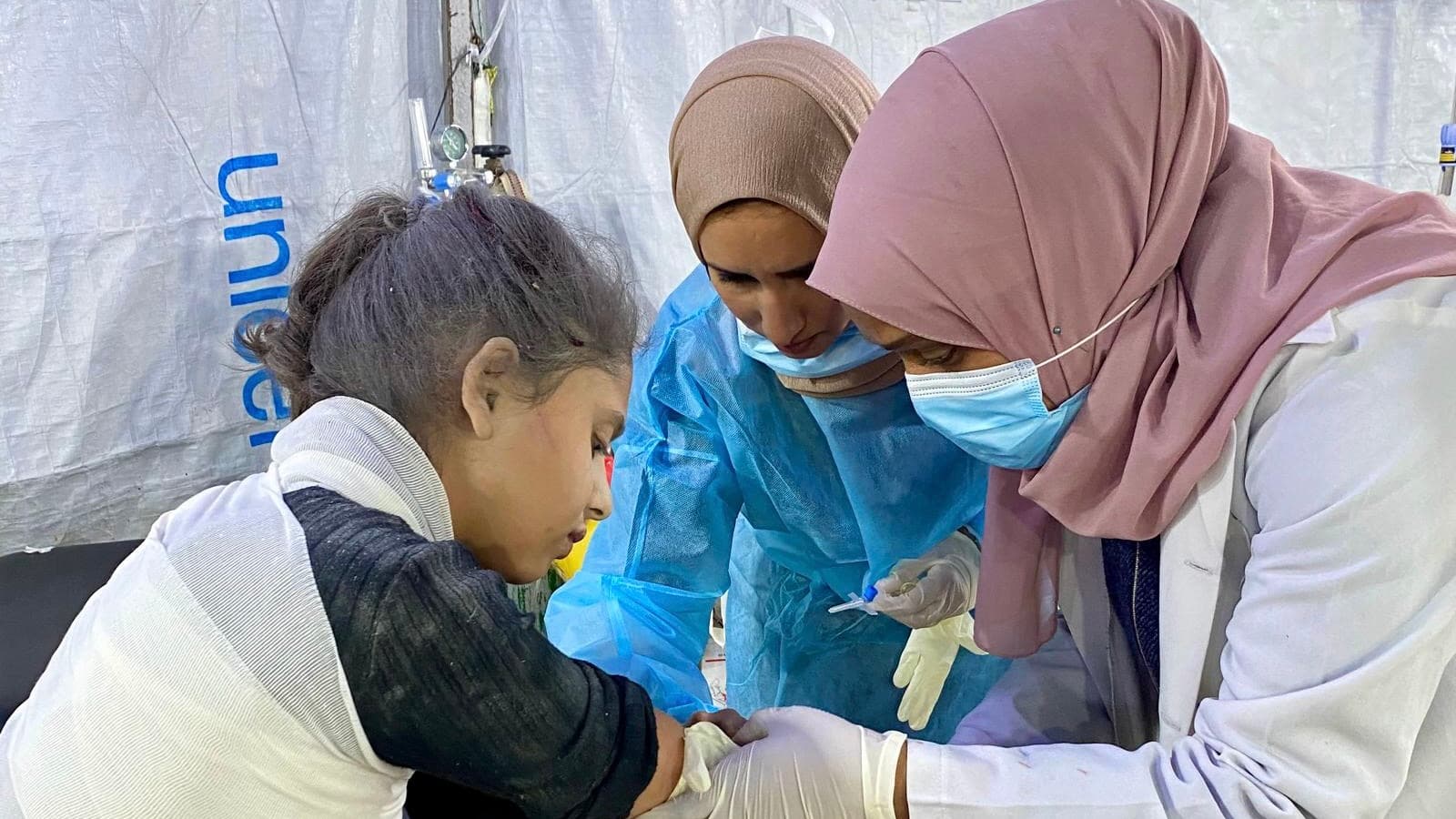
Importantly, the Cambodian government expanded HIV testing and treatment, provided multi-month dispensing of antiretroviral medicines, implemented stronger integration between HIV services and the broader healthcare system, and provided wider access to preventive tools such as long-acting pre-exposure prophylaxis and HIV self-testing, this in a country still rebuilding vital institutions after decades of war.
Most tellingly, the Cambodian government took the stigma out of AIDS by working with village and community chiefs, still a vital part of the fabric of Cambodian society.
The United States and other developed nations have failed to hit the target, due not just to funding but to their failure to deliver equitable care to the most vulnerable and marginalised communities.
In a country where government resources are stretched and which relies heavily on NGOs to help carry out its social programs, the Catholic Church, through Caritas Cambodia and Catholic Relief Services (CRS), has played a key role in Cambodia's AIDS battle.
The Church has helped across the board, from HIV testing to treatment access, nutritional support, and home-based care for the vulnerable, to sheltering thousands of shunned families.
In the early 2000s, the Missions Étrangères de Paris (MEP), the Paris Foreign Missions Society, which provides most of Cambodia's set up the John Paul II Pro-Life Centre, a home for tens of thousands of HIV/AIDS patients, about 80 km Southwest of Phnom Penh.
The facility also served as a refuge for hundreds of families shunned by their own communities.
Cambodia's HIV/AIDS epidemic exploded with the arrival of UN peacekeepers in 1991 to oversee the Paris Peace Accords, ending years of war with the Vietnamese after the Khmer Rouge genocide. With them came thousands of UN workers and NGOS.
By 1997, HIV prevalence among those aged 15–49 peaked at an estimated 3.0 per cent to 3.9 per cent of the population, giving it the highest infection rate in the region. At it its peak in 1995, Cambodia recorded almost 25,000 new HIV infections a year.
About 76,000 of Cambodia's 17.5 million are now living with HIV. But they live, largely, without stigma and prejudice.
Like most of Cambodia's successful social policies, the key has been the traditional village and community structure.
Despite the almost total destruction of Khmer society and the cultural fabric by the Khmer Rouge, community leadership survived.
Critical to the government's HIV/AIDS campaign was educating community leaders – such as village chiefs – and, through them, the community.
“I don't know how I caught it," says Sok Bopha, a 44-year-old Phnom Penh bank worker diagnosed 10 years ago. “But it changed my life and my family.
“Nobody wanted to be near us," she told AsiaNews. “But, slowly, things changed.
“I don't tell people. I don't know what they will think. I am always little scared. But I have a family and community that supports me. I try to help others like me in my community. We never feel alone.”
Cambodia has not just relied on culture and community. In a country where everyone knows everyone's business, it dramatically expanded self-testing.
KHANA'S Chamreun told AsiaNews that it all boils down to an old and deeply held belief: "Leave No One Behind”.
This “places people at the centre of social and economic development," he explained. “It also demonstrates Cambodia’s continued prioritisation of equitable access to health services and its long-term investment in strengthening the national health system.”