Jakarta (AsiaNews) – Caritas Indonesia, together with Caritas teams from four affected dioceses, responded promptly to assist survivors of the 7.7-magnitude earthquake that struck Flores, in the province of East Nusa Tenggara, on 15 August 2026.
The earthquake affected vast areas, killing 103 people and forcing tens of thousands to flee their homes. As of 20 August, figures from the Indonesian National Disaster Management Agency (BNPB) recorded 82,691 displaced people.
As the humanitarian arm of the Indonesian Bishops’ Conference (KWI), Caritas Indonesia is coordinating relief efforts in the Archdiocese of Ende and the dioceses of Maumere, Ruteng and Labuan Bajo. Aid has even reached the remote island of Palue. It takes nearly six hours to reach the island by motorboat.
“Communication infrastructure has been completely destroyed,” Fr M. Adolf Cawa, a native of Palue who currently serves as Superior General of the Brothers of the Sacred Heart (BHk), based in Malang, East Java province, told AsiaNews.
The KWI praises Caritas’s response
Archbishop Antonius Subianto Bunjamin, president of the KWI, praised the prompt response of Caritas Indonesia and called on all members of the Catholic Church to collaborate in a synodal spirit so that humanitarian aid can be provided effectively and equitably.
“I offer my prayers and sympathy to all the victims and survivors. The disaster has destroyed material structures, but we believe it will never destroy our spirit of solidarity and the strength of our faith,” said Archbishop Antonius Subianto Bunjamin.
Bishop Pius Riana Prapdi of the Diocese of Ketapang, West Kalimantan, chairman of the board of trustees of the KWI’s Karina Foundation, reiterated Caritas’ commitment to standing by the survivors, particularly through medical care and psychosocial support.
Caritas Indonesia has sent around 180 kilograms of medicines and emergency medical supplies to the affected areas, along with additional doctors and nurses to provide healthcare. On 19 and 20 August, Caritas medical teams treated 661 patients across seven locations.
Acute respiratory infections (ARIs) were the most common condition, whilst chronic conditions such as high blood pressure, diabetes, high cholesterol and chronic obstructive pulmonary disease (COPD) were frequently found among elderly patients.
The medical teams also treated patients suffering from fractures, wounds, keratitis and diarrhoea, including cases suspected of being linked to contaminated well water. As part of the emergency medical services, pregnant women were also examined.
Psychosocial support for children
In addition to medical services, Caritas Indonesia has prioritised mental health and psychosocial support, particularly for children and adolescents affected by the disaster. A total of 481 people, including 288 children and adolescents, received psychosocial support through activities such as games, singing, drawing, storytelling, psychological first aid and spiritual support.
These activities aim to help survivors, particularly children, cope with the fear, anxiety and emotional distress caused by the earthquake.
Water, food and essential supplies
To address the shortage of drinking water in the affected communities, Caritas Indonesia is preparing 100 water tanks, each with a capacity of 1,200 litres. The tanks are being transported by sea from the KWI National Logistics Centre in Surabaya to Flores. Food and other essential supplies are also being distributed through the Caritas networks operating in the four affected dioceses.
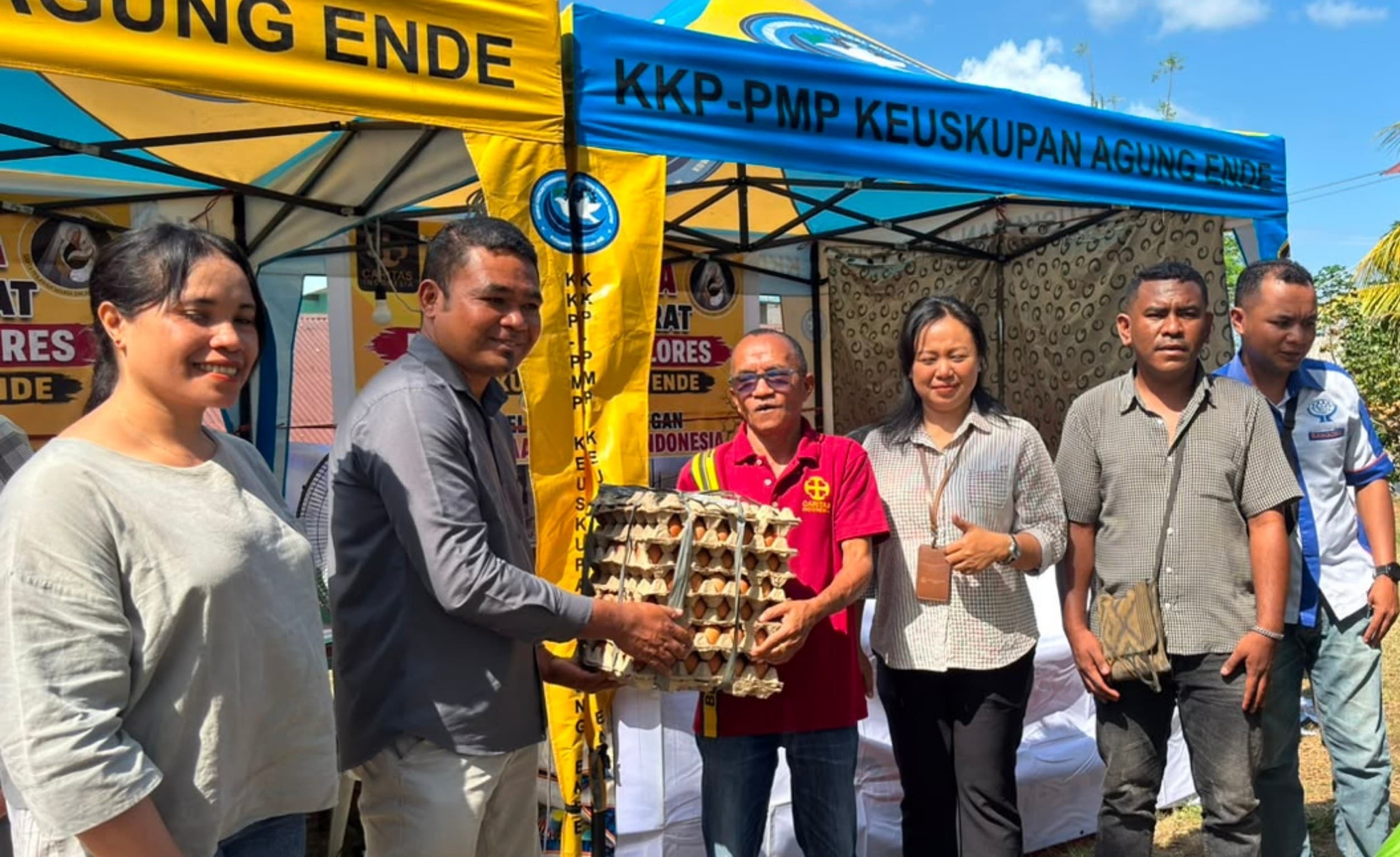
In the Diocese of Maumere, for example, relief supplies have reached the island of Palue, including 2,500 kilograms of rice, 204 trays of eggs and 200 cartons of mineral water.
Meanwhile, in the Archdiocese of Ende and the dioceses of Ruteng and Labuan Bajo, food, hygiene kits, medicines and other essential supplies continue to be distributed in line with the needs identified on the ground.
Thanks to coordination between the dioceses and the support of volunteers, Caritas Indonesia is working to ensure that humanitarian aid is not limited to urban centres, but also reaches remote communities and outlying islands, which are often more difficult to access.
For Caritas, the response to disasters is not merely about meeting people’s immediate physical needs, but also about bringing solidarity, hope and support to communities struggling to recover and rebuild their lives.
Call for medical volunteers
Meanwhile, the Ursuline Alumni Association has launched a public campaign to recruit medical volunteers to support humanitarian efforts in Flores. The association is seeking both general practitioners and specialists willing to travel to the affected areas and provide humanitarian assistance to earthquake survivors.
The initiative is expected to strengthen the medical response and help meet the ongoing healthcare needs of the communities affected by the disaster.