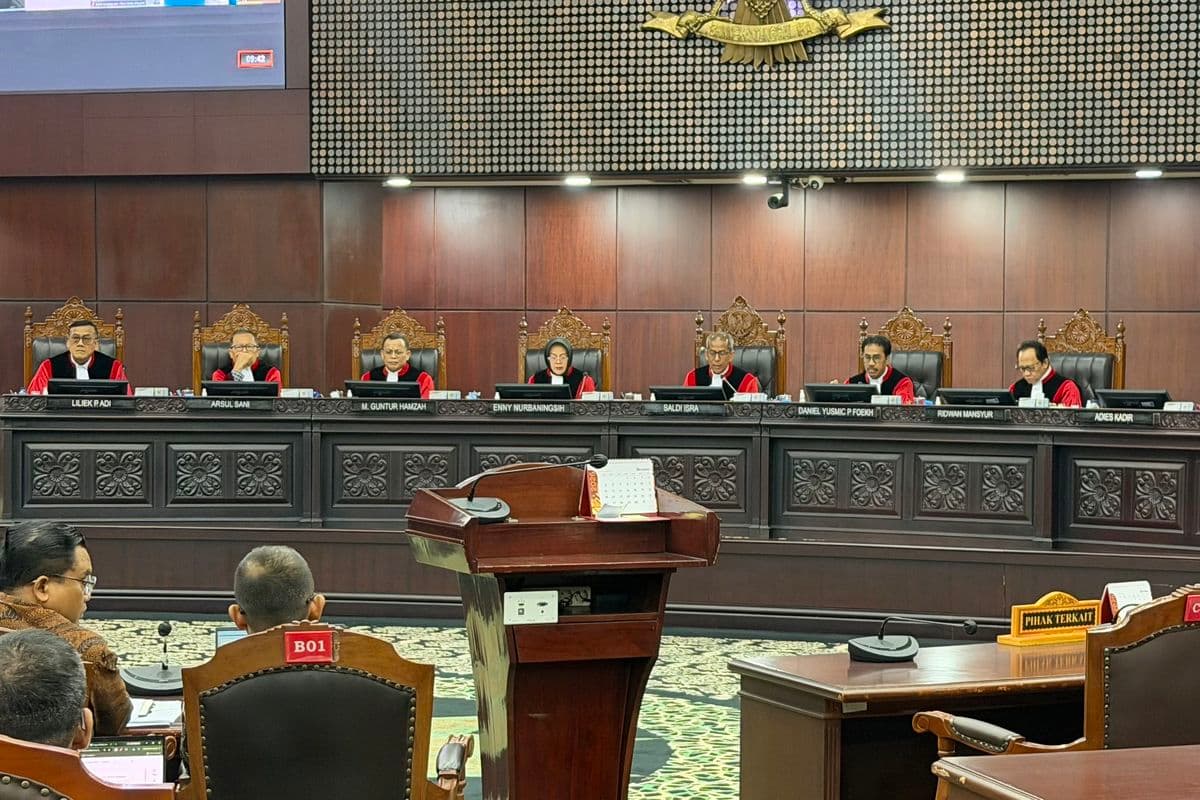
Jakarta (AsiaNews) – On 17 August, coinciding with the 81st anniversary of Indonesia’s independence, the Indonesian Bishops’ Conference (KWI) published its 2026 Pastoral Note. The document bears the signatures of Bishop Antonius Subianto Bunjamin of Bandung and Bishop Adrianus Sunarko of Palkanpinang, respectively president and secretary-general of the KWI.
The 81-page document is entitled “The Path of Hope Amidst the Nation’s Dynamics: A Synodal Church to Uphold Public Ethics and Strengthen Human Solidarity in Indonesia” and is divided into three main sections.
The first expresses gratitude for God’s work in the life of the nation and the Indonesian Church. The second examines the multidimensional crises currently affecting Indonesia. The third presents the Church’s response: to walk together as an integral part of the nation to nurture hope, strengthen civic virtue and promote human solidarity. Below we present some key messages.
Interconnected crises
Indonesia is a great nation blessed with abundant natural resources, cultural richness and extraordinary diversity. Yet, behind these strengths, the country faces interlinked social, economic, political, technological, ecological and moral crises.
The problem is not simply unequal economic growth or the decline of democracy. At a deeper level, what is at stake is human dignity and the common good.
Vulnerable groups bear the heaviest burden. Young people struggle with mental health issues and alienation in the digital world. Women continue to suffer discrimination and violence. Indigenous peoples, people with disabilities, the elderly, children and the poor still do not enjoy adequate protection.
In such circumstances, the Catholic Church cannot remain a bystander.
Becoming a Church that walks together
The Second Vatican Council emphasises that the Church is called to be present in the world and to share in the joys, hopes, sorrows and anxieties of humanity.
The Christian faith, therefore, cannot remain confined to the altar. It must find concrete expression in social life. This is the heart of being a synodal Church: a Church that walks together.
Synodality is founded on communion, participation and mission. The Church must create more space for the laity, women, young people and those whose voices have often gone unheard.
At the same time, the Church is called to walk alongside wider society, beyond religious and cultural boundaries, promoting human well-being and the integrity of creation.
Standing with the vulnerable
Standing with the poor and the marginalised is not an optional addition to the Church’s mission. It is part of its very identity. Charitable work must therefore go hand in hand with the promotion of rights and the defence of the most vulnerable. The Church must accompany farmers, fishermen, workers, migrant workers, women, poor families, indigenous communities and other vulnerable groups.
Catholic educational and healthcare institutions must likewise reaffirm their identity as works of mission, rather than merely as institutions competing according to market logic.
Catholic schools, universities, clinics and hospitals must remain ‘a home for all’, especially for the poor and the vulnerable.
Humanising technology
The Pastoral Note also addresses the rapid development of digital technology and artificial intelligence. AI creates significant opportunities, but it also entails risks: disinformation, deepfakes, hate speech, cyberbullying, online sexual exploitation, algorithmic manipulation and threats to privacy.
The Church therefore calls for digital literacy that goes beyond technical proficiency. People must learn to evaluate information, identify disinformation, understand how algorithms work and use technology responsibly.
Technology must serve humanity, not replace our humanity. In education, for example, AI should support learning without undermining the human capacity to think, reflect and make responsible decisions.
In a digital world that can foster loneliness and alienation, the Church is called to become a place of authentic human encounter.
Hearing the Earth’s Cry
The human crisis cannot be separated from the ecological crisis. Deforestation, mining and intensive plantations, agrarian conflicts, pollution, poor waste management and climate change increasingly threaten human life. Their harshest consequences are often borne by indigenous communities, farmers, fishermen, women, children and the poor.
Therefore, the cry of the Earth cannot be separated from the cry of the poor. Ecological conversion must be reflected in changes to daily life: reducing food and plastic waste, conserving energy, protecting water resources, planting trees and developing more responsible consumption patterns.
However, individual action alone is not enough. The Church must also defend the rights of indigenous peoples, support communities affected by land conflicts, critically examine development projects that harm the environment, and advocate for fairer and more sustainable policies.
Church institutions themselves must set an example. Environmental commitment should be reflected in the management of parishes, schools, universities, seminaries, religious houses, hospitals and even in investment management.
Non-partisan, but not apolitical
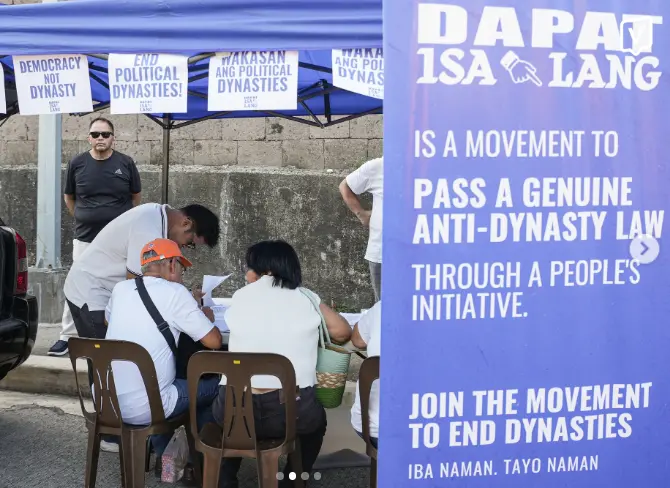
Another major concern is the state of democracy. The centralisation of power, the weakening of the political opposition, the shrinking of space for civil society and pressure on critical voices can divert democracy from its true purpose.
Democracy cannot be reduced to elections. It requires citizen participation, civil liberties, the rule of law, transparency and leaders who prioritise the welfare of the people over narrow partisan interests.
The Church’s position on this matter is clear: it must not be partisan, but neither can it be apolitical. Lay Catholics are called to participate in politics, government and the formulation of public policy. Bishops, priests and religious, on the other hand, have a different responsibility: to form consciences, to educate in the ethics of politics, to accompany the faithful and to speak out when human dignity and the common good are threatened.
From a Christian perspective, politics does not consist primarily in seizing power. Politics is service. The Church must therefore strengthen political education, the dissemination of the Church’s Social Teaching and civic formation, whilst at the same time preparing young Catholics with integrity, competence, spirituality and moral courage to participate in public life.
A return to fundamental values
Behind these various crises lies an even deeper problem: a crisis of values.
The doctrine of Pancasila embodies the noble values upon which Indonesians have sought to build their shared life. The Church sees these values as capable of harmonising with the values of the Gospel in the common quest for a just, humane, peaceful and inclusive society.
Christian faith and commitment to the nation are therefore not contradictory. The formation of values begins in the family. It is there that children first learn that life is a gift, that others are their brothers and sisters, and that differences must be respected.
Catholic schools continue this formation by educating not only academically capable pupils, but also open-minded, compassionate individuals who are sensitive to injustice and capable of living alongside those of different religions and cultures.
Nor should the Eucharist end when the faithful leave the church building. The celebration of faith must bear fruit in the form of fraternity, peace, solidarity and commitment to those who suffer.
Becoming bridge-builders
Ultimately, synodality is not merely a method for holding meetings, conducting consultations or governing the Church. Synodality requires a conversion in the way the Church is present in the world.
The Church is called to build bridges: between humanity and God, between people, between different social and religious communities, and between humanity and creation as a whole.
It is not enough simply to listen to those who are vulnerable, wounded or marginalised. Their voices must also help to shape the Church’s priorities and the way in which it carries out its mission.
Indonesia’s multidimensional crises can easily breed pessimism. Yet it is precisely in such circumstances that the Church is called to become a community of hope.
Christian hope is not empty optimism. It takes concrete form when we walk alongside those who suffer, defend those whose voices are not heard, care for creation, pursue justice and restore broken relationships.
Ultimately, amidst the nation’s crises, the Catholic Church in Indonesia is called to uphold the dignity of the human person, build bridges between civilisations, safeguard our common home and be a community that continues to nurture hope.
ECCLESIA IN ASIA IS THE ASIANEWS NEWSLETTER DEDICATED TO CHRISTIAN COMMUNITIES IN ASIA. WOULD YOU LIKE TO RECEIVE IT EVERY SUNDAY? TO SUBSCRIBE, CLICK HERE.