Kuching (AsiaNews) - The indigenous Catholic communities of Borneo are currently celebrating the annual harvest festivals of Kaamatan and Gawai, which are among the most important cultural and spiritual events in East Malaysia. To mark the occasion, some parishes have already begun organising themed masses, cultural performances and community gatherings, with celebrations set to continue until at least mid-June. In Sabah, the Kadazandusun, Murut and Rungus communities will celebrate Kaamatan on 30 and 31 May, whilst in neighbouring Sarawak, the Dayak communities – which include the Iban, Bidayuh, Orang Ulu and other indigenous groups – will celebrate the Gawai Dayak harvest festivals on 1 and 2 June.
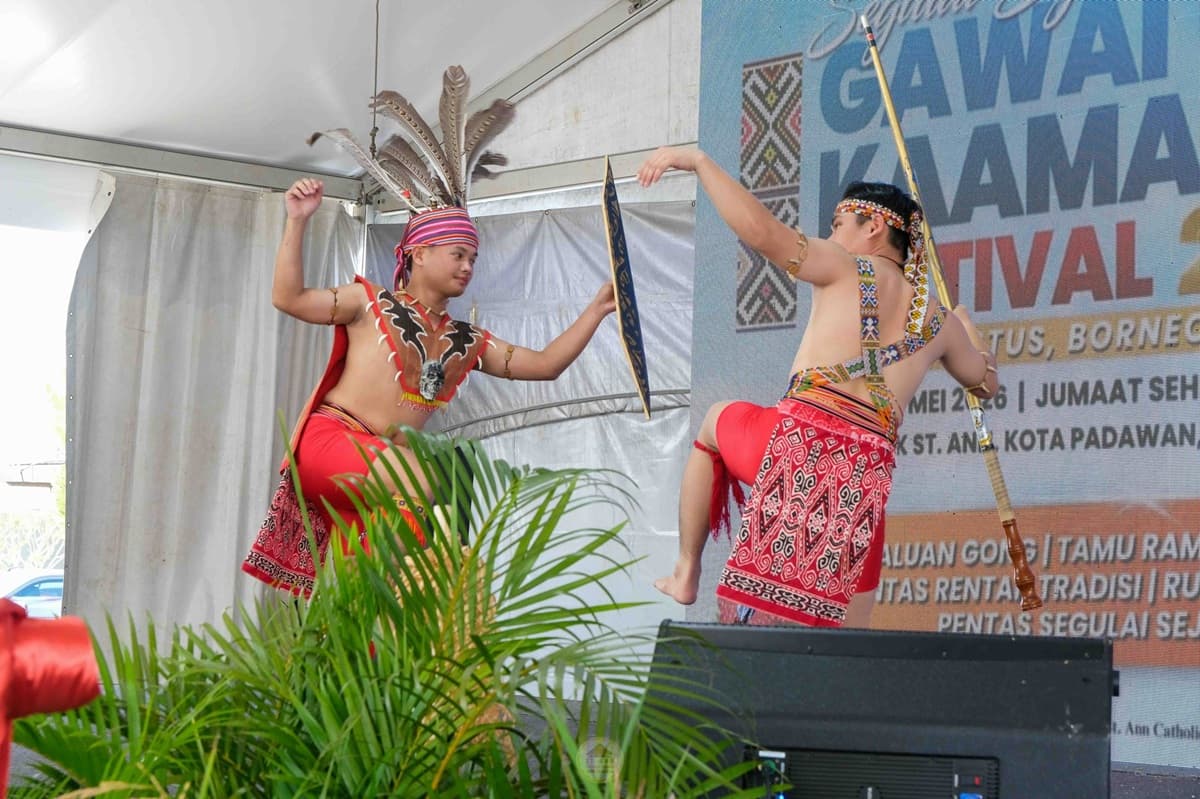
Although rooted in ancient agrarian traditions, today these festivals are deeply intertwined with Christian worship and identity, particularly among the indigenous communities of Malaysian Borneo, who are largely Catholic and Protestant. Across the region of Sabah and Sarawak, churches will hold thanksgiving masses, cultural gatherings and parish festivals, with worshippers arriving in colourful traditional dress adorned with beads, silver ornaments, woven fabrics and feathered headdresses.
In many parishes, liturgical dances inspired by traditional movements accompany the offertory processions, whilst traditional musical instruments such as the sapeh, gongs and drums feature prominently during the celebrations. Although Kaamatan and Gawai officially fall between late May and early June, celebrations in many churches and indigenous communities had already begun over the preceding two weekends, with harvest-themed masses, cultural performances and community gatherings.
Traditionally, many indigenous communities in Borneo lived in longhouses, communal dwellings typical of the island where entire families shared a single roof, in a way of life centred on community and cooperation. Although many young Dayak and Kadazandusun people now live and work in cities, the harvest festivals continue to draw them back home, to their ancestral villages and their characteristically long houses.
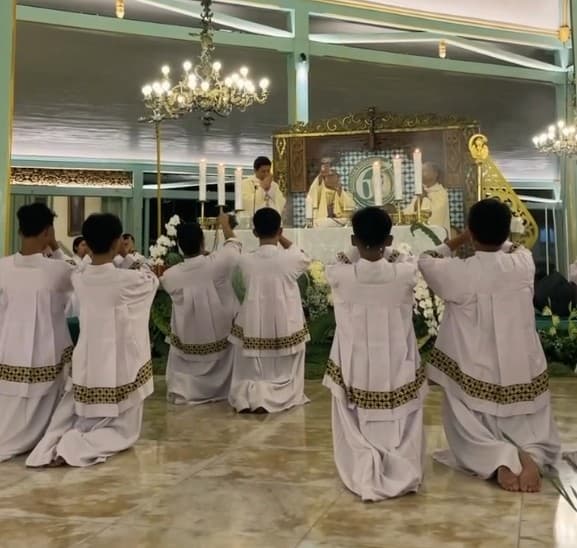
One parish in Sarawak that has already immersed itself in the festive atmosphere is St Anne’s Church in Kota Padawan, about 16 km south of the state capital, Kuching, where an early celebration of Gawai-Kaamatan was held. The parish grounds came alive with traditional music, liturgical dance performances, ethnic songs and cultural displays presented by indigenous Catholic communities from across Sabah and Sarawak.
The celebrations began with a Mass of thanksgiving attended by parishioners dressed in traditional costumes representing various ethnic groups. The vibrant display of Dayak and Kadazandusun culture transformed the church grounds into a mosaic of colours and identities, reflecting the diversity of the indigenous peoples of eastern Malaysia.
During the service, the parish priests reminded the faithful that Gawai and Kaamatan are not merely cultural festivals, but also occasions to give thanks to God for the blessings received throughout the year. Many indigenous Catholics today see these festivals as examples of Christian inculturation, in which traditional customs, music and community values are expressed through the lens of faith. And although some ancient rituals have faded over time, the spirit of gratitude, brotherhood and homecoming remains central to both festivals.
In Sabah and Sarawak, meanwhile, preparations continue in villages, longhouses and parishes, as families gather for what many describe as something that goes beyond a simple celebration: a reaffirmation of faith, culture and a sense of belonging. In East Malaysia, Catholics make up a significant proportion of the Christian population. Sarawak has around 440–500,000 Catholics. Sabah has between 240,000 and 250,000.