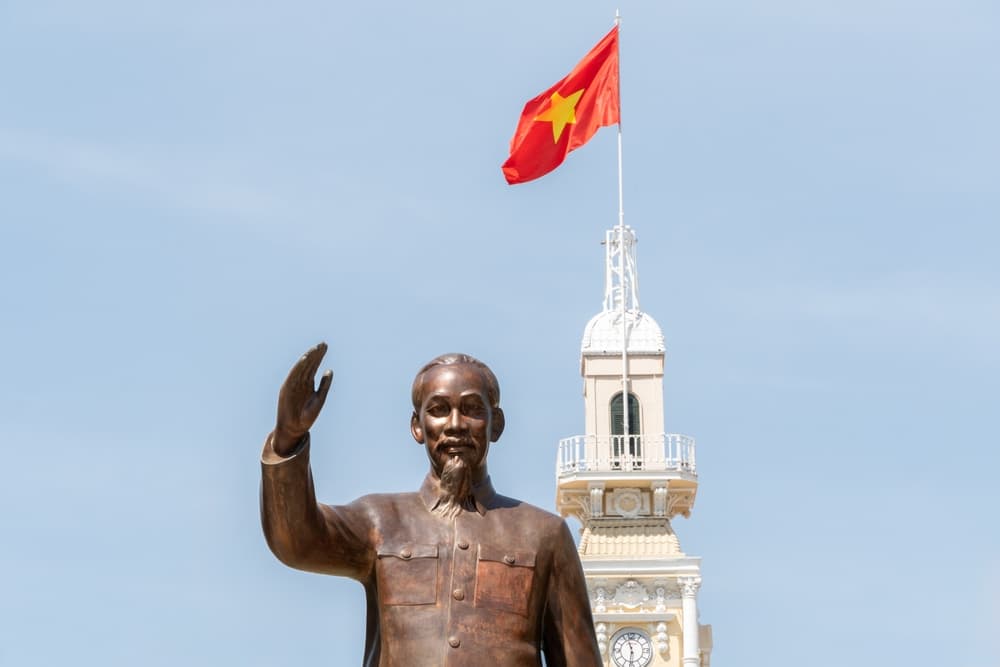
Hanoi (AsiaNews) – In Vietnam, history books dedicated to revolutionary figures will face stricter controls after the National Assembly approved an amendment to the publishing law on 24 August, introducing three tiers of oversight for publications deemed sensitive, specifically those dealing with the history of the communist revolution and the leaders of the party and state.
The new legislation will come into effect in 2027, tightening rules in the wake of the recent publication of a book in Vietnamese titled Stories with Thanh: A New Account of Light (Chuyện với Thanh – Lời kể mới về ánh sáng).
Written by businessman and mathematician Nguyễn Thành Nam, a former CEO of the tech giant FPT and a lecturer on Ho Chi Minh Thought at VinUniversity in Hanoi, the book focused on Vietnam's history and the life of Ho Chi Minh to new generations.
According to the Asia Sentinel newsletter on Substack, the book was initially met with praise and acclaim from the official press of the Communist Party of Vietnam (CPV) upon its release in April.
However, the situation changed within a few weeks. Critics on social media alleged that the book distorts history and shows disrespect to the “Father of the Nation”. Things went rapidly from bad to worse thereafter.
Articles that had celebrated the book's publication were removed. In July, the author and several executives from the publishing house that released the book were charged under Article 117 of the Penal Code, which penalises the production, possession, and dissemination of materials deemed to be against the state.
The publishing house was fined 100 million dong, around US$ 3,900, and suspended for two months. Dozens of media outlets faced sanctions for advertising or reviewing the book.
The author, Nguyễn Thành Nam, is neither a dissident nor an opponent of the regime, but a figure with strong ties to the Vietnamese establishment. In the past, he had received awards for his efforts in studying and disseminating the thoughts of Ho Chi Minh.
According to Asia Sentinel, he had invested around a billion dong (just under US$ 40,000) in the publication of the book, which continues to circulate online, bypassing censorship, and can be found in used books markets.
The book presents the story of Ho Chi Minh through a dialogue between a teacher, whose character partly reflects Nam’s own personal history, and a Gen Z student with little interest in history.
With such an approach, the author sought to make the founder of the CPV more accessible to young people, presenting him not merely as the icon celebrated by official propaganda, but as a historical figure with his own complex and multifaceted nature.
This is where the problem likely arose. Nam did not simply reiterate the official biography; instead, he drew upon different sources and interpretations, including a biography published in 2000 by American historian William Duiker, which Nam himself had translated into Vietnamese.
Furthermore, the book addressed aspects often absent from official narratives, such as land reforms, the persecution of intellectuals and writers in the 1950s, and the re-education camps for former South Vietnamese officials.
The text also referred to the various names Ho Chi Minh used throughout his life, rather than just the moniker of “Uncle Ho”.
South Vietnamese leaders are not portrayed merely as tools of foreign powers, but as politicians with their own visions for the country and its history.
Additionally, the volume cites the role US aid to the Viet Minh during the war against Japan and the economic development of the south prior to reunification, elements that Hanoi had never historically acknowledged.
However, according to the formal charges, the book “distorted the history of the revolution and the political lines and policies of the party and the state,”" and insulted Ho Chi Minh, General Võ Nguyên Giáp, and other leaders.
Nam subsequently admitted that parts of the book contained false information, expressing regret and apologising to readers.
Human Rights Watch (HRW) called on Vietnam to drop the charges and release the five people arrested in connection with the case.
The Vietnamese government rejected the HRW’s criticism. On 23 July, Foreign Ministry spokesperson Phạm Thu Hằng dismissed Human Rights Watch's allegations as “not worthy commenting on.”
The CPV’s heroes must be praised solely in the manner prescribed by official propaganda.