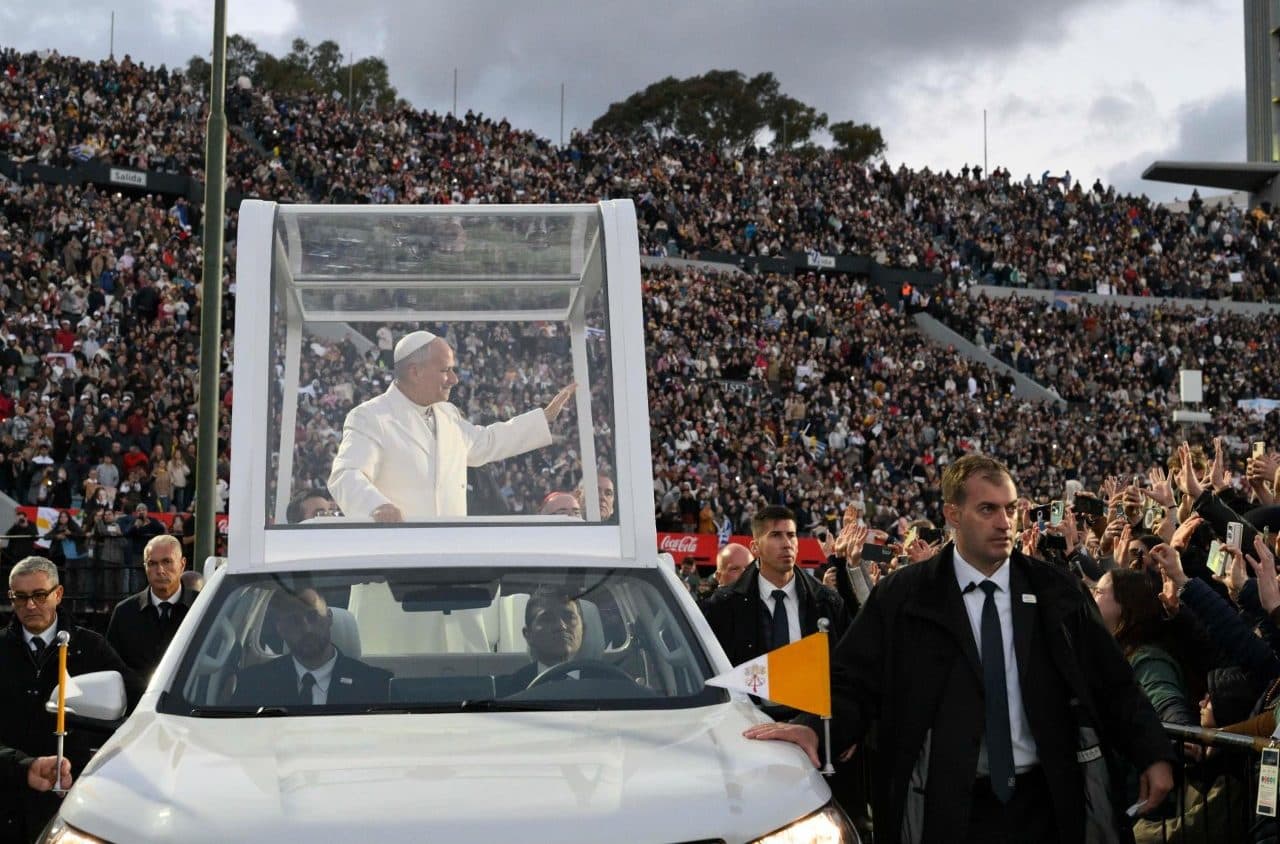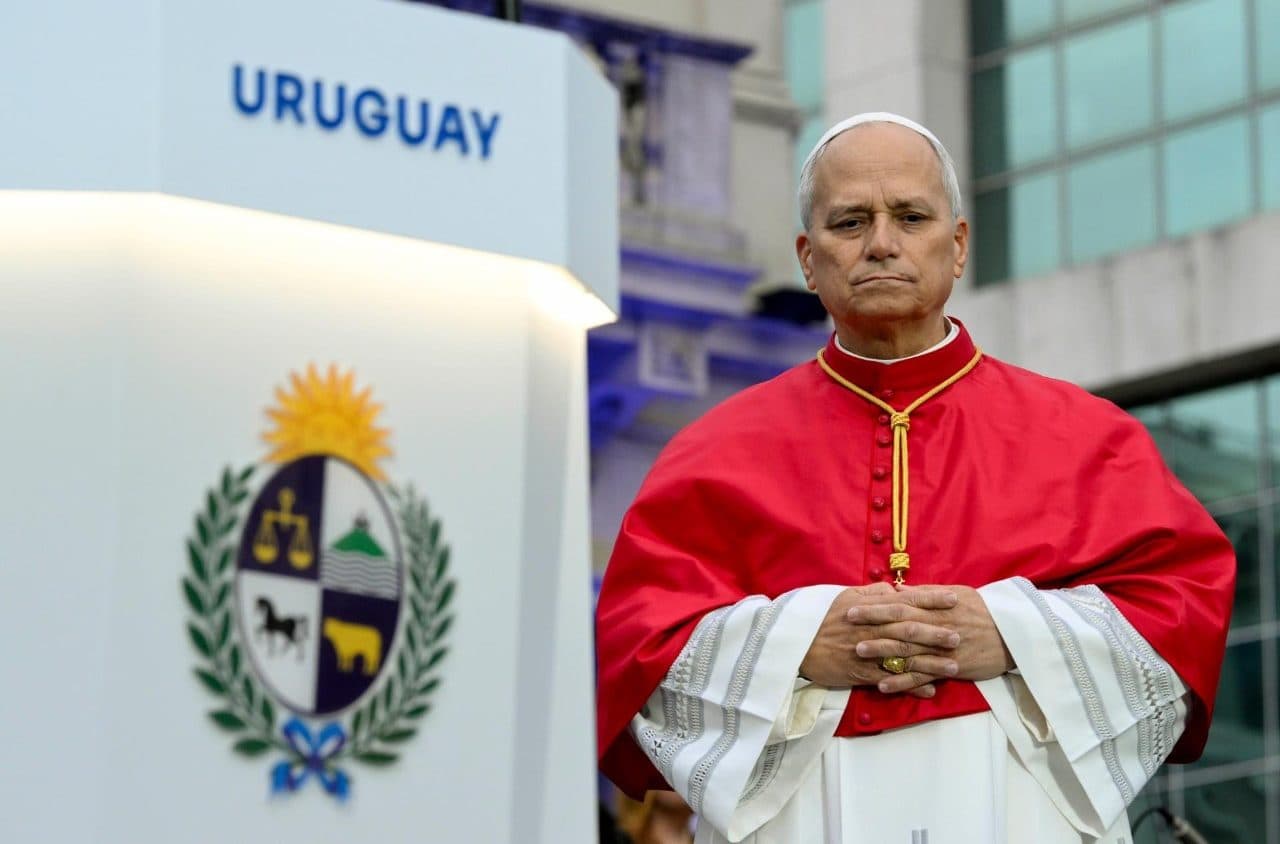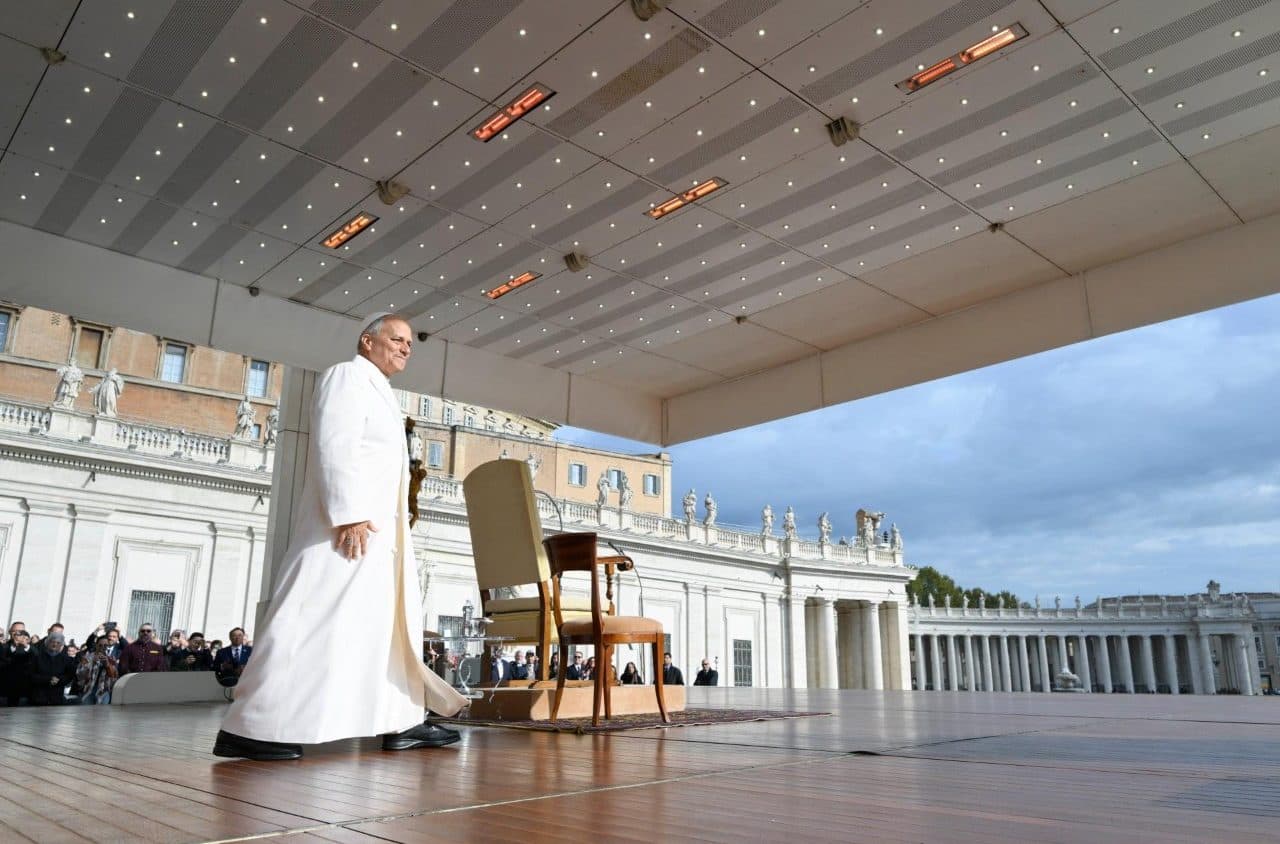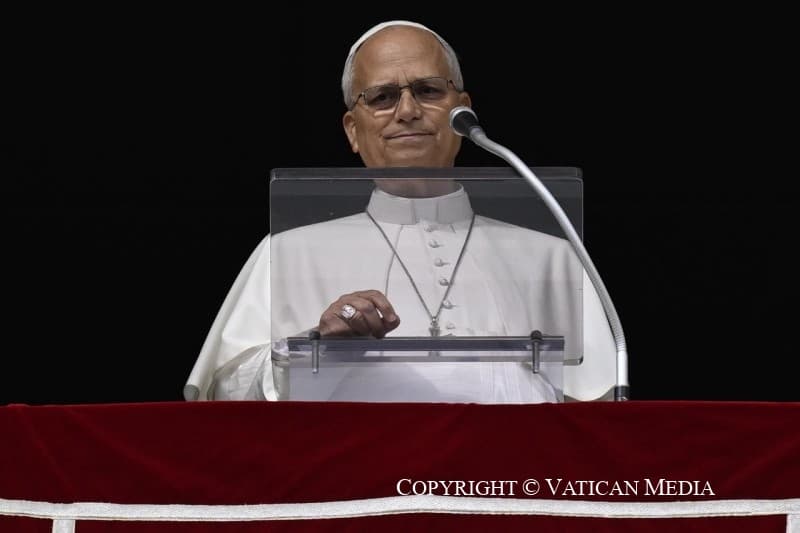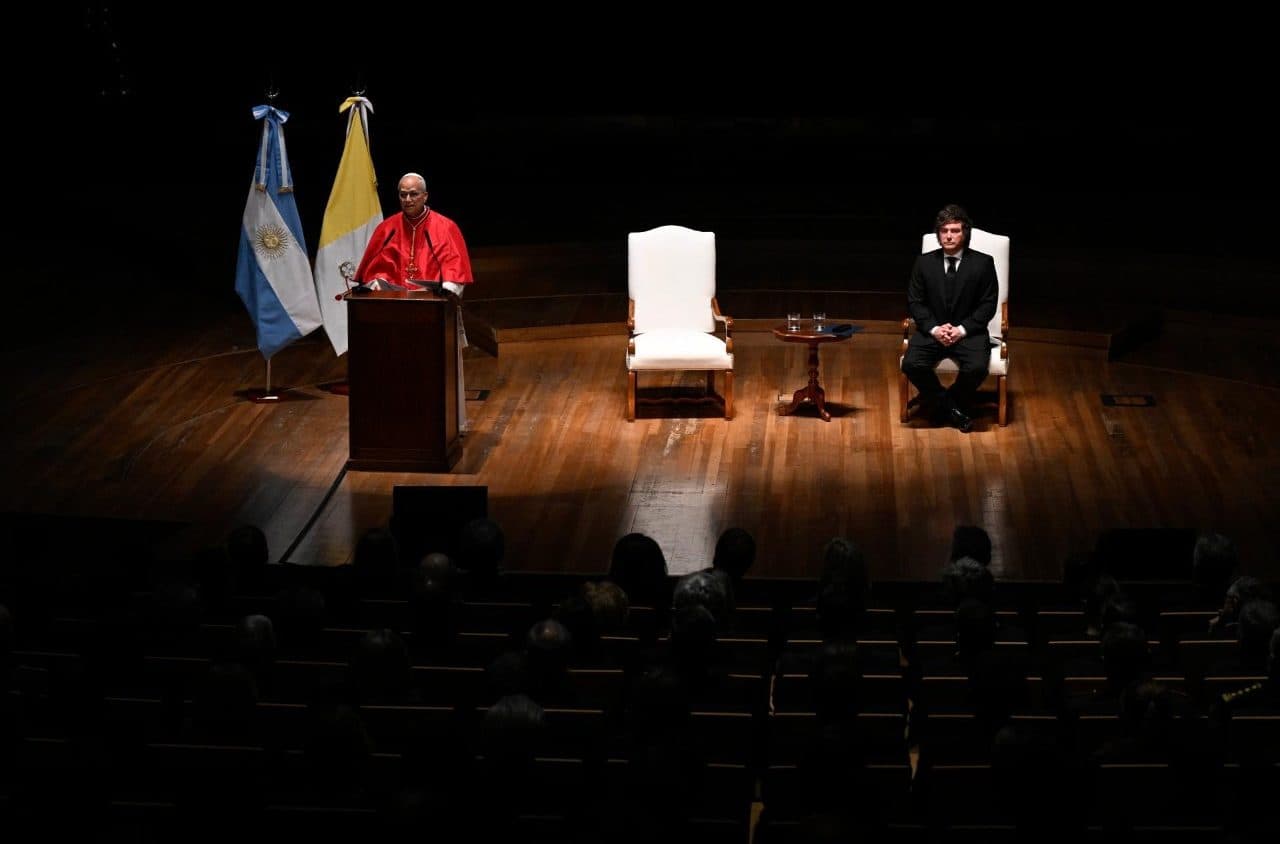
Buenos Aires (AsiaNews) – Following his visit to Uruguay, Pope Leo XIV, arrived in Buenos Aires, Argentina, on the second leg of his apostolic journey to Latin America (6-17 November 2026), which will be followed by a visit to "his" Peru, where he once served as a bishop.
Argentina is the birthplace of his predecessor, Pope Francis, who served as Primate of Argentina and as archbishop of the capital, the country’s most populous city, located on the western bank of the Río de la Plata, until his election to the See of Peter on 13 March 2013.
After he was elected pope, José Mario Bergoglio (1936–2025) never returned to the land where he spent the greater part of his life. The last papal visit to Argentina took place 39 years ago.
Yesterday, Leo XIV delivered his first address in Buenos Aires at the Palacio Libertad. The audience included President Javier Milei – who had previously met the pope at the Vatican’s Apostolic Palace on 7 June 2025 – along with various government officials and members of the diplomatic corps. The Argentinian leader described his compatriot, Bergoglio, as "undoubtedly the most important Argentine in history”
Leo’s address was political in nature, touching upon several issues that intersect with Argentina’s social and public life, including both the country’s potential and its vulnerabilities.
This morning, the pontiff visited staff and residents at the Pequeño Cottolengo Argentino Don Orione, a long-established care and support facility for people with disabilities located in Claypole, south of the capital.
Founded in 1935 by Saint Luigi Orione (1872–1940), the facility is known as the “city of charity”, spanning some 50 hectares. It now houses a relic from the founder, his heart.
The site has become a beacon of prayer and pilgrimage, drawing thousands of the faithful each year who come to entrust their hopes and intentions, or to offer thanks.
This visit was followed by Holy Mass at the Monumento de los Españoles (Monument to the Spaniards) in Buenos Aires.
Remembering Pope Francis
Pope Leo XIV introduced himself to the authorities as a “Pastor.”
For him, this historic visit is “personally meaningful”, as he remembered “the voice of an Argentinian Pope, who treasured, in his memories and in his heart, the places, the people and the faith that he received here.”
Speaking about his predecessor, Leo added that in this journey he was “retracing his steps”. The Argentine pontiff in fact began his journey in his homeland that “would later be joined to that of the entire Church.”
Democracy, family, and work
Praising the Argentine people for their capacity to “open their doors” and to “rebound and move forward,” Leo reminded them that “democracy”, too, is a legacy from their history that must be safeguarded.
It can be strengthened, he noted, “through willingness to listen, through careful use of words, through the patient search for agreement”. For those who hold public office, this means a “particularly demanding” task.
In fact, “Authority attains its highest meaning when it is exercised as service”, always directed towards the “good of the entire community,” of which the family is the “basic unit” and extending to the “circumstances of everyday life.”
Hence, Leo stressed the great value of “prudence” and of the awareness of the “limits of the power” that has been entrusted.
Likewise, “The economy must be at the service of the person, and not the person at the service of the economy.”
Speaking about work, a fundamental condition for “earn a living”, Leo noted that, “A nation must seriously ask itself where it has failed when its young people have to leave their homeland in order to make their dreams come true.”
He called for ensuring the conditions to live “freely” in Argentina, starting with education, training, universities, and research.
Recognising the dignity of those yet to be born
Leo XIV also spoke about the “place” held in society by those “not yet born”.
“Before asking ourselves what kind of world we will leave our children, we must first recognize their dignity.”
“Our responsibility toward future generations begins with welcoming life from its very first moments and safeguarding it until its natural end,” he explained.
“This responsibility toward our fellow men and women also extends to the care of the earth,” he said.
Pointing to the “extraordinary natural wealth” that Argentina has, he called for a “truly human ecology” to “combine care for creation with care for people,” without losing sight of the “well-being of communities”.
In his address to the authorities, Leo also spoke of a world in which “rapid technological advances” raise “far-reaching questions,” especially in relation to AI.
In light of this, “Technological development requires an ethical consciousness that is equal to its challenges,” he said.
"Increasing opportunities for encounter and collaboration”
Speaking about Argentina’s future, Leo emphasised how closely it is linked to “the peoples with which it shares this continent.”
He called for greater “opportunities for encounter and collaboration,” which “is one way of jointly assuming responsibilities that no country can face alone.”
Various peoples need to cooperate “in the face of serious threats” and take common action among and within countries against “arms and drug trafficking together with corruption”, which “undermine social cohesion, fuel violence and divert resources necessary for the common good.”
This shared commitment also includes “service to peace.” Indeed, “The legitimate interests of each nation must be defended by means of dialogue, respect for the law, and a constant effort to reach agreement,” he explained.
“South America has been able, at troubled times in its history, to find processes of negotiation and understanding,” Leo said. Hence, “Argentina is called to preserve this readiness to engage in dialogue and to help ensure that it continues to bear fruit”.