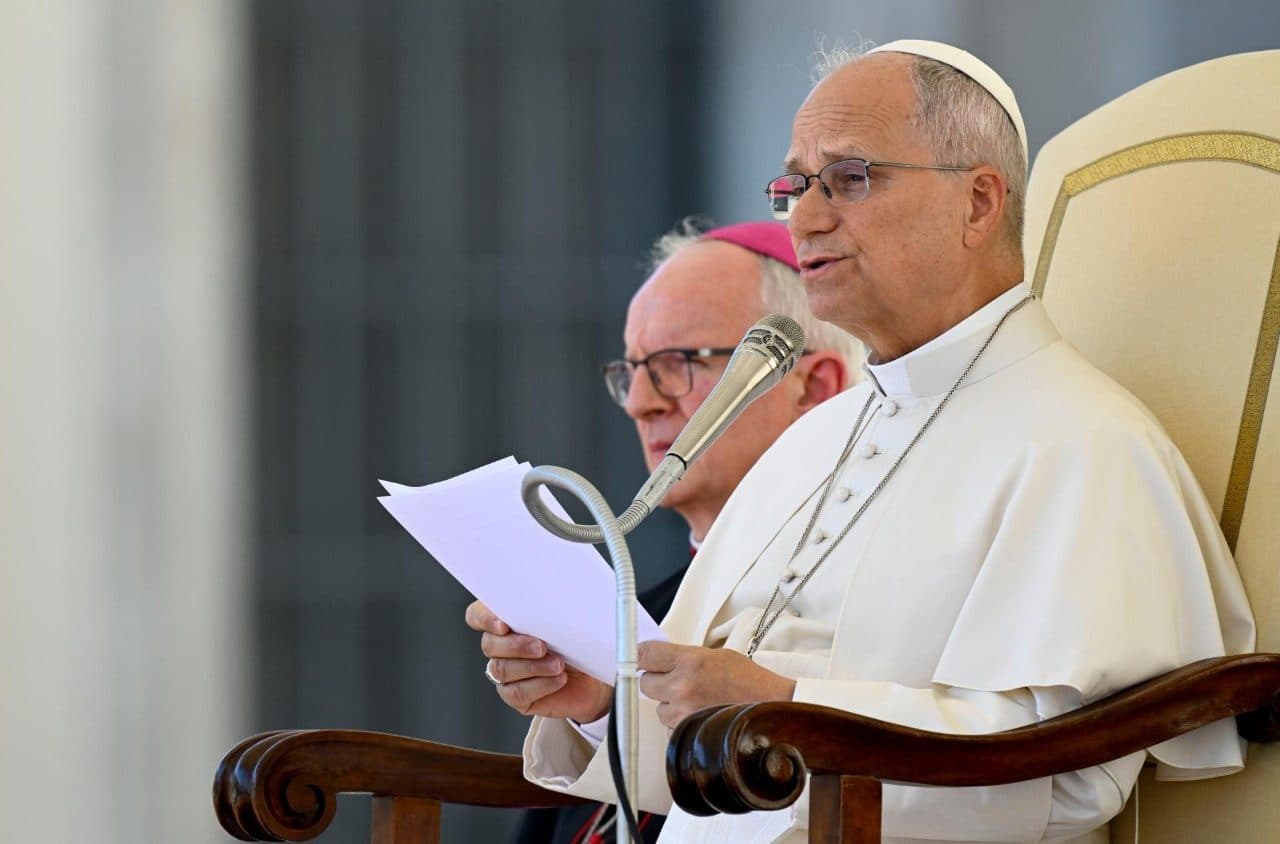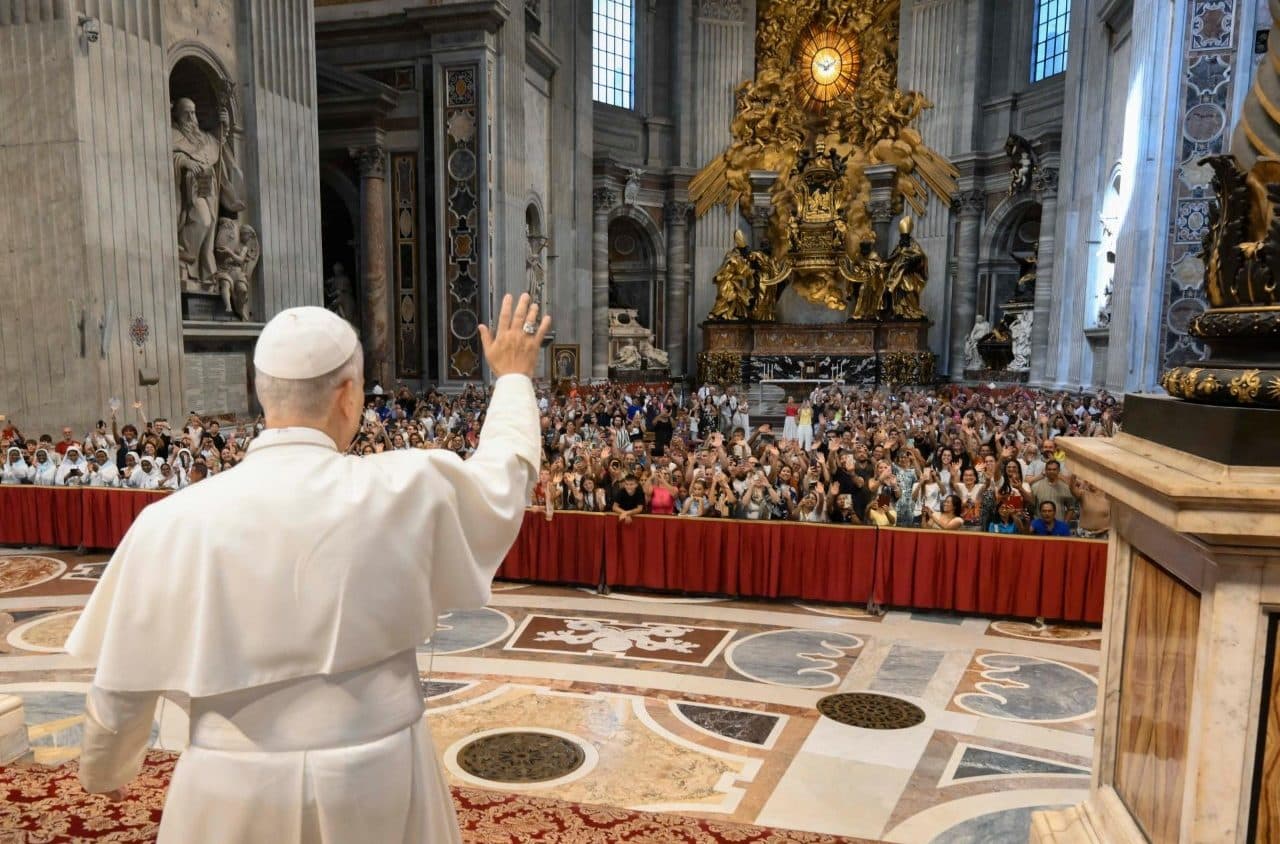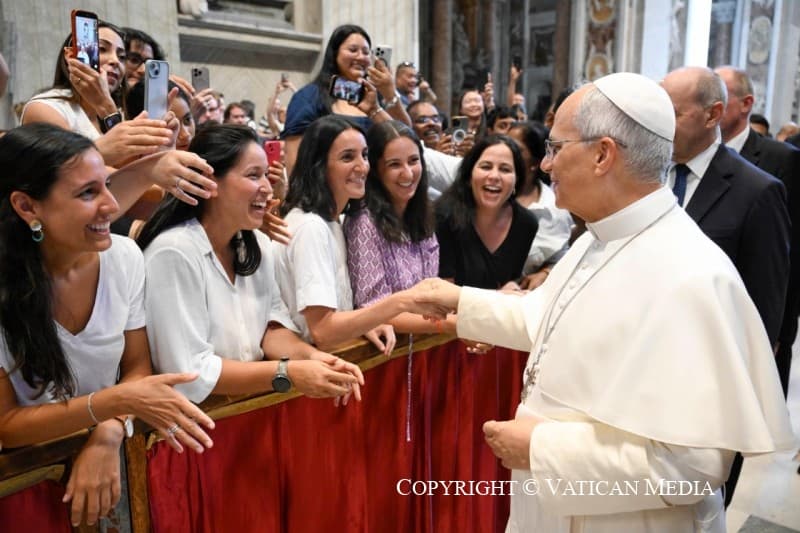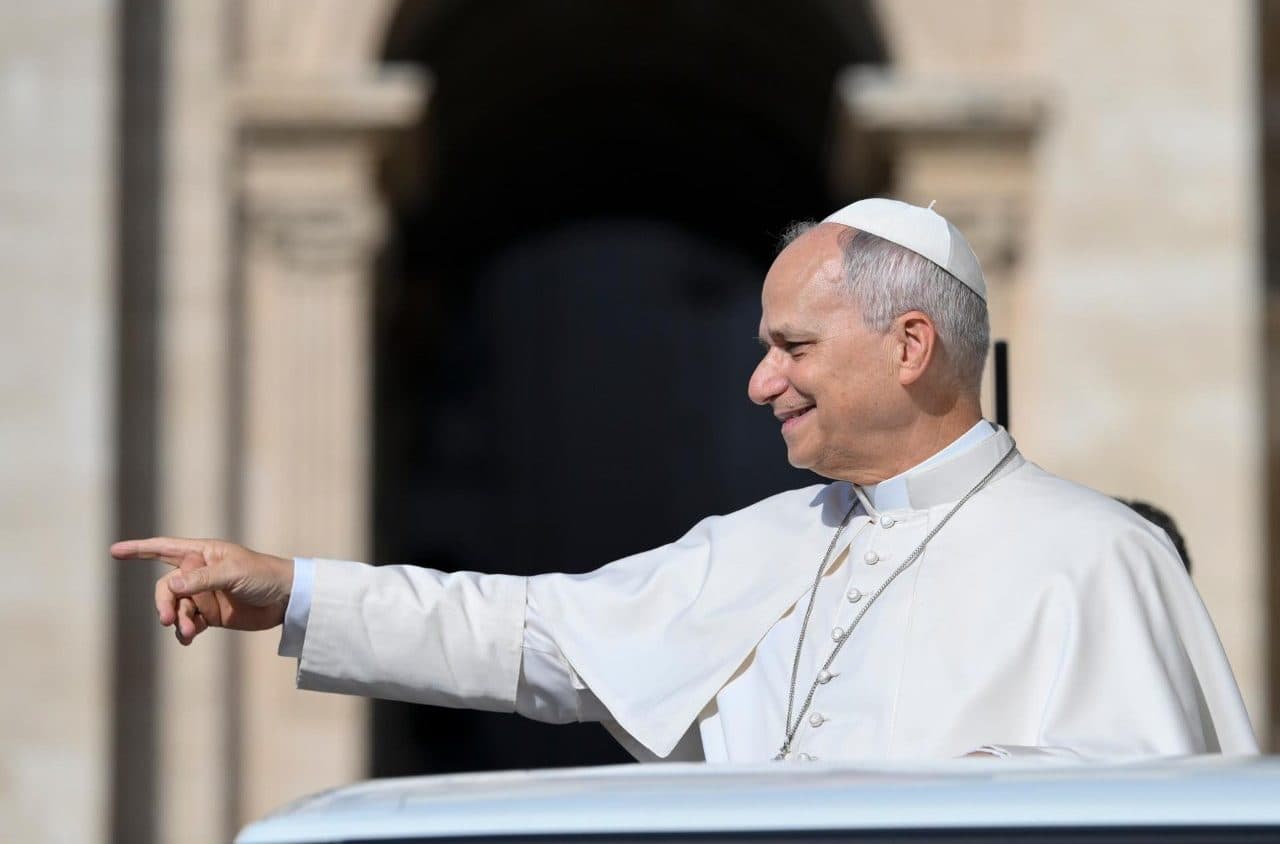
Vatican City (AsiaNews) – Pope Leo XIV appeared in a festive St Peter’s Square bathed in sunlight, greeting from his popemobile thousands of people gathered for the Wednesday general audience.
This morning, from the steps of St Peter’s Basilica, the pontiff continued his series of reflections on the documents of the Second Vatican Council, carrying on the catechesis begun last week on the pastoral constitution Gaudium et Spes.
He devoted today’s address to the "dignity of the human person," a theme highlighted in Chapter 1.
“The person always implies relationship”
For Leo, this is "one of the most significant chapters in human history," as it highlights the "characteristics" and "fundamental [. . .] rights" associated with the dignity of the person.
Nonetheless, “the path ahead is not yet complete and must address the contradictions, both old and new, which prevent its full realization.”
Citing the “contribution” offered by the Church, he reiterated that “human dignity arises from the very being of the person.” Indeed, “Every human person is planned and willed by God to enter into communion with Him,” he said, citing his first encyclical, Magnifica Humanitas.
“In faith we can understand the ultimate foundation for the dignity of the person,” he explained. “The person always implies relationship, communion and participation in relation to God and to others”.
This “excludes self-centred isolation. To be a person means to perceive oneself as a gift to be shared, growing and maturing through acceptance, reciprocity and service,” Leo added.
Body-as-object: "denial of dignity"
In his address, the pope noted the extent to which the dignity of the person is entrusted to the “responsibility of each person”, for “it also demands solidarity and mutual care, overcoming the many falsifications and manipulations that still disfigure our perception of it and hinder its realization.”
Gaudium et spes stresses how “human dignity concerns the whole person and, therefore, dualistic views must be overcome: the human being ‘though made of body and soul, is one’.”
For this reason, the pontiff said that, “Reducing the body to an ‘object’ to be disposed of arbitrarily is always a denial of the dignity of the person”.
Citing chapter 14 of Gaudium et spes, Leo said that “‘man is not allowed to despise his bodily life’ and ‘is obliged to regard his body as good and honourable since God has created it”.
Finally, he highlighted the “most significant expressions” the conciliar document employs in reference to dignity, namely intelligence, conscience, and freedom.
“These dimensions are closely connected to one another: it is in conscience that truth is recognized as such, and freedom can experience it as its foundation and possibility”.
Hence, “Let us commit ourselves to promoting and defending it always, with the light and strength of the Gospel,” he said, bringing his address to a close.
Concluding greetings
After the catechesis, Leo XIV greeted members of the steering committee of the Interreligious Platform for Dialogue and Cooperation in the Arab World, who were present in St Peter's Square.
“I [. . .] pray that your efforts to promote peaceful coexistence in the Arab region will indeed bear much fruit,” he said.
Turning to young people, seniors, and the newlyweds, he added: “Yesterday we celebrated the liturgical Feast of the Nativity of the Blessed Virgin Mary; may her example and her maternal intercession inspire and accompany your lives.”