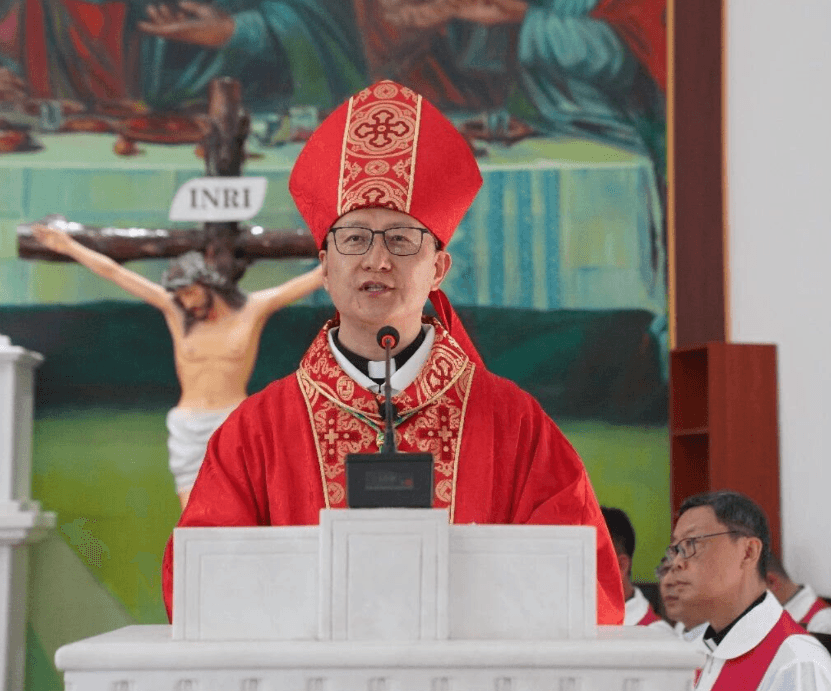
Taipei (AsiaNews) – A conference at Fu Jen Catholic University in Taipei brought to an end a year of initiatives dedicated to the centenary of the First Plenary Council for China, a key event in the history of the Church in China that took place in Shanghai in 1924.
Organised by the Taiwanese section of the Verbiest Foundation, the conference – attended by 80 people, with seven speakers and as many commentators – was almost an academic and pastoral synthesis of the reflection that unfolded over the year on the theme of the inculturation of Catholicism in China.
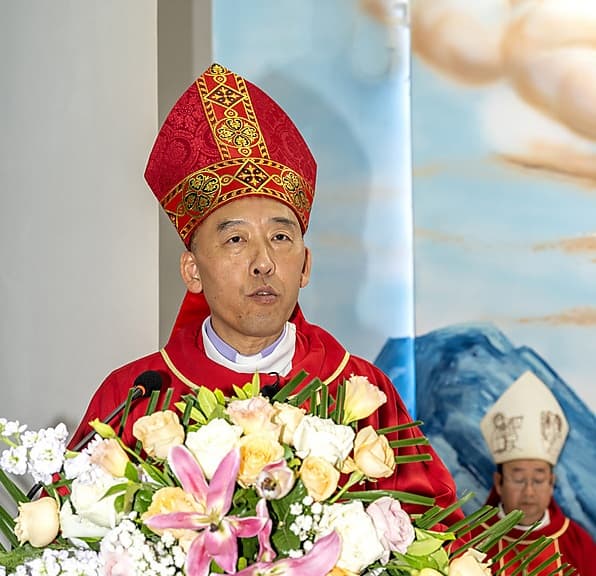
Previous meetings were held in Milan and the Vatican (May), in Macau in June and a simpler meeting in Beijing. Bishop John Baptist Lee Keh-mien, president of the Chinese Regional Bishops' Conference of Taiwan, opened the meeting in Taipei along with Mgr Stefano Mazzotti, pro-chargé d'affaires at the Vatican Nunciature.
The speakers, and their respective commentators, reiterated the central role played by Card Celso Costantini, with the report of Fr Sun Zheng of the Congregation of the Disciples of the Lord, which the apostolic delegate had founded precisely to promote inculturation.
One presentation was dedicated to the renewal of liturgical music, evoking the prophetic figure of the missionary Vincent Lebbe. Prof Ku Wei-ying's address focused on the impact of the Chinese Catholic intellectual Ma Xianbo on Costantini's thought, and consequently on the theme of academic training that led to the foundation of the Catholic University, one of the lasting fruits of his mission.
Historian Chen Fang-chung looked at the Chinese Council in the historical context of China’s great renewal, which began with the 4 May 1919 movement, followed by the spread of communist ideas. Those were years of great turmoil, not only for the Church, but for Chinese society as well.
It seems significant to me that this year's reflection on the First Plenary Council for China should end in Taiwan, where some organisations born from that ecclesial event still exist, starting with Fu Jen Catholic University, which will celebrate its first centenary next year, and the Congregation for only Chinese religious, which Costantini tenaciously sought in order to enhance their specific contribution. The theme of inculturation and interfaith dialogue is being freely pursued in Taiwan with ecclesial and missionary aims.
On this occasion I was able to return to the island where I began my 'missionary career' back in 1991. I met old and new friends. The Church is not alone in paying attention to Taiwan, as the island attracts diplomatic and strategic attention from elsewhere. People do not seem worried, as they have always lived with the possibility that China might try to reunify the island with the mainland by force. No one knows for sure what will happen.
Tensions are palpable, but for the Taiwanese it is déjà vu. There are other regional tensions, for example those between China and the Philippines, which could get out of hand and see an incident occur with unpredictable consequences.
While people do not appear alarmed in Taiwan, it is striking that the rhetoric over Taiwan’s unification is growing in intensity on the mainland, perhaps to distract from China’s serious social and economic problems, including youth malaise, the rapidly approaching demographic desert, the endless Ukrainian war involving China’s Russian ally, and Trump's enigmatic return to the international scene.
Will the anti-Taiwan propaganda remain just a rhetorical exercise? And for how long? No one with an ounce of humanity can imagine an act of force with catastrophic consequences, no matter how much this world of ours is capable of horribly cruel violence and wars every day.