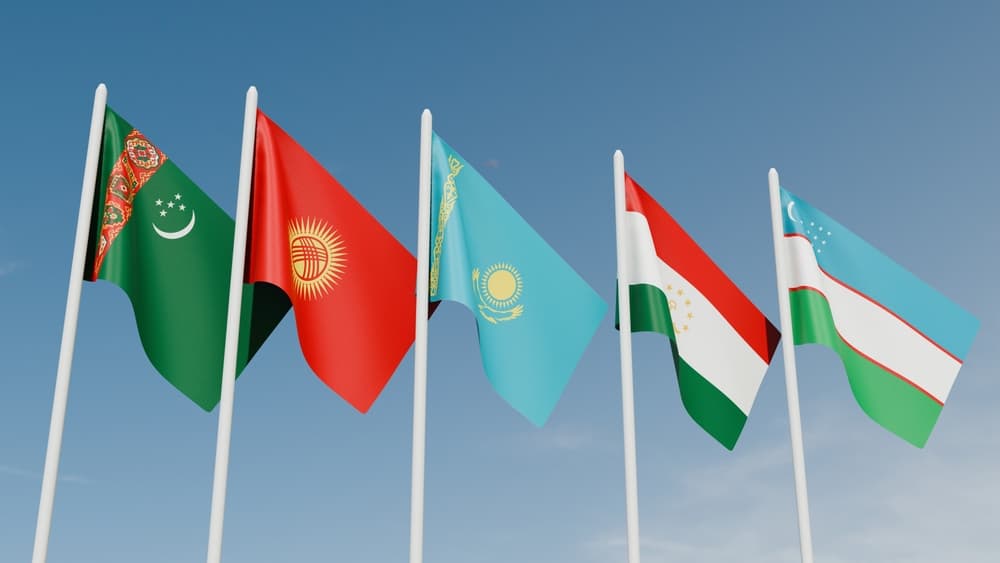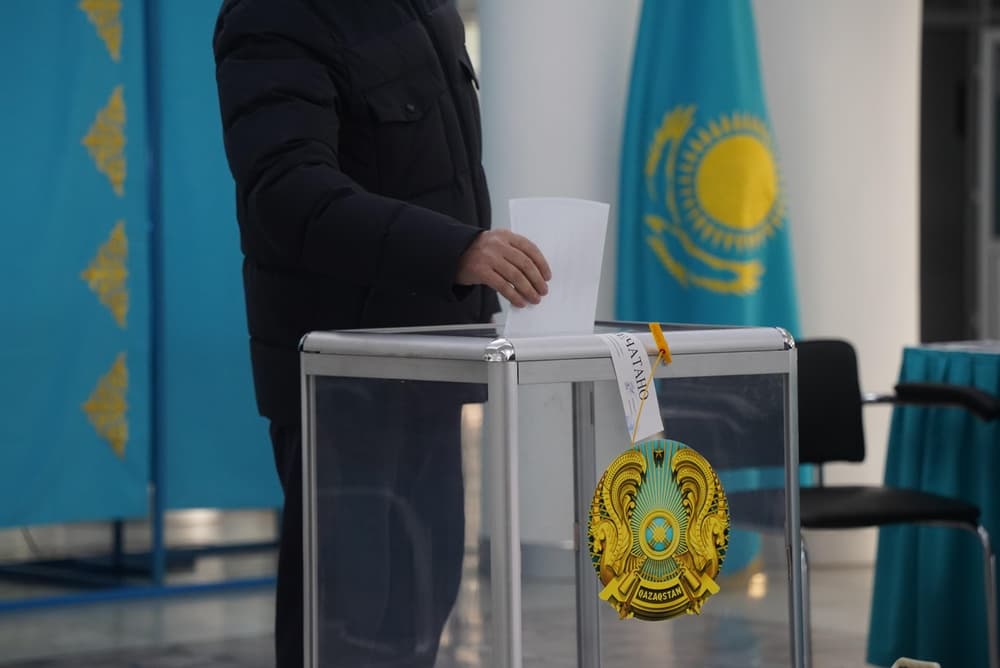
Astana (AsiaNews) – Kazakhstan’s old parliament no longer exists, and the new one has not yet been elected. Following the entry into force of the new Constitution, the Central Electoral Commission has announced 23 August as the date for the parliamentary elections to the Kurultaj, the new People’s Assembly, and has approved the election campaign timetable; parties are expected to enter the race as early as 23 July, present their manifestos and begin vying for votes, but the real mystery, it seems, is not who will secure a majority, but rather who will or will not manage to enter parliament, and how the balance of power will be distributed amongst the participants.
In April this year, the creation of the new Adilet party was announced. Rumours were circulating about the possible formation of another party or the merger of smaller parties, but in the end the established political giant was absorbed into the newly formed party, whose founders include people who had been involved in drafting the new Constitution.
Various rumours, merger scenarios and speculation were circulating. “Today, the country does not need new lines of division, but new points of unification, and at this crucial moment we must pool our resources with the new Adilet political party, as part of a single pro-presidential force, to build a just and progressive Kazakhstan,” said Erlan Košanov, chairman of the former majority party Amanat.
The rebranding of Amanat’s assets was carried out rather swiftly, but the party still legally exists and is likely to remain ‘on the sidelines’ for some time; the Maslakhat deputies elected by Amanat still hold their seats, and formalising the merger with Adilet may take some time. Amanat has, however, withdrawn from the Kurultaj elections, and in this way the two pro-presidential parties have reached a rather astute consensus on a unified course of action and on President Tokaev’s reforms.
Other parties have remained largely unchanged, though some have new leaders: the People’s Party of Kazakhstan, Ak Žol and Auyl all have new leadership, whilst Respublica has retained its previous leader, the OSDP has not publicly announced a change of leader, and a new leadership dispute is looming within Baytak. Eligibility for the new parliament will be restricted to party lists; consequently, the main focus is no longer on which parties will stand, but on exactly who they will include on their lists. Single-member constituencies no longer exist, and it will now be the parties themselves that can enter the Kurultaj under their own banner and with their own programme.
For now, one can only speculate on what each party’s election manifesto will contain, and this will not be known for certain until 23 July. In the meantime, the parties are actively preparing for the start of the election campaign, holding congresses and approving their lists. Currently, the OSDP has submitted the shortest list of candidates, comprising just 33 people; Respublica had previously approved a list of 76 people, Ak Žol 63, Auyl 69, the People’s Party of Kazakhstan 72 and Baytak 53. Adilet, for its part, is set to publish its list in the coming days, which is likely to be the longest.
The exact identities of the candidates on these lists would require a separate analysis, but the high number of candidates already speaks volumes about each party’s ambitions. The Russian political scientist Roman Juneman, an expert on Kazakhstan, does not rule out the possibility that the Kurultaj was initially conceived as a merger of two pro-presidential parties – one vaguely left-wing, the other vaguely right-wing – but judging by current developments, this idea has been abandoned. In his view, “it is not entirely clear why it was necessary to complicate the structure with two pro-presidential parties, a scheme that is difficult to explain to the electorate itself, especially when it comes to public sector employees, doctors, teachers, civil servants and their families”.
According to Juneman, the party’s key niches are already formally occupied: there are programmes for the business sector, for rural areas, for the environment and for social democracy, but the political centre, it seems, remains in the hands of the new ruling party, which “already occupies a centre-left niche, so the system does not need a strong, separate social-democratic rival”. Political competition in Kazakhstan effectively takes place within a system where the boundaries of what is permissible are clearly defined. Parties remain an integral part of the overall political system, serving largely as “filler elements within a system that is largely decorative”. However, according to the expert, even this model can be beneficial, and it does not render the new Kurultajs or the parties themselves useless: much will depend on whom the parties elect to parliament from their lists, and on how willing these MPs are to address the concerns of their constituents.