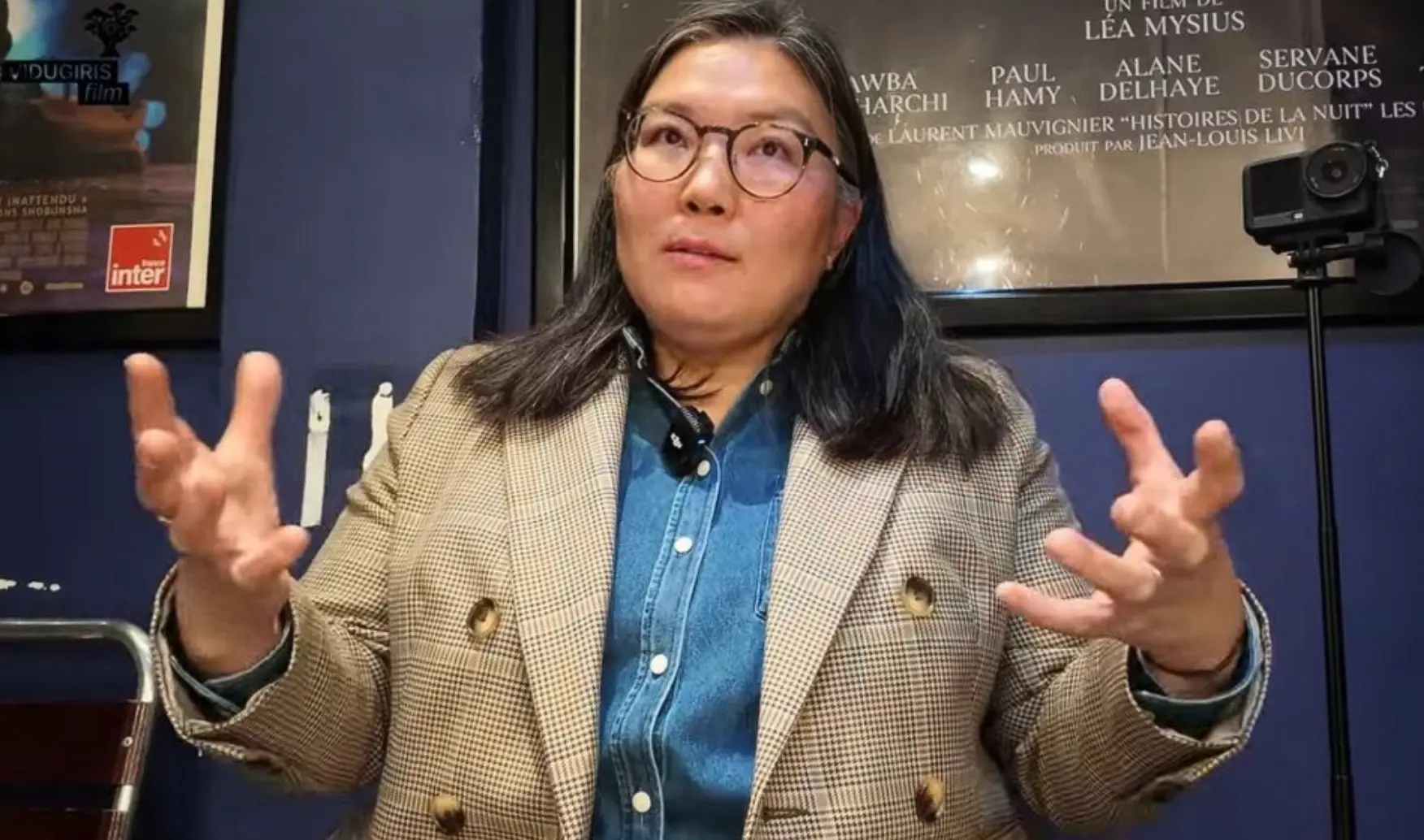
Moscow (AsiaNews) – Following the screening of the Kyrgyz film Kurak in Paris, Kaktus.Media spoke with Raisa Sidenova, a researcher specialising in Soviet documentary cinema and lecturer in film theory at Newcastle University in the UK, who was in France to take part in the international conference “Cinematographic Stories of Central Asia: Perspectives”, held in October 2026. Sidenova is working on a book, “From Truth to verité”, dedicated to Soviet poetic documentary cinema. Her research interests include the Riga School of Documentary Cinema and films produced at the Kyrgyzfilm studios.
Speaking about the phenomenon of Kyrgyz cinema, Raisa Sidenova emphasises how the role of documentary cinema in the development of national cinema is often overlooked.
Meanwhile, many renowned directors, including Tolomuš Okeev and Bolotbek Šamšiev, began their careers in documentary cinema; according to the researcher, the documentary foundation of Kyrgyz cinema was truly exceptional. The directors did not merely record events, but experimented with form, editing and visual language. “I believe it was very important that the directors of the poetic school were not afraid to tackle a wide range of themes: both historical and those relating to everyday life,” observes the researcher.
The work of Algimantas Vidugiris occupies a special place in Sidenova’s research, as she states: “I believe he is a very important director not only for Kyrgyz documentary cinema, but for the whole of Soviet documentary cinema and for world documentary cinema in general”. The researcher highlights the director’s unique method: studying life through observation and poetic interpretation. In the film PSP (“Research and Investigation Team”), the work of geologists forms the basis for a conversation about work, human relationships and everyday life. Another example is Vidugiris’s debut film, “Facing the Sun” from 1962; Sidenova viewed it on film in 2022 at the Kyrgyz National Archive of Cinematographic, Photographic and Sound Documentation, and organised its digitisation.
Another topic of discussion was Juz Gernstein’s 1967 film “Look Back, Comrade”, which was banned by the party authorities in Soviet Kyrgyzstan. Raisa Sidenova presented a paper on the film at the Paris conference, stating that “the film is interesting not only for its history, but also for its artistic language; through the use of multiple screens, archive footage, sound and editing, the director offers an alternative view of the past that does not align with the official Soviet conception of historical development”.
In 2018, the surviving footage was rediscovered and made available to the public, thanks to the joint efforts of Russia’s Gosfilmofond, the Russian State Archive of Film, Photographs and Sound Records, and the Central State Museum of Cinema. In the final months of his life, Juz Gernstein, who died aged 99, learnt that the film, long thought to be lost, had survived.
The discussion took place following a screening of the film Kurak by the Kyrgyz director Erke Džumakmatova; the film left a strong emotional impression on Raisa Sidenova, who observed that the story told in the film extends far beyond the borders of a single country and resonates with the fates of women in different parts of the world. Sidenova admitted that watching the film had been emotionally demanding, but it is precisely this, in her view, that constitutes the film’s significance: cinema must tackle important and painful issues, even if they provoke rejection or resistance.
At the conference, Gulbara Tolomušova presented examples of films that had been banned or restricted, including “Look Back, Comrade” and Kurak. Documentary cinema is not a secondary genre, but an independent artistic tradition that has shaped directorial methods, a visual language and a unique way of understanding reality; it is important to bring forgotten films back to the big screen and introduce them to new generations of viewers.