Milan (AsiaNews) – In China, the relationship with pets is moving beyond mere ownership. Dogs and cats are increasingly regarded as part of the family, and this relationship is reflected in the products purchased, the services used and the willingness to invest in their care. This is the phenomenon of the ‘humanisation’ of pets – the tendency to relate to domestic animals as if they were human beings.
A trend that, in the Chinese market – and beyond – is taking on particularly visible forms: from the choice of ‘human-grade’ food products, made with ingredients suitable for human consumption, to technology for remotely monitoring pets, and even the possibility of cloning them.
The cloning of pets is legal in China and is carried out by a number of companies, the best known of which is Sinogene Biotechnology. In August 2023, during Pet Fair Asia in Shanghai – the leading trade fair for the sector in the Asia-Pacific region – the company exhibited several cloned terriers, recognisable by their collars bearing the words “I am a clone dog”.
According to reports by AFP at the time, Sinogene began cloning dogs for research purposes in 2017 and entered the commercial market in 2018. Since then, the company has experienced rapid growth. The cost of cloning a dog ranges from 30,000 to 60,000 dollars, depending on the breed.
The company itself explained that, in the early years, cloning had been met with scepticism amongst consumers, but that the growing emotional attachment to pets had helped to make it progressively more widely accepted. The service does not, of course, bring the original animal back to life, but creates one that is genetically very similar.
Cloning represents the extreme end of a phenomenon that now extends to much more everyday consumer behaviour. For example, tech products allow owners to monitor and even entertain their pets even when they are not at home: cameras, automatic feeders, smart water dispensers and devices equipped with artificial intelligence functions enable owners to monitor their pets, manage their feeding and keep track of some of their activities remotely. Robots capable of following pets around the house, dispensing food, playing with them and imitating the owner’s voice are also available on the market.
‘Humanisation’ does not merely mean treating the animal as a member of the family, but also adapting the home environment and services to its needs. In this context, custom-made furniture for pets is proving particularly successful, ranging from bedrooms for pets to baths or washbasins specifically designed for the hygiene and grooming of dogs or cats.
The growth of this market is also confirmed by the figures. According to the China Pet Industry White Paper 2026, in 2025 there were 126 million dogs and cats living in Chinese urban areas – 53.43 million dogs and 72.89 million cats.
The total population increased by 1.8 per cent compared with 2024, whilst the consumer market for these two species grew by 4.1 per cent, reaching 312.6 billion yuan. The dog market was worth 160.6 billion yuan, whilst the cat market was worth 152 billion yuan.
The most telling figure, however, is the average expenditure. In 2025, owners spent an average of 3,006 yuan per year on a dog – up 1.5 per cent – and 2,085 yuan on a cat – up 3.2 per cent. The number of animals, therefore, is growing at a slower rate than the value of consumer spending. The White Paper also forecasts that the urban market for dogs and cats will reach 405 billion yuan in 2028.
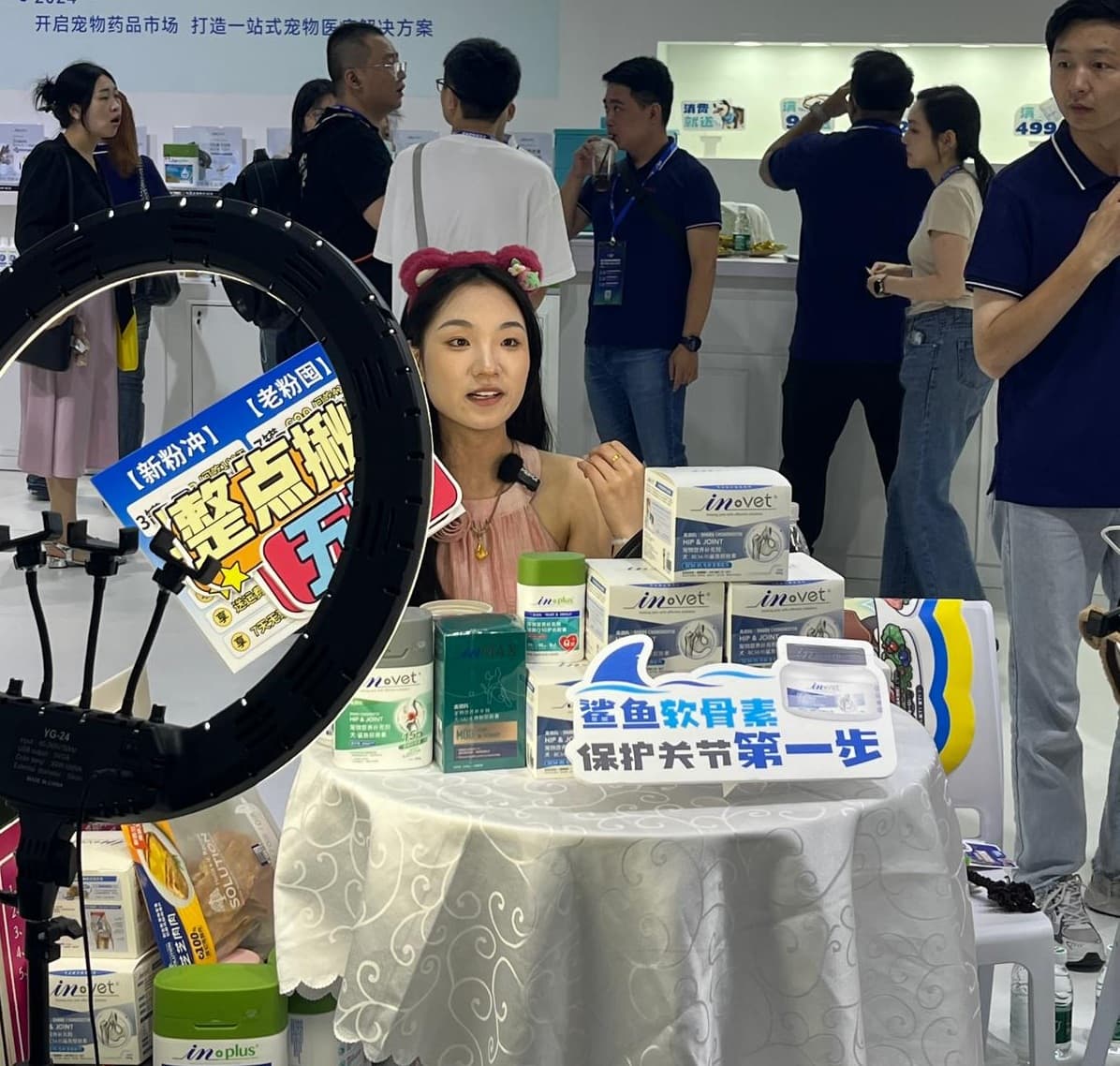
An excellent barometer for gauging the health of China’s pet economy is the Pet Fair Asia trade fair, now in its 28th edition and held in Shanghai from 19 to 23 August. This year’s event broke several records, hosting over 2,600 exhibitors and more than 130,000 trade visitors. The growth in international participation – now a consistent trend in recent editions – is significant: this year, foreign visitors from 102 countries increased by 23 per cent, reaching the highest number ever recorded; whilst on the final two days, which were open to the public, the fair was visited by over 400,000 pet owners and enthusiasts.
The exhibition halls also hosted hundreds of content creators and teams dedicated to live streaming. This trend is particularly evident on Douyin, the Chinese equivalent of TikTok. During the event, the stands became veritable sets for live streams, and several brands used influencers to showcase and sell products directly to the online audience.
Whilst Chinese consumers are increasingly discerning and willing to spend on their pets, the industry itself is also undergoing a significant transformation. For years, in fact, China has primarily served as a major production hub for the international pet care sector, playing a key role in contract manufacturing. Today, the growth of the domestic market is creating the conditions for a further shift. Factories that produce for foreign brands are developing their own brands, investing in innovation and seeking to bring these brands to overseas markets as well.
Products from Chinese brands already have a strong presence in neighbouring markets, but at the same time they are beginning to appear on shelves – both physical and digital – in South America and some European countries.