Istanbul (AsiaNews) – War, poverty, distant schools, joblessness, and the need to help families make ends meet are pushing many Kurdish children and youths in the border regions between Iran, Iraq, and Turkey to become kolbars, cross-border porters.
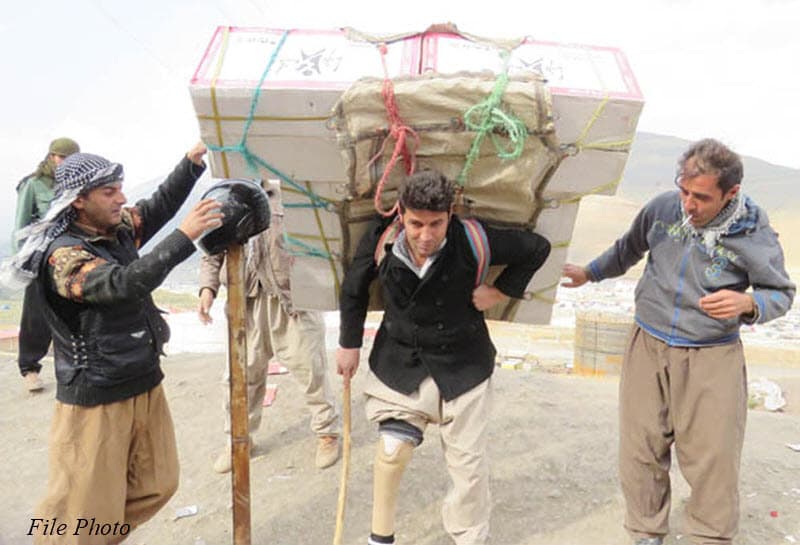
Iranian kolbars are among the most exposed to danger, carrying heavy loads through snowdrifts in winter or under the sun in summer, across the mountainous border area of western Iran.
Journeys are made on horseback or, more often than not, on foot, and (sometimes) in illegal conditions, often away from official border crossings and along routes fraught with difficulties and dangers.
Also known as kolber, the word in both Kurdish and Persian comes from kol (back) and bar (load), and describes one of the most dangerous and precarious professions in the world.
Kolbars are not professional porters, but informal workers, often smugglers, driven by extreme poverty and the lack of economic alternatives in the Kurdish provinces, especially in Iran.
They shoulder enormous burdens that can weigh up to 50 kg, containing a wide variety of goods: household appliances, cigarettes, clothes, tyres, fabrics, fuel, or even goods prohibited in Islam, such as alcohol.
Most live in Iranian Kurdistan, one of the poorest regions of the country. Their ranks include not only labourers but also young people with advanced degrees and qualifications who are unable to find employment due to structural problems or regional conflicts.
Women and minors are increasingly involved in the activity, working without any legal, union, pension, or health insurance protection.
Over the years, the Islamic Republic's security forces, including the Revolutionary Guards (Pasdaran), have reportedly attacked kolbars, opening fire on them to block their movement, killing some, including the very young.
This practice is growing due to the economic difficulties linked to Iran’s conflicts, as reported by the Iranian Labour News Agency (ILNA).
“The fact that a teenager sets out on a route where there is a risk of being shot, a mine explosion or an accident, either to help their family or cover school and living expenses, should be a serious warning to society,” labour activist Abdollah Belvasi told ILNA. “A child should be sitting at a school desk, not on a kolbari route.”
Poverty and unstable family incomes are increasingly affecting children of families living in border areas, Belvasi noted. And Kurdish border porters face snow, heavy loads, and death for US$ 10.
According to the labour activist, a shortage of jobs has also left many young people, including university graduates and accomplished athletes, facing a choice between working as a kolbar, with its risk of death, or migration away from their homes and families.
The war launched by the United States and Israel against Iran has compounded the difficulties of an economy already plagued by sanctions.
The situation escalated in late August and early September when, one night, US President Donald Trump threatened new raids on the Islamic Republic, whose leaders vowed to retaliate, like this morning with a drone attack against US targets in Kuwait.
According to the Iranian Ministry of Health, at least 18 people have been killed and 142 wounded since 30 August, a situation set to get worse with Gulf states scrambling to jumpstart talks.
As the conflict picks up with naval blockades and tighter sanctions, the economic situation for Iran and its people has become even more critical.
Iran has faced years of high inflation, a weakening currency, and an unemployment crisis that have eroded purchasing power, making the cost of living increasingly difficult for many families.
According to the Hormozgan Workers' House, at least 20,000 workers have lost their jobs due to the economic slowdown and business closures.
This has led many families to pull their children out of school and send them to work to contribute to the household finances, turning to occupations that are not without dangers and challenges.
Many of the kolbars have been killed shot by the security forces or in accidents involving landmines.
“Deaths among kolbars are gradually being treated as routine news, receiving attention and prompting protests for several days before fading from public discussion,” Belvasi warned.
“When a kolbar is killed, a family suffers,” he added. “A breadwinner may be lost, children may be left without a father, or a family may have to contend with medical expenses and disability. If we see kolbari only in terms of numbers and statistics, we ignore the human dimension of the tragedy.”
Meanwhile, the death toll from accidents and critical situations continues to rise for those operating in the border regions in the west of the country.
“If the main causes – poverty, unemployment and the lack of stable job opportunities – are not addressed, the issue will emerge again,” Belvasi explained.
What is more, despite the economic, human and natural resources of border regions, this will affect more and more young people; hence, “The root causes must be addressed,” said the labour activist.