Beijing (AsiaNews) – Imprisoned at the age of just 14, Rahile Omer has died at 23 after spending long years behind bars. She passed away in a prison in Peyzivat County (known as Jiashi in Chinese), in Kashgar Prefecture, Xinjiang Uyghur Autonomous Region, northwestern China.
The death of Rahile Omer, a Uyghur woman from Konasheher, Kashgar, who was incarcerated in 2017 while still a child, was confirmed and reported by Radio Free Asia (RFA), which cited local officials who spoke on condition of anonymity.
The circumstances surrounding her death remain shrouded in mystery. Several advocacy groups representing the Uyghurs, a Muslim minority persecuted by the Chinese government, have launched independent enquiries to gather further information about her passing.
News of Omer’s death came to light on 25 October 2024, when the Chinese-language X account @luoxiangf shared the information, citing online reports that had appeared the previous day.
The post further claimed that the young woman had died as a result of severe depression and that both of her parents had also died in prison; however, these details have not been independently verified.
The account presented information attributed to researchers, describing how Chinese police had previously classified and monitored Omer following her family’s detention.
Her parents were reportedly arrested on 3 July 2017. According to law enforcement surveillance records, Omer had been designated as a "Class 12" individual, a category for persons linked to ongoing police investigations who are considered to be of potential security interest.
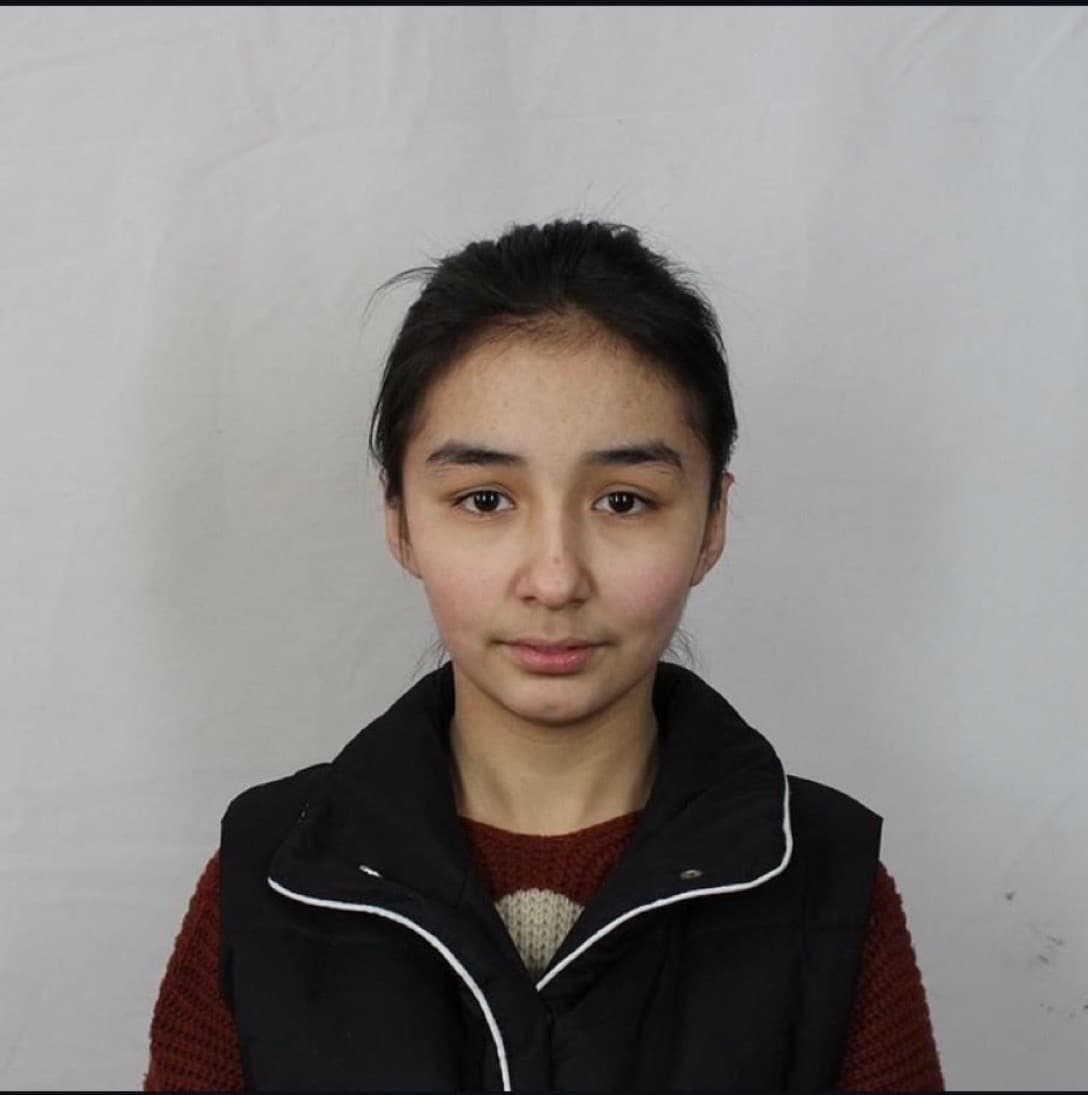
A photograph, dated 20 March 2018, appears to show Omer at a vocational training facility in Konasheher (Shufu) County. According to the account, the investigative documents available at the time contain no evidence that she committed any crime.
Subsequently, RFA’s Uyghur-affairs experts contacted police stations and judicial offices in the region to shed light on the matter.
A Han Chinese officer serving at the Langgar township police station confirmed that Omer had passed away about a month earlier, though he did not specify the location or the circumstances of her death.
Another person, who answered a different phone call, estimated that she had died about two months earlier.
A judicial official from Toqquzaq provided further details regarding her detention. Omer was held at the Opal training centre in Konasheher from 2017 to 2019, before she was moved to the Toqquzaq detention centre, where she remained until 2021.
In October of that year, the authorities sentenced her to 12 years in prison and transferred her to a facility in Peyzivat County.
Another police officer attributed her death to a heart condition, though he provided no medical documentation or further clarification regarding the circumstances of her death.
Police documents from Konasheher, which were leaked and published in 2022, offer additional documentary evidence of Omer’s detention.
Adrian Zenz, a researcher specialising in Chinese government policy in Xinjiang and the analysis of official documents, examined the so-called Xinjiang Police Files.
His research identified Omer in the leaked material, including a picture taken in 2018 at the Village 4 police station in Toqquzaq Bazaar.
Omer was reportedly arrested in September 2017, following the detention of her father, a government official. According to RFA, she was detained for "illegally gathering to disturb social order", a vaguely defined charge frequently used against Uyghurs.
A judicial official described Omer as someone who had not been "re-educated" after two years in a so-called training programme.
The official also referred to her religious practices, including prayers in the dormitory, though he provided no details regarding the evidence used against her or the legal process that led to her 12-year prison sentence; for their part, the authorities in Beijing have offered no comment.
Mamtimin Ala, president of the East Turkistan Government in Exile (ETGE), a political organisation founded in 2004 to serve as a representative body for the Xinjiang region and its peoples (Uyghurs, Kazakhs, Kyrgyz, Uzbeks, Tatars, Mongols), has spoken out on the case.
He expressed concern regarding what he describes as the death of a young Uyghur woman held in Chinese concentration camps.
Describing her as an innocent face among the millions of Uyghurs who have been reportedly detained, made to disappear, or have died in Chinese concentration camps, he stated that her story reflects the suffering of an entire people.
“Her face speaks, silently and solemnly, the unspeakable truth of this crime: a genocide and a crime against humanity,” Ala said.
Last week, AsiaNews reported the case of five Uyghur migrants in Thailand who are at risk of forcible repatriation to China; some are currently held in a detention centre, with China demanding their return.
In response, advocacy groups and human rights organisations, along with Thailand’s domestic opposition, have appealed to the Thai government to block their return, citing the grave risk of persecution.
The five were part of a group of more than 300 Uyghurs who had arrived in the Southeast Asian country in 2014, following a long and perilous journey, to escape persecution by Chinese authorities in the western province of Xinjiang, the ancestral homeland of this Muslim minority.