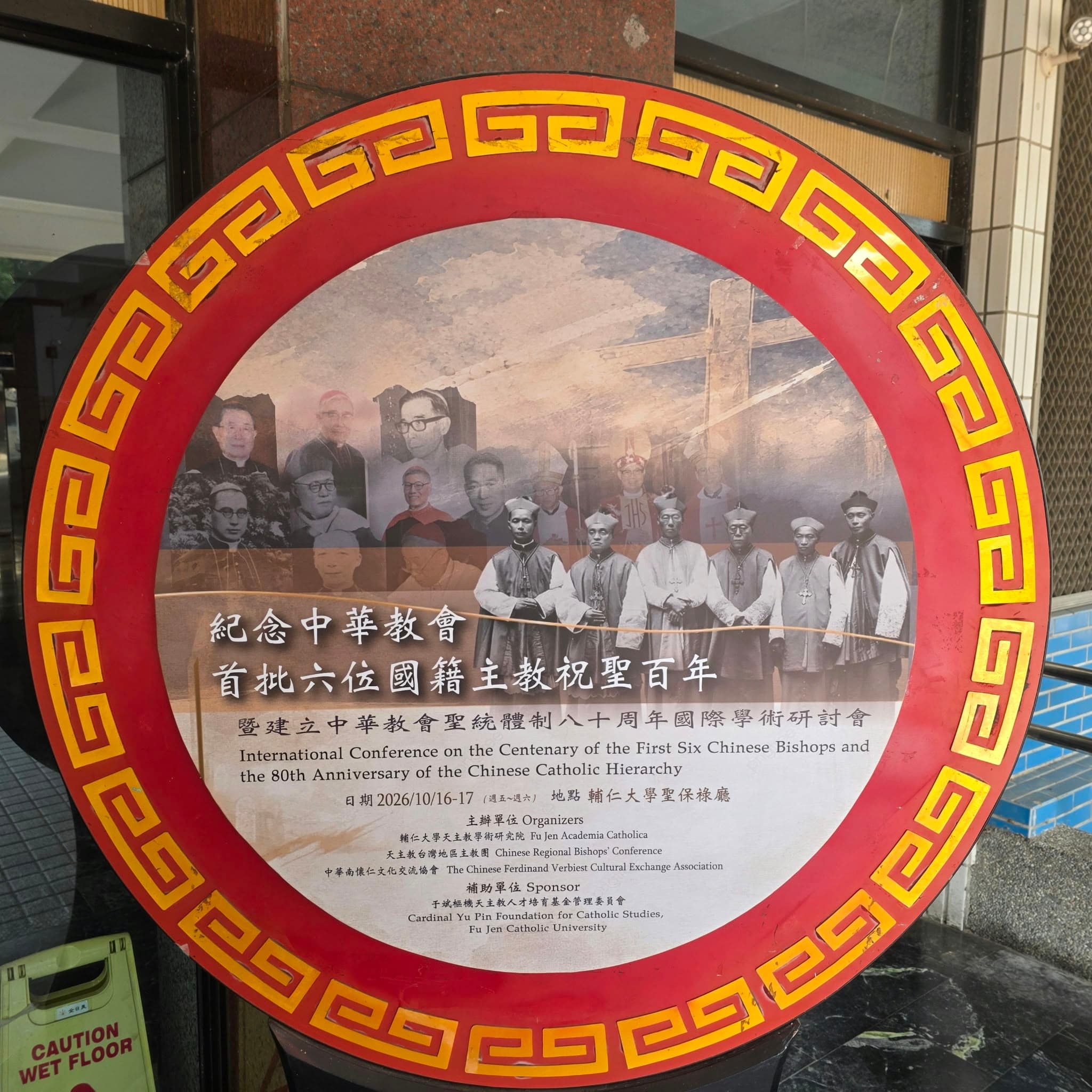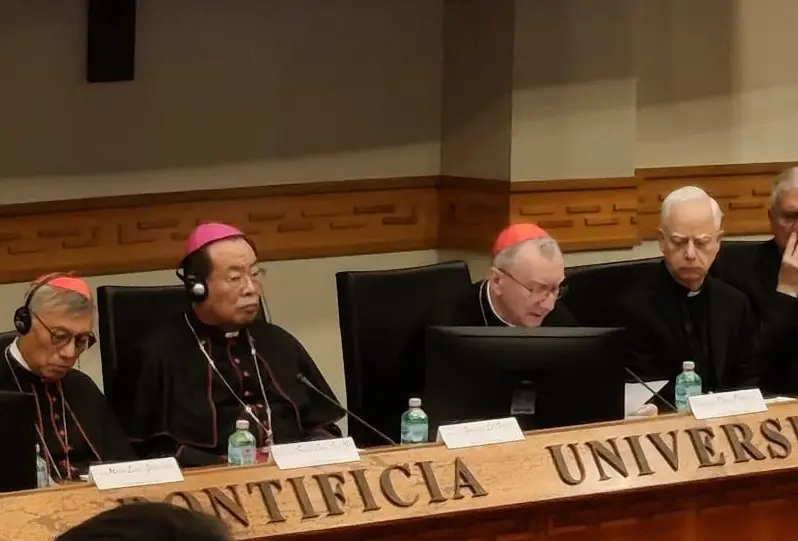
Rome (AsiaNews) – The Pontifical Urbaniana University in Rome brought together authoritative voices from the Church in China for a symposium titled The Face of the Universal Church in China: 100 Years Since the Consecration of the First Chinese Bishops, to mark the anniversary of the historic event of 1926, advocated by Pius XI.
For the occasion, Pope Leo XIV sent a video message, in which he reflects on the journey undertaken thus far, citing the key insights from his predecessors regarding the relationship with the Church in China.
The pontiff began with Benedict XV’s 1919 Apostolic Letter Maximum Illud, which spurred a new phase by reaffirming "the clear principle that the missionary work of the Church cannot be confused with processes of colonisation or the export of cultural ideas or models."
Regarding the consecration of the first six Chinese bishops of the modern era by Pius XI, Pope Leo XIV emphasised how "they travelled across the world to bear witness to the communion that flourishes from the faith of the Apostles, a communion whose essential, indispensable sign is the unity of every individual bishop with the Bishop of Rome.”
“Looking to the past can shed light on the present,” Leo added. “Today, in a world torn apart by conflicts and overwhelmed by wars, the Bride of Christ continues the same mission, praying that, in the face of every peril, the Lord may safeguard the treasure of ecclesial communion.”
Cardinal Parolin’s remarks
Following the screening of a video documentary, produced by Teresa Tseng Kuang Yi, on the events that led to the consecration of Chinese bishops in 1926, Vatican Secretary of State Cardinal Pietro Parolin described the consecration of indigenous bishops as “certainly a decisive turning point in the history of the Catholic mission in China.”
This, he explained, was strongly and personally championed by Pope Pius XI, as attested to by the then-prefect of Propaganda Fide, Cardinal Van Rossum. In his notes from an audience granted to him by Pius XI on 4 February 1926, we can read: “His Holiness decided that we must move forward without hesitation, because otherwise, we will never achieve anything good or solid.”
The uniqueness of episcopal consecration at the hands of the pope highlights the importance Pius XI placed on this event, choosing, as Parolin notes, “the very same day on which, seven years earlier, he himself had received his own episcopal consecration.”
In his homily on 28 October 1926, Pius XI expressed “genuine esteem” for China, describing it as “boundless regions where, since the remotest antiquity, literature and the arts have flourished.”
This represents a radically different vision from that of peoples “dwelling in darkness and the shadow of death”, a perspective that, until then, had characterised the common perception of non-Christian civilisations, even in Catholic circles.
Stressing the bond between pope and bishops, the secretary of state noted that “from the very first centuries of the ecclesial community’s life, the pope and the bishops have been joined by a bond rooted in Christ’s mandate and nurtured in the communion of the Spirit. Just as Peter was called to strengthen his brothers, so too is the successor of Peter a visible sign of unity for the pastors of the Church.”
Furthermore, regarding how this relationship should be understood, he said that “far from being a form of political hegemony, this inherent presence of the Petrine ministry within every portion of the People of God manifests a wonderful, reciprocal interiority between the universal Church and the particular Churches.”
Since 1926, Cardinal Parolin noted, “every step taken by the Apostolic See towards China has been intended to offer and safeguard this relationship of communion and effective communication, based on certain fundamental criteria: the necessity that individuals truly desire such communion, and that the external conditions exist for it to be expressed.”
Bishop Li Shan’s perspective
Following the remarks by the Secretary of State, Bishop Joseph Li Shan, head of the Diocese of Beijing since 2007 (with Vatican approval) delivered a highly anticipated address.
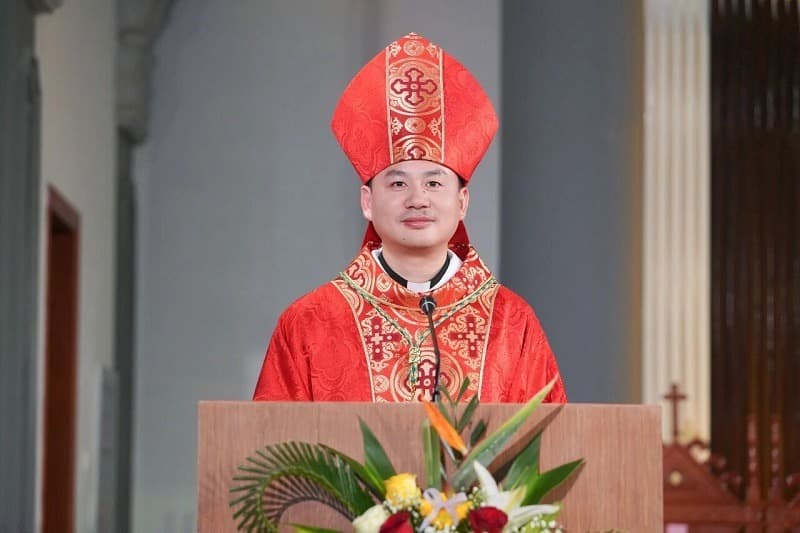
The prelate, who also chairs the Chinese Patriotic Catholic Association, the "self-governing" body established by the Communist Party of China (CPC), attended the Urbaniana conference along with another young bishop from mainland China, Ignatius Ding Zuyao of Haimen, who was appointed by Pope Leo XIV just a few weeks ago.
Li Shan cited the example of Matteo Ricci, who “understood deeply that the proclamation of the Gospel of Christ cannot bypass or underestimate the local society and culture; on the contrary, only by approaching local cultural traditions with a respectful spirit can the seed of the Gospel take root, sprout, flourish, and bear fruit.”
In his address, the bishop of Beijing noted that, on several occasions throughout the history of the Church in China, the process of “sinicisation” of the clergy, the key term currently used by Chinese President Xi Jinping to describe the relationship between religions and Chinese identity, has been considered or proposed as an option.
However, he believes that “before the founding of the People’s Republic, Chinese Catholicism had not truly emancipated itself from external governance; it had not become an endeavour led by Chinese Christians, and it had not yet managed to shed the label of ‘foreign religion’.”
Thus, “The founding of New China,” Bishop Li said, speaking in the shadow of St Peter’s dome, “radically altered the condition of a Church in China that had relied upon Western political forces.”
Turning to the present day, Li Shan explained that “the significance of the ‘sinicisation’ of the Church that we propose today.”
“The sinicisation of Catholicism does not aim to construct a different kind of Catholicism, one that departs from Tradition, but rather to build an authentically Catholic Church,” he said.
Sinicisation is “the process by which the catholicity of the Church moves from the abstract to the concrete, from the empty to the abundant, and from immaturity to maturity.”
In his view, “state laws and Church norms, not only do not stand in opposition to one another, but actually complement each other on the path towards human perfection,” he said in concluding his address, effectively endorsing Beijing’s interventionism in the regulation of religion.
Cardinal Chow: sinicisation and interculturality
In his address, Cardinal Stephen Chow Sau-yan, bishop of Hong Kong, suggested considering the option of "interculturality", alongside the processes of inculturation and sinicisation, by drawing upon remarks made by Benedict XVI (then still a cardinal) in a notable speech delivered in Hong Kong on 3 March 1993, during a meeting with the doctrinal commissions of Asia.
Sinicisation, he noted, is linked to a patriotic spirit and the "ideology of the Communist Party of China”.
“This phenomenon,” he explained, “occurs in various areas of life in China, not only in the religious sphere, and certainly not exclusively with regard to the Catholic Church.”
“Being a patriot and a faithful believer entails no inherent conflict,” he stated, before asking: “But how do we put this into practice?”
In his reflections, Cardinal Chow calls for interculturality to be considered as a dynamic process of co-construction, building something new together.
“If we want to grow, if we want to evolve, we must be capable of accepting change. It is not just about changing others; it is also about changing ourselves.”
The path towards interculturality requires a willingness to change, mutual influence, and an openness to convergence, while viewing divergences not as negative aspects, but as something “to work on and walk together.”
“When we meet, we come to understand how we can become Christians, true Christians, and, at the same time, true Chinese,” the bishop of Hong Kong noted.
“We can talk and understand one another. And I believe this is already happening. In this sense, I do not think Matteo Ricci was merely a figure dedicated to ‘inculturation’. In reality, he was already working on interculturality.”