Milan (AsiaNews) – When it comes to the war between China and the West over raw materials, attention is almost always focused on rare earths, a group of 17 elements indispensable for producing the magnets used in electric motors, missiles and turbines, which Beijing has used in recent years to put pressure on Washington.
Rare earths, however, represent only one part of a much larger family, that of critical metals, i.e. raw materials that are hard to replace in industry and the military, whose supply is exposed to geopolitical risks. This category includes cobalt, gallium, germanium, antimony and tungsten, materials in which Chinese dominance is in most cases even stronger than in rare earths.
One key difference exists. In the case of rare earths, China's strength lies above all in its ability to refine and process them, a pre-eminence that, at least in theory, other countries could fill in time. For some critical metals, however, Beijing’s leverage lies mainly in reserves, which is much harder to weaken.
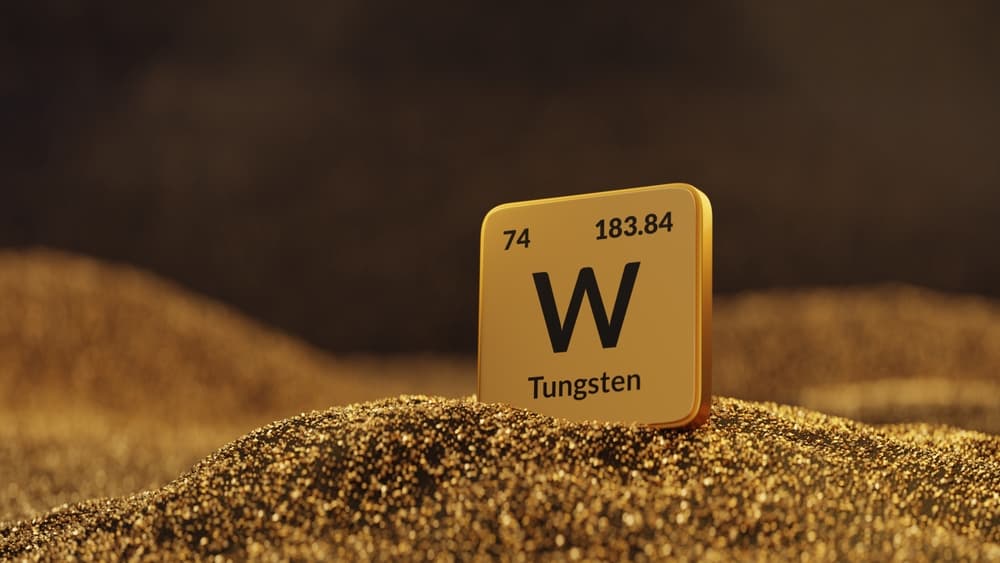
Tungsten best illustrates this second aspect. Highly dense and heat-resistant, it is used in drill tips and cutting tools indispensable for almost every industrial process, as well as in piercing ammunition and in the shielding of nuclear submarines. Its strategic importance has increased with recent wars, as it is used in manufacturing bullets and anti-missile defence systems.
China produces more than 80 per cent and holds much of the world's reserves, mainly in Jiangxi province, around the city of Ganzhou, which showcases itself as the world's tungsten capital.
In February 2025, in response to US tariffs, Beijing introduced controls on exports of tungsten and other metals. Since then, the price of tungsten has doubled.
It should be borne in mind that opening a new mine usually takes more than ten years, from the discovery of the deposit to the start of large-scale production, and involves large investments, in mountainous and isolated areas. Therefore, dependence on China will be hard to overcome in the short term.
The accumulation strategy
Beijing has accompanied the crackdown on exports with a policy of accumulation. In the first five months of this year, Chinese imports of the 22 metals subject to restrictions rose by 60 per cent over the same period last year, reaching the highest monthly level in March in more than seven years.
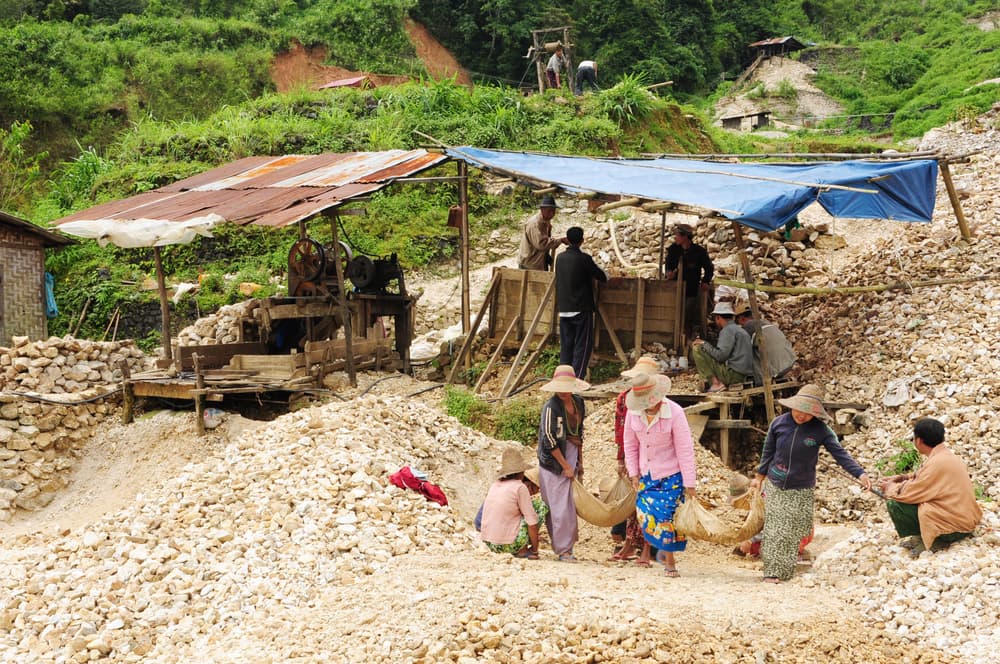
China is also on a buying spree for raw minerals not yet subject to controls, importing tungsten and molybdenum from countries with which it maintains close diplomatic relations, such as Myanmar, Uzbekistan and Kazakhstan.
Toru Okabe, a lecturer at the University of Tokyo quoted by Nikkei Asia, describes this combination of export restrictions and increased purchases as a pressure tool on the West and, at the same time, a means of exchange in diplomatic relations.
The most relevant case concerns North Korea. Between January and May, China imported tungsten from Pyongyang worth US$ 87.5 million, ten times the value recorded in the same period of the previous year. This has made tungsten China’s main import, in terms of value, from the neighbouring country. Such trade is possible thanks to a loophole in the sanctions against Pyongyang.
In 2017 the UN Security Council banned North Korea from exporting coal and iron in order to starve its nuclear and missile programme, but tungsten was not included in the embargo and has become a valuable source of foreign currency for the country.
Outside of China, tungsten is scarce and Chinese buyers are looking for it everywhere. According to the Financial Times, from the beginning of 2025 Chinese operators have been scouring scrap heaps in the United States in search of drill bits and used industrial tools from which to recover the metal, offering up to five times the current price, and fuelling a bidding war with US competitors. Since May 2025 the price of tungsten in the United States jumped by more than 200 per cent and that of scrap by 350 per cent.
The owner of a recycling company told the newspaper that Chinese buyers ask him to deliver the goods to an intermediary whose name or address he does not know, in the parking lot of a shopping centre, so that it can then be shipped to China. Some of the scrap is processed in third countries, from Southeast Asia to South Korea, before entering China. Another recycler called this trade, “a secret war that nobody's talking about”.
In the United States there is no ban on the sale of tungsten for export but some operators are now asking Washington to introduce one; for its part, the US government has declared itself ready to allocate up to US$ 1.6 billion to develop a future tungsten mine in Kazakhstan.
A disunited West
While China methodically accumulates resources, the West is struggling to build an alternative and avoid infighting. In the United States, after Beijing cut off supplies last year of rare-earth magnets, forcing some car production lines to shut down, the government and private investors began pouring billions into the few companies active in the sector.
Two of the largest, MP Materials and USA Rare Earth, however, have ended up at the centre of a bitter court battle. The former accuses the latter of poaching at least eight technicians in order to get a technology developed over years of work that allows magnets to withstand high temperatures and which was not patented precisely to keep it secret.
USA Rare Earth denies having obtained trade secrets, claiming that the lawsuit is aimed at hindering its growth.
The litigation is an example of how the Western effort to reduce dependence on China risks collapsing into rivalries between competing companies.
Japan is the most exposed. Following Prime Minister Sanae Takaichi's statement about a possible military emergency regarding Taiwan, China's Ministry of Commerce tightened controls earlier this year on dual-use goods bound for Japan, and many companies in the country can no longer buy Chinese tungsten. Since April 2025 the price of the metal in Japan rose almost sixfold.
Tungsten is needed to make the tips used in drilling printed circuit boards, which have become increasingly thick with the spread of artificial intelligence processors, as well as some of the gases used in the manufacture of more advanced semiconductors.
Japanese plants consume at least a hundred tonnes a month, traditionally provided by Chinese suppliers.
The overall picture goes well beyond the ongoing trade dispute. After the summit between Donald Trump and Xi Jinping last October, Beijing suspended some restrictions on rare earths for a year, but left in place controls on tungsten. In short, he put the gun back in the holster, but did not give it up.
It remains to be seen if countries dependent on these supplies will be able to coordinate steps hitherto conducted separately; meanwhile, China continues to stockpile and seek new deposits in every corner of the world.