Milan (AsiaNews) – For decades, the Inner Mongolian city of Ulanqab was associated with pastoralism, agriculture and coal mining. Today, it has become one of China’s main hubs for data centres and artificial intelligence. Since 2016, nearly a hundred facilities have been opened or have begun construction and, according to research by Goldman Sachs, companies have planned facilities with a total capacity of 12.5 GW.
The surge in energy demand is already evident in consumption figures. According to the municipal statistics office, in the first six months of 2026, electricity used by data services rose by 85.2 per cent year-on-year, reaching 4 billion kWh.
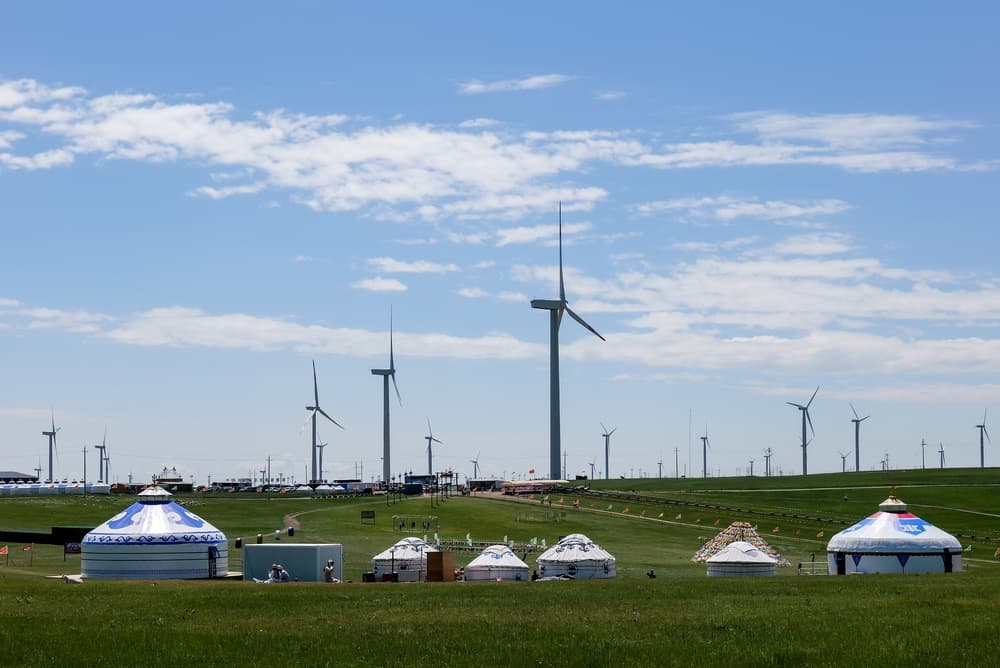
Among the new projects is Envision’s Galaxy Campus, designed to reach 2 GW and powered directly by renewable energy. The company, a manufacturer of wind turbines, aims to use Ulanqab as a model for integrating energy production and computing infrastructure.
Beijing’s AI race
Ulanqab began attracting technology companies long before the current AI race. In 2021, the area was designated as one of the main hubs of the national “Eastern Data, Western Compute” programme, through which Beijing aims to shift part of its data processing to the country’s western regions, where energy and land are cheaper.
The distance from the coast, initially a disadvantage, has become a strength with the rise in AI-related workloads. The cold climate reduces the energy required to cool servers, whilst the availability of wind and solar power helps to keep costs low. The relative proximity to Beijing and the fibre-optic connections have also reduced the problem of latency.
The race to build massive data centres is not limited to Ulanqab. On 22 August, in Hohhot, the capital of Inner Mongolia, 12 projects related to artificial intelligence and computing were announced, totalling 186.46 billion yuan – approximately 27.5 billion dollars.
Energy, coal and water
Beijing aims to increase the share of green electricity used by major computing hubs to 80 per cent by the end of the decade. Ulanqab has significant wind and solar resources, but the picture remains more complex. According to research, around 37 per cent of Ulanqab’s electricity still comes from coal. Data centres must also operate without interruption, making the continuous availability of power a key issue.
The other constraint is water: Ulanqab is situated in one of the driest areas of Inner Mongolia and receives around 350–360 millimetres of rainfall per year. Data centres require additional water for cooling, particularly during the summer months, when availability is most limited.
Few benefits for the local population
There is also another aspect to consider: the significant infrastructure investments in this region do not bring direct benefits to the local population. A 2026 study by Justin Kollar and Andrew Stokols notes that data centres generate relatively few direct jobs. In Ulanqab, around 90 per cent of those employed in data-related activities are reportedly non-residents. Some companies have opened offices in the city and programmes have been set up to attract and train engineers, but according to the researchers, the limited number of workers required by the facilities reduces the immediate impact of the investments on local employment.