Milan (AsiaNews) – For a decade, Saudi Arabia’s policy in Yemen, as in other parts of the Middle East, was based on the assumption that time, money, and coercive force, applied with patience and strategy, would suffice to subdue the Houthis, prevail over regional rivals, or compel them to reach agreements.
However, in recent weeks, or perhaps since the start of the Israel-US war with Iran in February, this outlook has faced a crisis unlike any seen since the Saudis entered the Yemeni conflict in 2015 with their (failed) military offensive to capture the capital, Sana’a.
Having seized strategically significant stretches of Red Sea’s coast in western Yemen, the Houthis are now pushing towards Marib, the last major stronghold of forces loyal to the internationally recognised, Riyadh-backed government.
Compounding the situation are attacks by pro-Iran rebel groups on cross-border energy facilities and the launching of drones (which the Houthis deny) towards Makkah, Islam’s holiest site.
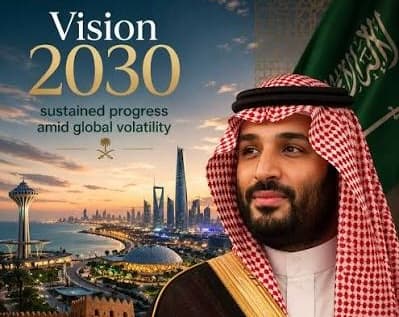
This scenario appears to jeopardise plans for a strong nation, driven by economic and social change, championed by Crown Prince Mohammed bin Salman (also known by his initials as MbS) through his Vision 2030 initiative.
A broken vision
Over the past few years, MbS tried to build a (more or less) solid network of alliances, ranging from US President Donald Trump to regional powers, despite underlying frictions with the United Arab Emirates (UAE), Saudi Arabia’s his true regional rival, both economically and politically.
However, Trump recently flatly rejected the idea of intervening in Yemen to support Saudi Arabia, stating that, “The Houthis called us, and they let us know they don’t want to fight with us”.
At the same time, parties to the so-called Makkah Pact (which includes nuclear-armed Pakistan and Turkey) were quick to clarify that the clashes, and the alleged attack on Makkah, do not trigger an obligation to intervene in defence of the Saudis.
Islamabad and Ankara justified this stance by noting that, so far, no intervention mechanisms have been defined, unlike the Atlantic Alliance (NATO), which mandates a response in the event of aggression against a member state.
Saudi Arabia’s setbacks in Yemen have also been compounded by additional problems in the north.
Last week, the Saudi foreign ministry confirmed that the drones that disabled the East-West Pipeline, which moves up to 4 per cent of the global supply to the Red Sea, originated in Iraq.
For several analysts, the timing of these events, coinciding with the Houthi offensive in the south and raids on the Khamis Mushait airbase, raise questions about coordinated operations.
According to the Associated Press, citing Saudi and Iraqi officials, emissaries from the pro-Iranian movement operated within an operations room managed by Iraqi groups, assisting them in planning the attack.
What is evident now is that Saudi Arabia has no painless way out of its multiple crises, whose military aspect, spanning from north to south, is merely the latest piece of the puzzle.
For over a year, the kingdom’s authorities have scaled back the mega-projects that were a source of pride, ranging from the futuristic metropolis of Neom and major industrial facilities to the hosting of premier sporting events, including the 2034 World Cup.
The economy, entertainment, social development, the opening up of the show business sector, and infrastructure are among Bin Salman’s flagship initiatives that have increasingly faced setbacks and downsizing over time. Now, a failed political and military strategy in Yemen has been added to the mix.
The end of the MBS era?
Indeed, the crown prince appears to be the true loser in the recent shifting landscape of the Middle East, a situation exacerbated by the rapid escalation of events on the military front.
At best, his image has been tarnished, that of a strongman and guarantor of stability through alliances and projects rather than military might, given that the Saudi military appears to be the weak link in this chain of grandeur.
Until recently, such a collapse seemed all but unthinkable, considering the honours and accolades President Trump showered him at the White House less than a year ago.
What is more, Yemen has historically been a treacherous graveyard for Saudi ambitions, a fate that befell Prince Khalid bin Sultan, a hero of Operation Desert Storm.
Following the 100-hour liberation of Kuwait, the Saudis had earmarked him as a future king, only to turn their backs in 2009 after his failed cross-border scorched earth mission, which ended in a humiliating withdrawal and the loss of hundreds of soldiers.
After facing hundreds of Houthi rocket and drone attacks on Saudi civilian and military infrastructure, MbS sought an agreement with the Houthis, culminating in the 2022 truce.
However, lingering tensions with UAE led Saudi Arabia, where MbS, rather than the elderly and ailing King Salman, is now the dominant figure, to intervene against UAE-aligned groups in Yemen, specifically the Southern Transitional Council.
This struggle for control of the south has weakened the anti-Houthi front and, in recent weeks, fuelled a sudden resurgence of the conflict.
Such a strategic blunder, much like the fate of the "Hero of Kuwait", could prove costly for the architect of the kingdom’s development and its ambitious Vision 2030, potentially putting at risk his personal leadership.
Analysts point out that the driving force behind Saudi policy has been MbS’s desire to do the exact opposite of the UAE, a move that has effectively made him the architect of his own undoing.
Ego and a lack of understanding have shaped every decision regarding Yemen. The Saudis now risk paying the price for a future monarch who may ascend the throne already hobbled, all while the shadow of an internal royal coup looms, a scenario reminiscent of past palace intrigues.
The Future of the Gulf
What is at stake today is not merely the personal fate of MbS and the Saudi kingdom’s role on the Middle Eastern and global stage, but the future of the Gulf region itself, long the heart of energy trade and a crossroads for maritime commerce, stretching from Hormuz to the Red Sea.
Before the war, states in the area aimed to diversify their economies beyond oil, banking on becoming "oases of stability" within a turbulent Middle East.
Trump’s decision to wage war on Iran, ignoring their opposition and yielding to pressure from Israel, exposed the fragility of that gamble.
The war with Iran sent maritime trade insurance costs skyrocketing, fostering an unusual strategic convergence among the Gulf monarchies within a regional security framework that had proven to be a failure.
Although behind-the-scenes coordination may appear deep, the Gulf Cooperation Council (GCC), established in 1981, has invoked its collective defence clause only once.
At the same time, its members largely agree on three points: Iran remains a long-term threat, the US security umbrella is no longer reliable, and regional stability has become an existential priority.
Lastly, two challenges are clear: one is the Iranian regime, which continues to pursue its vision of an axis across the region; the other is an Israel determined to achieve "regional paramountcy”, acting as the sole arbiter of the use of force with the rest of the region falling into line.
Nevertheless, competition between states, particularly between Mohammed bin Salman’s Saudi Arabia and Mohammed bin Zayed’s UAE, has meant that this convergence has remained a pact of convenience rather than a genuine asset in the face of a threat.
For over a decade, the Gulf states have been pursuing a diversification strategy to shield themselves from American unreliability, particularly with Trump’s return, and the Iranian threat.
However, not all countries have reached the same conclusion on how to act amid fragility, volatility, and unresolved conflicts. The UAE and other monarchies are aiming for a new regional security plan, yet it remains to be seen how to translate the hope for security guarantees into a stable, effective architecture.
According to experts, the Gulf needs, now more than ever, permanent mechanisms for integrated air and missile defence, intelligence sharing, maritime security, mutual assistance, and a credible commitment to collective defence.
To overcome this critical phase and establish themselves as global leaders, they must be capable of setting up a genuine regional system, laying the groundwork for a more effective and enduring collaborative framework that can transcend personal rivalries and divisions.





.webp&w=3840&q=75)