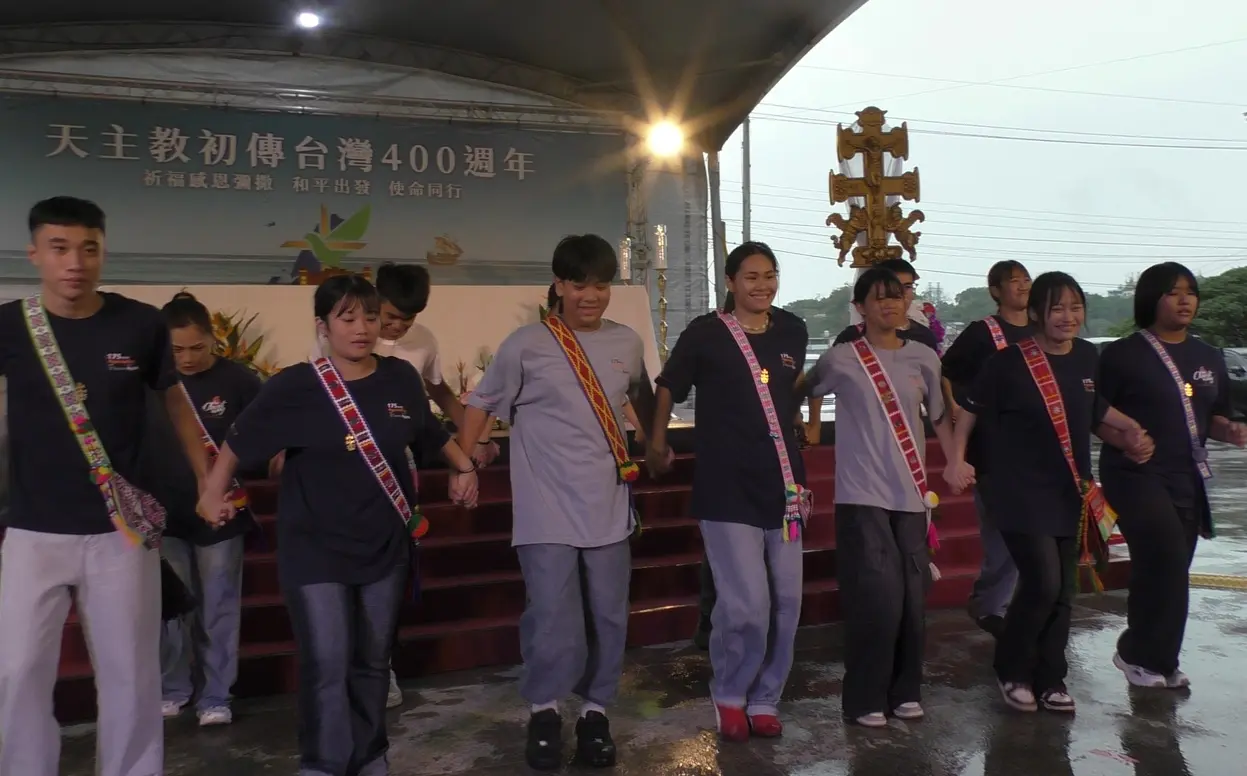
Taipei (AsiaNews) – n Keelung, hundreds of the faithful, religious sisters, and priests from across Taiwan gathered to mark the 400th anniversary of the arrival of the island’s first Catholic missionaries. This assembly in the northern port town—home to Taiwan’s earliest Catholic community since 1526/1626—offered a powerful gesture of shared remembrance and faith.
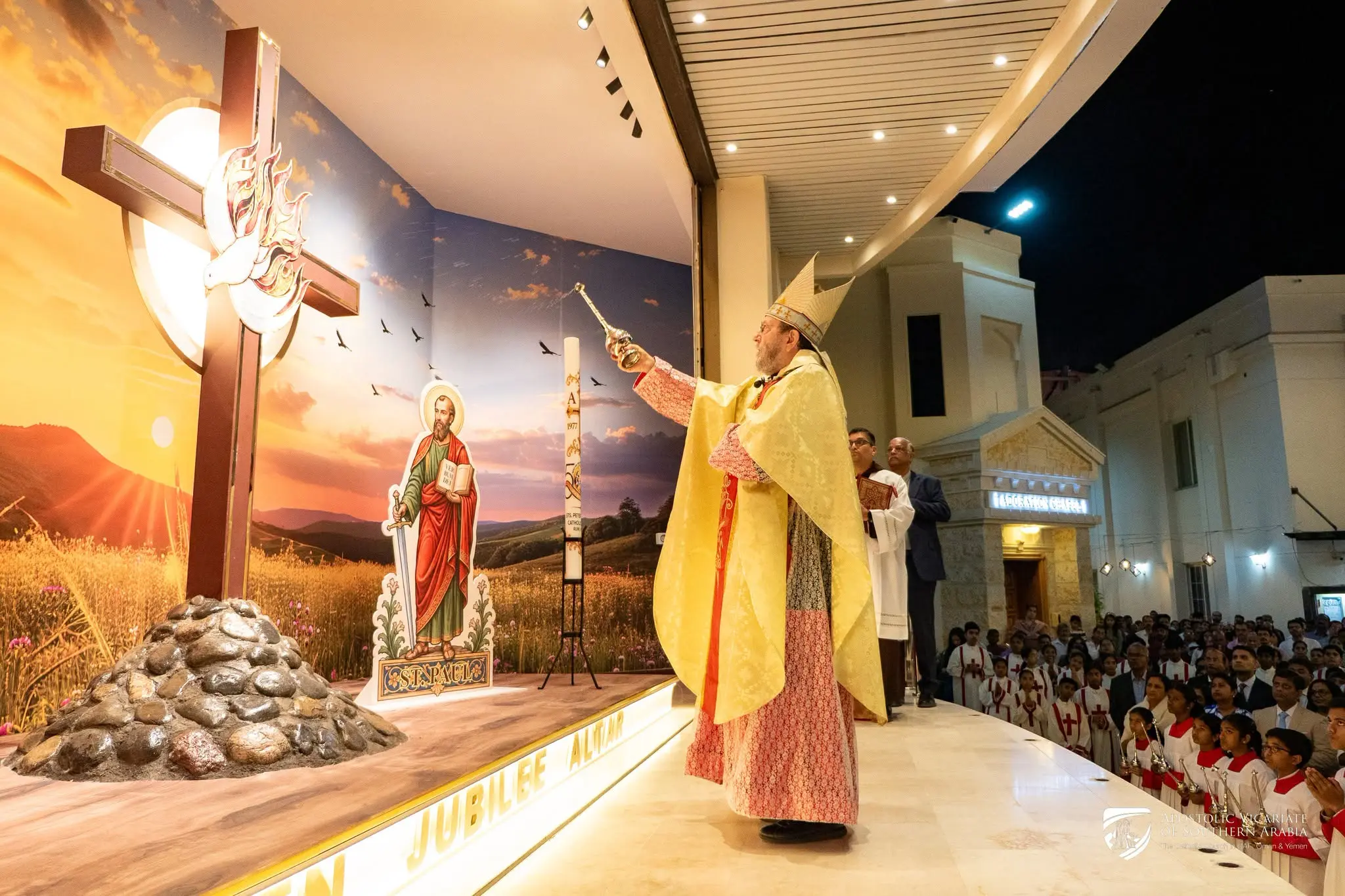
The Archbishop of Taipei, Bishop Thomas Chung, presided over the celebration under a large marquee that sheltered those present from the heavy rain. Alongside him were the President of the Chinese Regional Bishops’ Conference, Bishop John Baptis Lee (who is the Bishop of Hsinchu), Archbishop Savio Hong (formerly Apostolic Nuncio and, before that, Secretary of the Congregation for the Evangelisation of Peoples), together with other bishops and groups of the faithful who had travelled from all the dioceses of Taiwan.
A rediscovered past
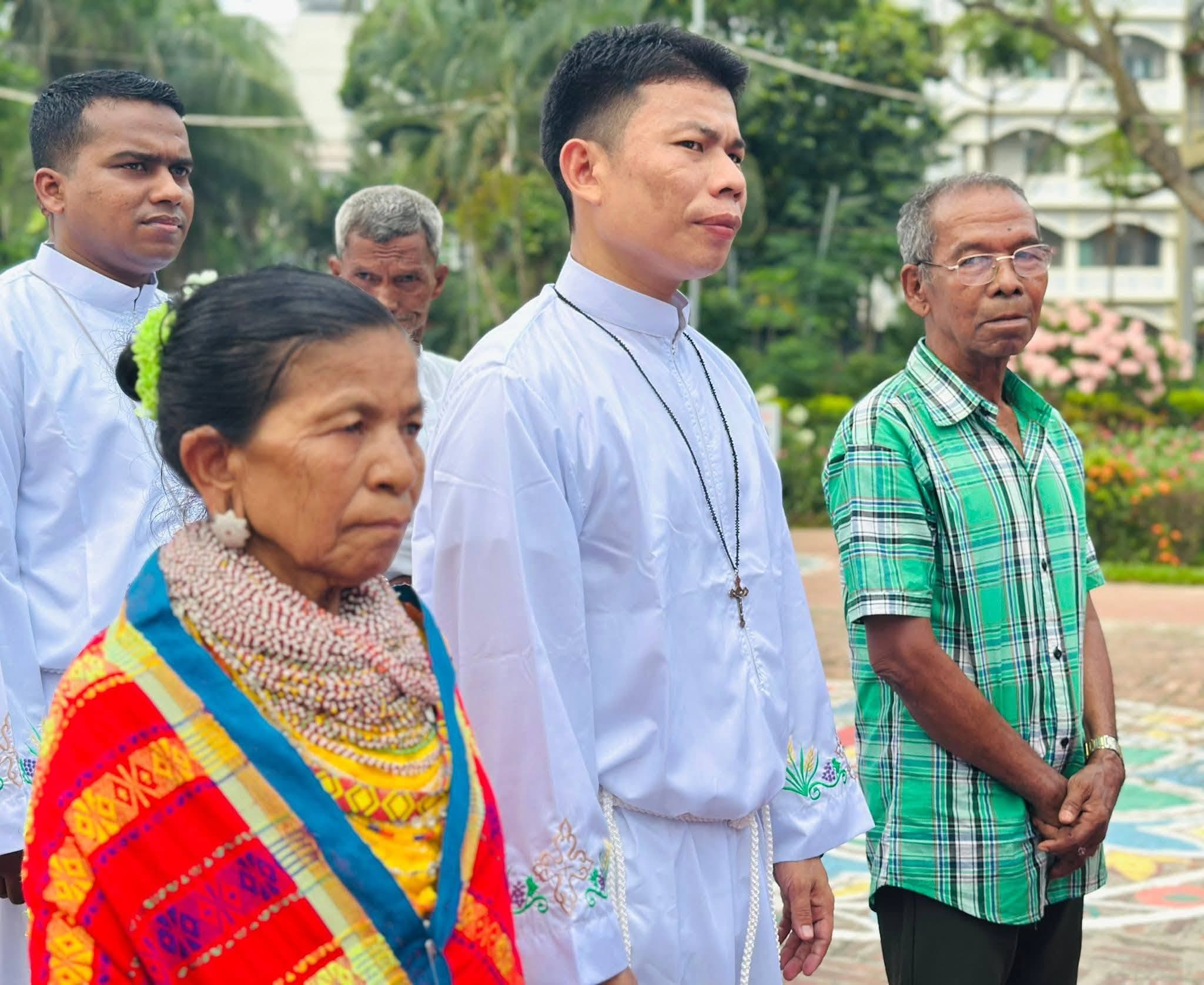
Significantly, the ceremony was enlivened by the songs and traditional costumes of groups from the indigenous Catholic communities of Keelung – the first to receive the initial proclamation – in a chapter of history that had long been almost forgotten in Taiwan. The fourth centenary celebrated this year is, in fact, the result of a genuine rediscovery. Between 2011 and 2019 alone, a team of archaeologists – during excavations on Heping Island, in Keelung – unearthed the foundations of the church of Todos los Santos (All Saints), built by Spanish Dominicans in the 17th century.
The church formed part of the town of San Salvador, founded by the Spanish conquistadors during their presence in northern Taiwan, which lasted just 16 years, from 1626 to 1642. During the excavations at the church complex – alongside the Cross of Caravaca, a large crucifix that the Spanish Dominicans had brought with them from Spain – 21 sets of human remains were also discovered, including those of a European, probably a missionary, and urns containing the ashes of indigenous children of the Pingpu ethnic group.
This fact bears witness to the fact that the church was not used solely by soldiers: there must also have been an initial proclamation of the Gospel to some local communities by the Spanish Dominicans who had arrived from the Philippines.
This presence was, however, short-lived: in August 1642, the Dutch army attacked Keelung and conquered Heping Island. During the conflict, the church was used as a detention centre for Spanish prisoners, before being put to military use and subsequently falling into ruin.
Thus, the Catholic Church in Taiwan would not be revived until 1859 – a full 217 years later – with other Dominican missionaries, who this time settled in the south of the island.
Finally, the 1950s arrived, a period marked by the exodus of thousands of people from Mao’s China to Taiwan, which also included many Chinese Catholics.
Today’s questions
It was precisely the archaeological discovery of the Keelung site that led the Church in Taiwan to reflect on its current situation. And on evangelisation in a context where local Catholics – despite full religious freedom – still number only 240,000, just over 1 per cent of the population. These groups risk remaining confined within ageing communities that are finding it increasingly difficult to pass on their faith from one generation to the next.
It is no coincidence that among the most significant moments of the afternoon in Keelung – alongside the beautiful melodies of the polyphonic chants performed by the St Gabriel Choir – were those featuring the young people of the deanery and the children from the nursery schools run by the Church for everyone in the local community.
Meanwhile, during the prayers of the faithful – alongside Chinese – English, Tagalog and Vietnamese were spoken, because today there are thousands of Catholic migrants living and working in Taiwan. Moreover, a significant proportion of the clergy and nuns are missionaries who have come from other countries in Asia, as well as from Europe, Africa and Latin America, to carry out their apostolate here.
How, then, can we return to speaking not as outsiders to Chinese culture, whilst also fostering within the faith that very same encounter which has enabled this island, in other spheres, to become a major global crossroads over recent decades? And how can we take our cue from the (often hidden) questions of the young people who throng the bars and shopping centres of Taipei, even amidst the serious demographic crisis that now characterises this Asian metropolis too (and without the excuse of the ‘one-child’ policy, madly pursued for decades on the other side of the Strait)?
Bishop Lee’s invitation
In this context, yesterday the President of the Bishops’ Conference, Bishop Lee – in his homily during the celebration before the Cross of Caravaca – drew a parallel with the Gospel passage about the disciples of Emmaus. They too, he said, had encountered Jesus, but had subsequently forgotten him and failed to recognise him along the way. “It was truly recognising him as the Risen One that changed everything in their lives and made them witnesses to the Gospel,” he said.
“Let us return to the mission with the same ardent heart as theirs,” said the Bishop of Hsinchu, the district famous throughout the world for its microchips. “Let us rebuild. Our reality is no longer that of the past, but let us ask ourselves together: where has the Lord already risen? He is in our midst.
He walks with us. He has never abandoned us. And it is not enough for us simply to know the content of the faith, nor even simply to love people,” he concluded, addressing the faithful. “We must truly know Jesus, establish a relationship with Him, and live a new life in Him. Only in this way will we enable others to encounter Him through us.”
VIEW SOME MORE PHOTOGRAPHS OF THE CELEBRATION IN KEELUNG HERE
ECCLESIA IN ASIA IS THE ASIANEWS NEWSLETTER DEDICATED TO CHRISTIAN COMMUNITIES IN ASIA. WOULD YOU LIKE TO RECEIVE IT EVERY SUNDAY? TO SUBSCRIBE, CLICK HERE.