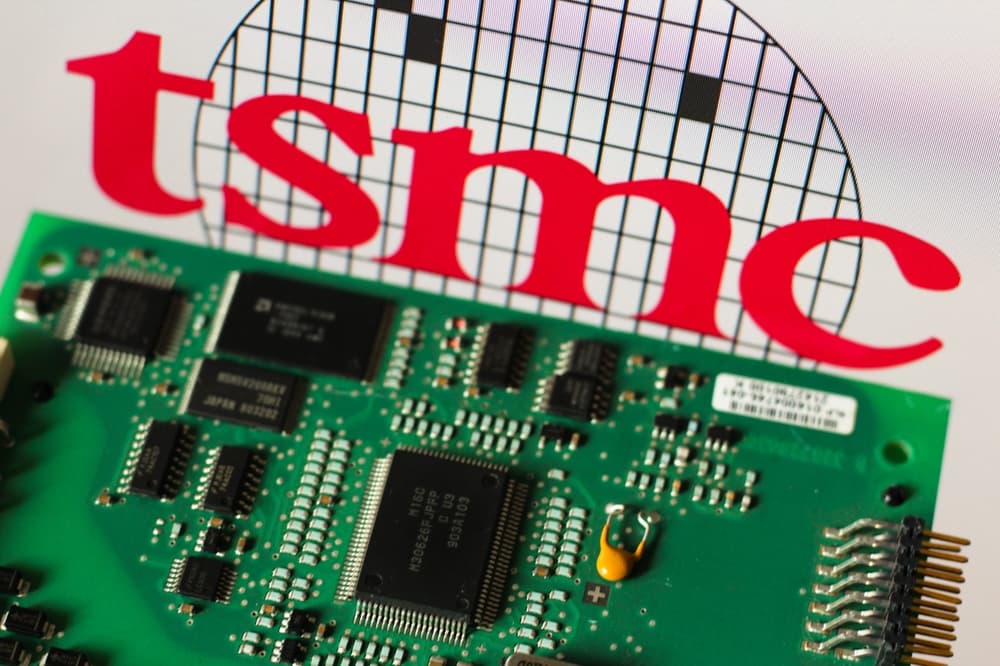
Taipei (AsiaNews/Agencies) – The race for artificial intelligence (AI) is accelerating Taiwan’s economy, expected to see a record Gross Domestic Product (GDP) growth of 10.7 per cent by the end of the year, the highest in the world, this according to the latest outlook by the International Monetary Fund (IMF).
In a report released yesterday during a summit in Bangkok, the UN agency more than doubled its April forecast, which had predicted a 5.2 per cent increase, making Taiwan the only economy in the world expected to see double-digit growth this year.
This far surpasses other Asia-Pacific economies: 5 per cent for Singapore, 3.8 per cent for Hong Kong, 3.3 per cent for South Korea, and 0.7 per cent for Japan. China is expected to grow by 4.5 per cent, while the United States should see a 2.3 per cent increase.
The agency’s estimate is lower than the one published in August by Taiwan’s Directorate General of Budget, Accounting and Statistics, which had projected growth of 11.05 per cent.
Such a performance is driven primarily by demand for components essential to the development of artificial intelligence.
Taiwan and South Korea currently hold a prominent position in the production of hardware for the computing systems used to train and operate AI models, so much so that, according to the IMF, they collectively account for 62 per cent of global net trade in AI-related computing hardware.
The impact extends to other economies in the region. “Given the structure of supply chains for technology exports from these two economies, a handful of commodity exporters and other manufacturing hubs in East Asia are likely to see spillovers from this activity,” the IMF report reads.
For Taiwan, the IMF also projects a 2 per cent rise in the consumer price index, up from the 1.5 per cent forecast in April, while the unemployment rate is expected to remain largely stable at 3.4 per cent.
At the same time, the agency highlights that conflict and technology are the two major forces transforming the global economy.
The benefits of investments in artificial intelligence are in fact skewed. While some advanced economies are reaping the rewards of the tech boom, poorer, energy-importing countries face rising costs, driven largely by the war in Iran.
According to new IMF forecasts, India’s economy is projected to expand by 7 per cent in 2026, an upward revision of 0.6 percentage points from July estimates, fuelled primarily by robust domestic demand and the services sector; however, structural challenges remain regarding job creation, particularly for youth, and weak private investment.
China, meanwhile, is expected to experience 4.5 per cent growth, a slight decline from the previous forecast and the 5 per cent growth projected for 2025.
The IMF notes that the outlook for the world’s second-largest economy is weighed down by rising global oil prices and uncertainties in the international landscape.
Consequently, while benefiting from demand for AI-related technologies, China faces a less favourable economic environment than Taiwan.
In contrast, the IMF projects aggregate growth of 4.4 per cent for the five major ASEAN economies (Indonesia, Malaysia, the Philippines, Singapore, and Thailand) in 2026, up from the previously estimated 4.1 per cent, driven by investments in data centres.
However, the latter require energy, water, and adequate infrastructure, and do not, on their own, guarantee that the benefits will be shared across the entire population.
In a working paper published in August, the IMF explained that there is a real risk that capital-rich economies rapidly adopt artificial intelligence, leaving less prepared countries well behind, thereby widening the gap. Thus, those with an initial advantage can accumulate further capital and strengthen their lead, while latecomers risk being left behind.
The issue is also linked to the demographic differences among various Asian nations; for economies like Japan and South Korea, characterised by aging populations and shrinking workforces, AI can help maintain productivity despite fewer workers.
For younger countries like India and the Philippines, the challenge lies in ensuring that new technologies create employment opportunities rather than reducing job prospects for a growing workforce.