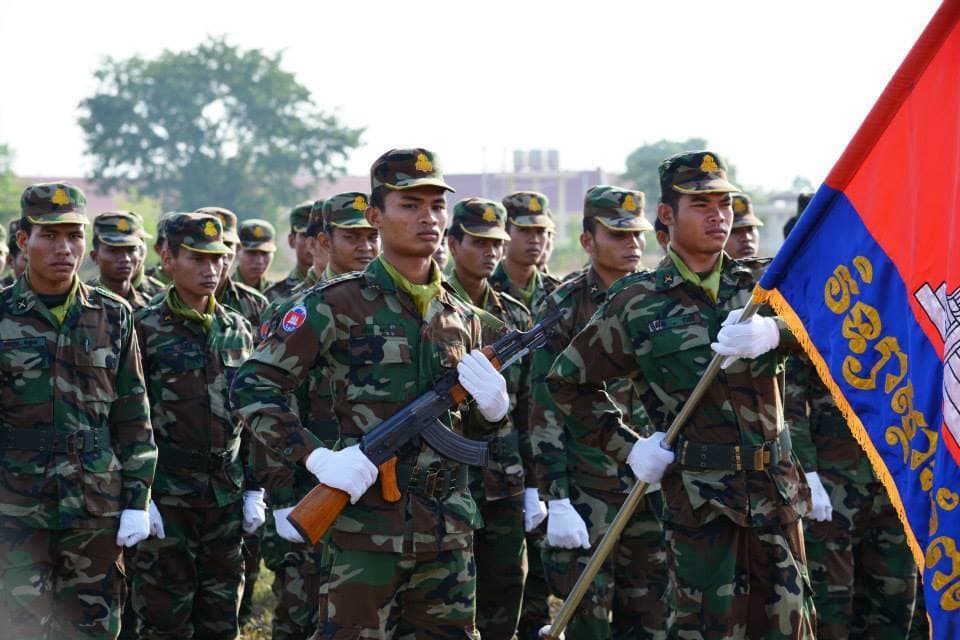
Phnom Penh (AsiaNews) – Following last year’s bloody border clashes with Thailand and ongoing tensions with its more powerful neighbour, Cambodia has reintroduced compulsory military conscription for the first time in three decades.
Funded by targeted tax reforms, this measure forms part of a wider programme to expand and modernise the army over the coming years, which will see defence spending rise from $650 million this year to $1.2 billion by 2030.
Every year, thousands of men aged between 18 and 25 will now be conscripted for two years’ active service, with severe prison sentences for those who evade conscription. This year alone, around 8,500 men will be called up to bolster the Royal Cambodian Armed Forces (RCAF), which has a strength of 124,000 personnel. With the country’s standoff with Thailand fuelling nationalist fervour, more than 3,000 young men are reported to have turned up to enlist on the first day of registration, 1 October.
At present, there are no official figures on the number of people who enlisted during this first registration phase, which ended on 9 October. “The public reintroduction of conscription sends a clear message of defensive deterrence to neighbouring states, including Thailand,” says Thong Mengdavid, a lecturer in international studies and public policy at the Royal University of Phnom Penh.
“Although Cambodia prioritises diplomacy and peaceful cooperation within ASEAN, maintaining a well-trained, disciplined and modern standing force,” he explains to AsiaNews, “signals a strong determination to defend territorial integrity and protect border areas from any potential aggression or illegal activity”.
Announcing the plan to reintroduce compulsory conscription in May, Prime Minister Hun Manet – the country’s first graduate of the United States Military Academy at West Point – stated that the clash with Thailand, with its resulting displaced persons, had prompted Cambodia to strengthen its armed forces. Hence the government’s decision to increase the number of soldiers, whilst equipping them with better and more modern equipment and weapons.
“This conflict,” said the Prime Minister, “is a lesson for us and represents an opportunity to review, assess and set our objectives for the reform of our armed forces.”
The conflict over the 830-km shared border erupted into violence just over a year ago, causing the deaths of over 100 people and forcing hundreds of thousands to flee their homes on both sides of the border.
The two countries – both members of ASEAN – subsequently signed a fragile and precarious truce, whilst the deeper issues that caused the dispute remain unresolved.
It is estimated that even today, 20,000 Cambodians are still unable to return to their villages, which are now occupied by the Thai army. Mengdavid stated that the conscription programme will provide much-needed fresh blood to an army led by ageing veterans, who have endured years of war and conflict.
“The introduction of conscription,” he said, “marks a strategic turning point for the Royal Cambodian Armed Forces.” “For decades,” he continued, “the army has relied on veterans from the civil war era who are now reaching retirement age. Replacing these retiring soldiers with a younger generation is essential to maintaining border security, ensuring territorial readiness against potential external threats and initiating the transition towards a modernised military force.”
The new law will also create a new and substantial reserve force for Cambodia, which currently has none. After completing compulsory service, conscripts will be required to serve in this corps until they reach the age of 45. Those who evade conscription face up to two years’ imprisonment in peacetime and five years in the event of war or conflict.
Cambodia has had a conscription law in force since 2006, which allows men aged between 18 and 30 to be conscripted for periods of 18 months. However, it lacked the necessary funds to implement the programme and had to allocate resources to other priorities, such as education, healthcare and job creation. This time, however, conscription will be adequately funded, as the government assures us.
Meanwhile, at least thirty government departments have been abolished and the country’s public debt-to-GDP ratio remains among the lowest in the region, standing at 25.5 per cent. “The consolidation of over 30 redundant departments spread across 16 ministries,” Mengdavid explains, “has reduced administrative costs, freeing up budgetary resources to be channelled directly into defence and human capital development.” “Thanks to a low public debt-to-GDP ratio,” he notes, “Cambodia maintains the financial margin necessary to fund military modernisation without compromising economic stability.”
Cambodia’s public debt-to-GDP ratio compares favourably with an ASEAN average of over 60 per cent and has been described by both the World Bank and the International Monetary Fund (IMF) as sustainable and low-risk. It is also well below the international danger threshold of 55 per cent. This guarantees the country both long-term development loans at more favourable rates and a financial reserve in the event that regional tensions or defence requirements should suddenly increase.
Phnom Penh’s defence spending grew moderately in 2026, rising from $739 million in 2025 to $750 million. However, with the implementation of fiscal and structural reforms, this figure is expected to rise to $900 million next year and reach approximately $1.2 billion by 2030.
An arms race which, in the recent past, has not failed to arouse concern even amongst the bishops of this Asian country.
Cambodia stopped conscripting young people into the army in 1993, following years of compulsory conscription and successive generations forced to fight by warlords. This decision was driven both by the 1991 Paris Peace Accords and by a lack of funds.
This time, conscription has also been conceived as a tool for workforce development, with a positive structural economic benefit. Recruits will receive two years of vocational training, thereby improving the quality and skill levels of the country’s largely unskilled workforce. They will also be given priority for further training and education upon discharge.
According to a World Bank study dating from 2024, 89 per cent of jobs in Cambodia remain low-skilled, leaving a large proportion of the workforce vulnerable to structural economic changes. Only 48.9 per cent of Cambodians hold a job for which they are qualified and prepared on the basis of the curriculum they have completed, as shown by data from the Ministry of Labour and Vocational Training.
“The integration of vocational training into military service aligns with Cambodia’s broader economic objectives. As the country moves towards a high value-added manufacturing sector, the annual reintegration into the civilian workforce of thousands of disciplined, technically trained young citizens (from the armed forces) directly addresses – concludes Mengdavid – the shortage of skilled labour and expands the national talent pool.”