Taipei (AsiaNews) – In Shenzhen, China is positioning itself as a major global hub, hosting the APEC summit as well as tomorrow’s highly anticipated trilateral meeting between Xi Jinping, Vladimir Putin, and Donald Trump.
The Chinese president has been vocal in portraying China as a guarantor of "stability" and an advocate for "openness" in international relations, particularly regarding trade.
However, there is one part of the Asia where these principles do not to apply, i.e. Taiwan. In this case, China’s view of what it considers an “internal affairs" takes precedence over all other considerations.
The Hong Kong Summit
A litmus test will arrive in just a few days. On 30 November, Hong Kong will host the 94th session of the Interpol General Assembly, the body that coordinates investigative efforts among law enforcement agencies worldwide.
One of the key topics on the agenda will be the fight against scam centres, transnational criminal groups operating out of various Asian countries that conduct online criminal activities, a sector now estimated to generate a global turnover of around a trillion dollars.
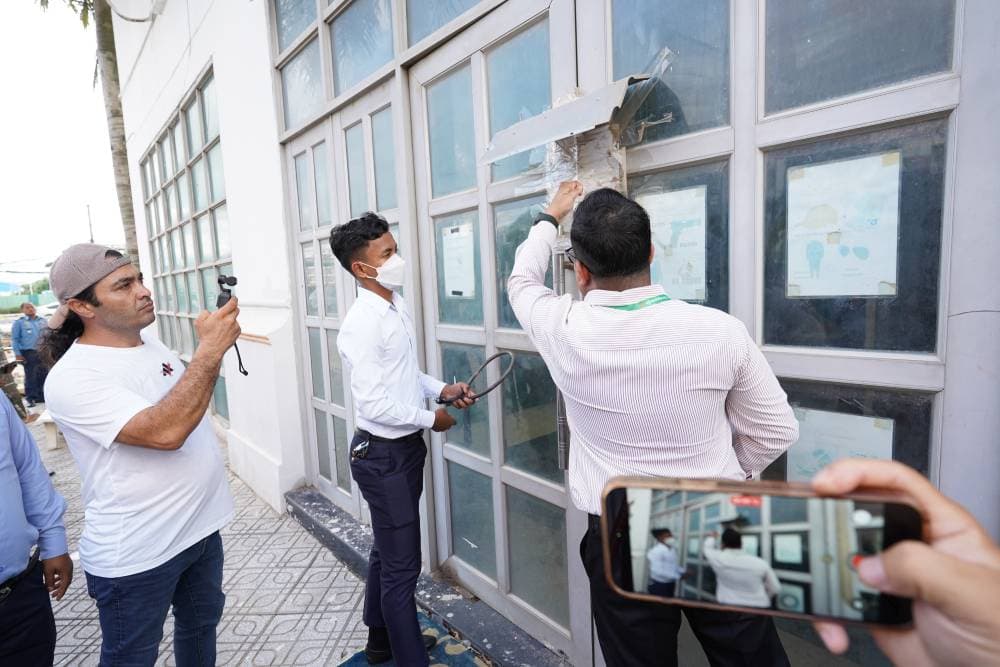
In recent months, this issue has gained increasing attention, particularly regarding crackdown following years of complicity, even at the highest levels, in Cambodia and Myanmar, the two countries where these criminal hubs are most concentrated.
This shift has been driven by mounting pressure from China and the United States, prompted by the massive scale the issue has reached.
However, many believe this may be little more than a sideshow, with criminal groups simply relocating to new sites or different countries.
For this reason, discussions within Interpol are a crucial step. Yet, there is one party with extensive knowledge of this issue that cannot take a seat at the table.
Taiwan’s police have long been at the forefront of the fight against these criminal activities; through bilateral cooperation, they have even played a role in operations led by the FBI against the Prince Group, the most notorious of these criminal organisations.
Yet, they will once again be absent from the Hong Kong summit, as China continues to block any participation by Taiwan in international bodies like Interpol.
When Beijing and Taipei cooperated
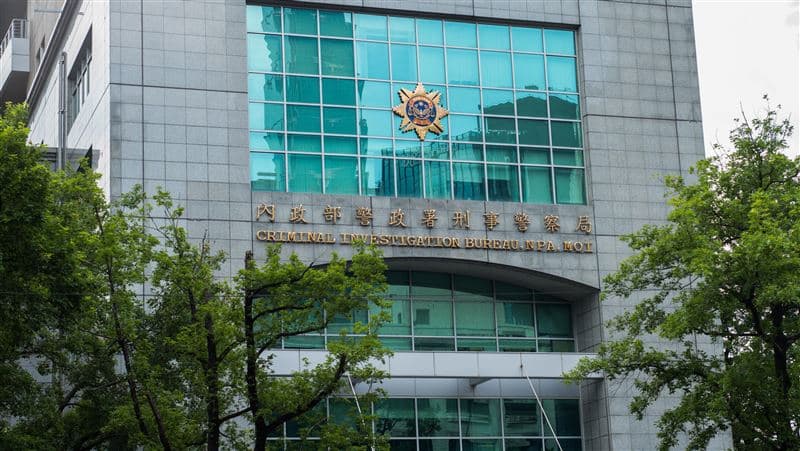
Edward Lee currently serves as the director of the International Criminal Affairs Division (ICAD) at Taiwan’s Criminal Investigation Bureau (CBI).
On the issue of scam centres, he possesses personal, hands-on experience gained while working in the liaison offices that the Taiwanese police maintain in the Philippines, Malaysia, and Thailand.
“For me, my job was to arrest around 400 Taiwanese scammers, and deport them back to Taiwan,” he said. “As a law enforcer working in transnational crime for almost two decades, I have to say that this is a major issue in the world. That Taiwan is not part of Interpol or on the transnational cooperation platform is also an issue,” he added.
“Two decades ago, we already tried to let the world know that such scam and fraud cases were very important,” he explained, mainly because they actually started in Taiwan, “from 2004 to 2009”, with a few dozen call centres, but after Taiwan started tracking them, these operations “moved to mainland China.”
Those, however, were very different times regarding relations between the two sides of the Taiwan Strait.
“Starting in 2009, we began collaborating with the police of the People’s Republic of China to combat this phenomenon,” the senior ICAD official said. “In 2009, when the cross-strait relationship was still good, we work with Chinese police and signed an MOU with them because all the call centres had moved from Taiwan to China.”
Cooperation during those years was effective. Chinese police learnt how to hunt them down. Consequently, the call centres relocated further to other countries in Southeast Asia, which is why Taiwan set up liaison offices in the Philippines, Thailand, and Vietnam.
Edward Lee provided more details about his work.
“From 2011 to 2016, I worked with the Malaysian police” and “cracked down 10 call centres in Malaysia,” at a time that saw “the merging of Taiwanese and Chinese syndicates.”
Eventually, the scam centres “moved from Southeast Asia to Africa and then to Europe”, like Montenegro and North Macedonia in 2018. “In North Macedonia, we cracked down a call centre, and I arrested and deported 92 Taiwanese from Montenegro to Taiwan”.
A step backward (and lost time)
With COVID-19, everything changed. Scam centres “moved back to Cambodia and Myanmar.”
“You know why they set up their compounds in Cambodia and Myanmar? Because of China’s One Belt, One Road policy.”
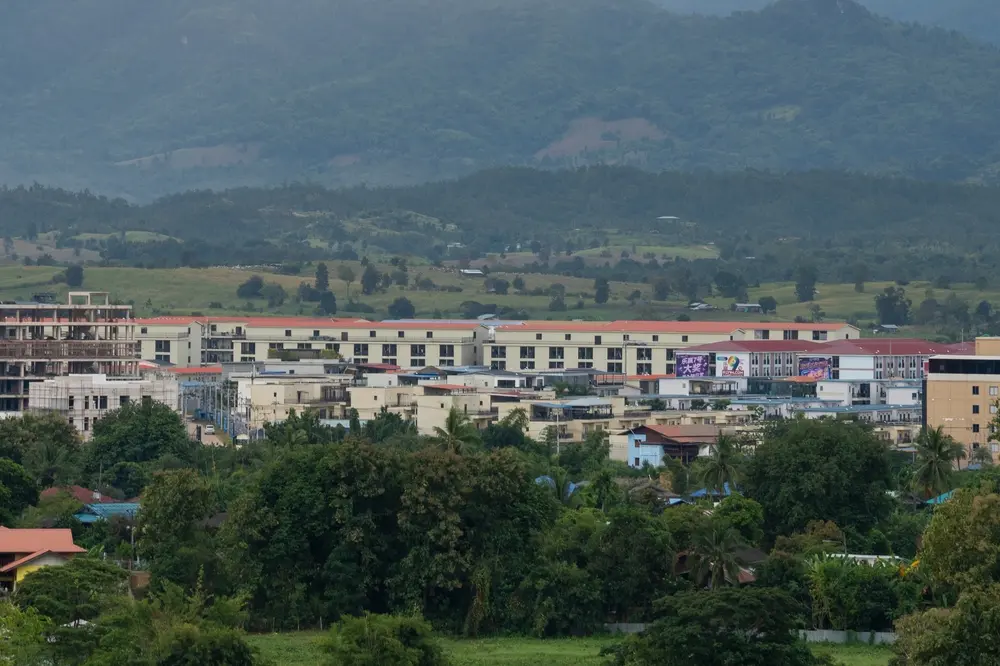
In those countries, China had set up infrastructure for business ventures, part of the so-called New Silk Road. With COVID-19, investments dried up: no businesspeople wanted to invest in Cambodia.
Yet the infrastructure and buildings were already there. It didn’t take long for criminal groups to seize the opportunity. Given “the corruption in Cambodia and Myanmar, they started to make this business” again.
Meanwhile, relations with China changed. Xi Jinping’s insistence on the political issue of Taiwan led to a push for the marginalisation of its institutions from international bodies, including those focused on security cooperation.
Over the years, Taiwan consistently asked to contribute its experience in combating scam centres, but “No one listened to us,” Lee lamented.
Meanwhile, the problem kept growing.
“In the beginning, the scammers only targeted the Taiwanese and Chinese and overseas Chinese, because they only speak Mandarin.” But with new artificial intelligence, they can find their victims anywhere in the world. “How? Through romance scam, impersonation scam, an investment scam, all kinds of scam, it's easy.”
For the ICAD director, “if two decades ago, the world had listened to us and tried to work with us, I don't think the call centres or the scam compounds would be so widespread today.”
In his view, the world should reconsider the harm that excluding Taiwan from Interpol entails.