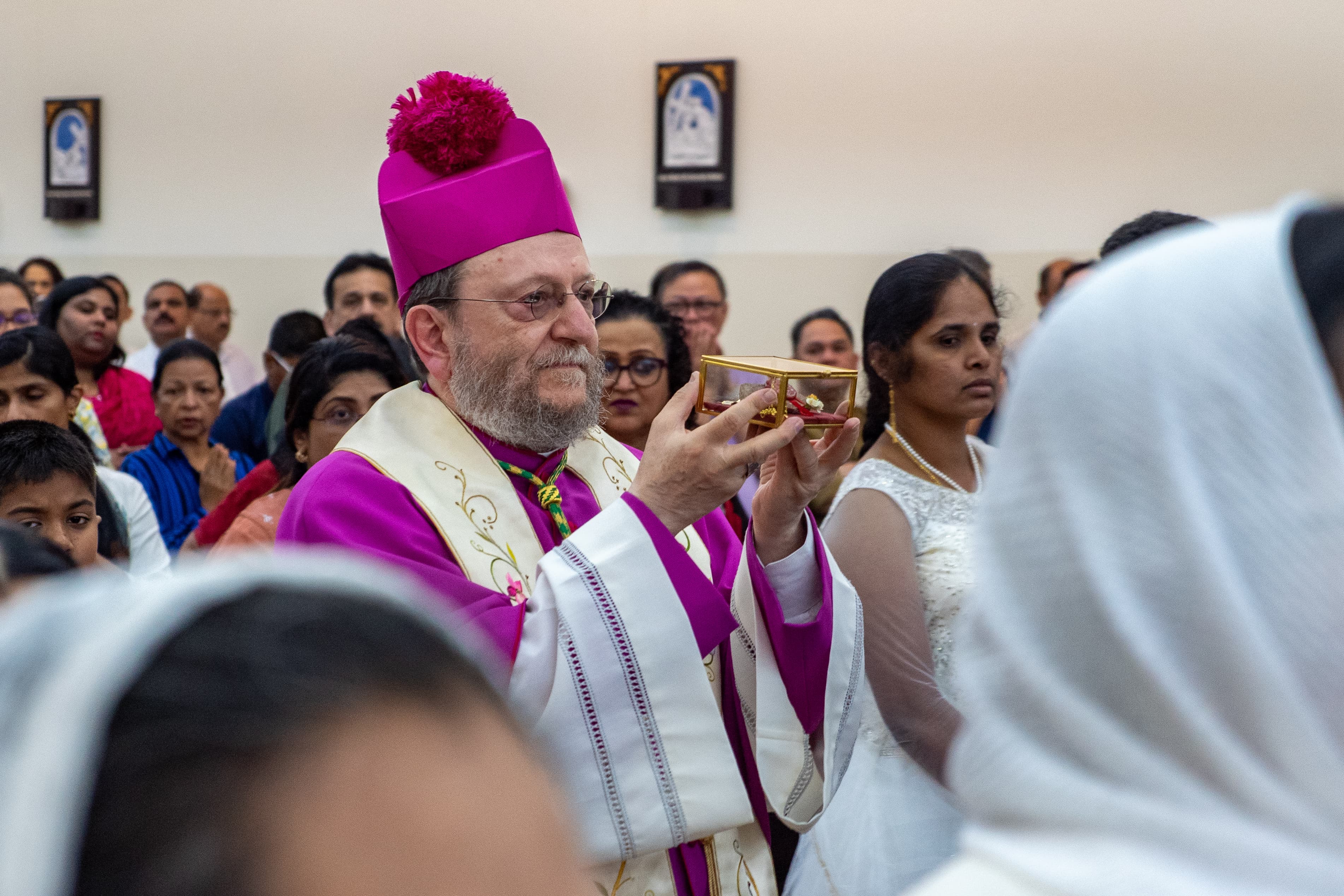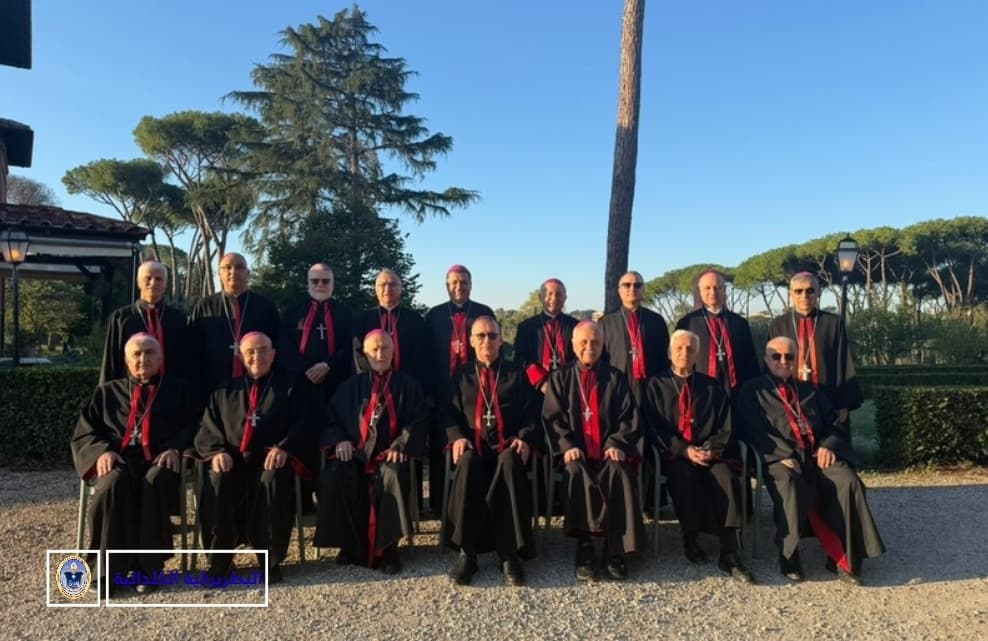
Rome (AsiaNews) – The Chaldean bishops issued a final statement at the end of their synod, which was held in Rome from 16 to 19 October.
In it they express “concerns about employment, stability, education, and the future” of families and the entire community,” which is “very close to our hearts”, and is “always present in our prayers and pastoral responsibility.”
In the statement sent to AsiaNews, signed by the synod’s secretary general, Bishop Felix Saeed Shabi of Zakho and patriarchal administrator of Alqosh, the prelates encourage families to “cultivate a spirit of prayer, dialogue, and forgiveness within their homes.”
Meanwhile, the patriarchs and heads of the Churches in Jerusalem issued a firm condemnation of the “heinous attack” carried out last Saturday by “masked settlers” in the Christian village of Taybeh, in the West Bank, a place long targeted by Jewish extremists and the site of escalating acts of violence during the current olive harvest.
Youth and the diaspora
in their synod, Chaldean bishops expressed hope that parishes can “be places of prayer, attentive listening, and pastoral accompaniment, where everyone finds a place and where young people actively contribute to parish life through their talents, questions, and initiatives.” To this end, they “encourage families to cultivate a spirit of prayer, dialogue, and forgiveness within their homes”.
They also focus on the “needs of our communities throughout the diaspora, particularly in Europe, and the importance of organizing their pastoral care in cooperation with the local Churches,” encouraging “our faithful abroad to preserve their faith, heritage, language, and bonds with their Mother Church, while actively participating in the societies in which they live.”
The synod is the first major event to take place under the leadership of the newpatriarch, Mar Polis III Nona, who succeeded Cardinal Louis Raphael Sako, who resigned, last April. Cardinal Sako is now dedicated to study and prayer at his new residence in Erbil, Iraqi Kurdistan.
The Chaldean Church descends from the Church of the East, with its origins in ancient Mesopotamia and the saints Mar Addai and Mar Mari, disciples of Saint Thomas the Apostle. The patriarchal see is located at Saint Joseph’s Cathedral in Baghdad, with various eparchies and dioceses in Iraq and across the globe.
It has more than 600,000 members, most of whom, around 300,000, live in the Arab country, though at one time their number exceeded 1.3 million. Since the US invasion in 2003, the majority fled, thus increasing both the size and weight of diaspora communities in Europe, North America, and Australia.
This synod took place in a “spirit of fraternal [ecclesial] communion” and “pastoral responsibility,” with the goal of “gathering together” and reflecting “upon the life and mission of our Church”, beginning with the celebration of Mass, prayers, and sacred hymns from the “Eastern liturgical tradition”.
The bishops offered prayers and expressed their “filial love” for Pope Leo XIV when the pontiff was in hospital for surgery to remove a lung tumour.
Praying for peace
The statement also pays tribute to the memory and witness of Mgr Sabri Anar, Chaldean Bishop of Diyarbakir (Turkey), who passed away on Saturday in Paris, France, where he had travelled for medical treatment as his illness worsened.
“As we mourn the loss of a brother and fellow servant in ministry, we remember with gratitude his priestly service in France and his episcopal ministry in Turkey, and we offer our prayers for the repose of his soul,”the statement reads.
On another matter, it says: “The Synod approved the establishment of its committees and appointed their chairpersons to strengthen collaboration, coordinate efforts, and ensure effective follow-up.”
“We also addressed the role of the Permanent Synod and the completion of its canonical membership, as well as the review of ecclesiastical regulations and particular law.”
It also examined“the draft Liturgical Directory, with a view to further study and consultation with priests and deacons throughout the dioceses,” as well as the promotion of the “Chaldean liturgical heritage”.
Finally, the bishops discussed ways to support “education, formation, and pastoral ministry” at home and abroad, as well as the Iraqi Church’s commitment to peace.
“We express our gratitude to all who support this mission through their work, expertise, and generosity, and call for greater solidarity among our dioceses in the homeland and throughout the diaspora, with particular attention to communities facing the greatest needs.”
“From Rome, we offer our prayers for Iraq and all the countries where our faithful live, and for peace throughout the Middle East and the world.
“We call for the rejection of violence, respect for human dignity and rights, and the promotion of citizenship and peaceful coexistence.”
The Church in the Holy Land against settlers
For their part, the patriarchs and heads of the Churches in Jerusalem issued an impassioned appeal against the violence directed at Palestinians currently engaged in the olive harvest, a vital resource for the local economy.
In one of the latest incident, diplomats from Belgium, France and Poland were attacked, as were activists and a delegation of laypeople and representatives from the French Church.
Church leaders in the Holy Land slam the “heinous attack” by “masked settlers”, describing it as part of “wide-scale terror” that goes beyond an “isolated incident.”
This situation reached “a peak during this time of the olive harvest, when families go to their lands to collect what they need to live and renew their generations-long bond with their lands.”
The patriarchs and heads of Churches blame a “religious ruling recently published, allowing Jews to take the olives of Palestinians,” calling it “unfounded, very worrying and dangerous, and absolutely unacceptable.”
Despite this, they also “very much appreciate that several rabbis and Jewish voices have publicly rejected it,” thanking Israeli President Yitzhak Herzog for his words of condemnation, while the stance of the government, which includes pro-settler members, has been far more timid, to put it mildly.
“Unfortunately,” the statement says, “the facts on the ground show that these attacks continue because of the impunity enjoyed by those who commit them.” For this reason, “We call upon the competent authorities to bring those responsible to justice”.