Milan (AsiaNews) – Iraqis will vote in parliamentary elections on 11 November, a key date to shape the future of a country that wants – or at least is trying – to put behind two decades of war and jihadi violence.
The vote comes with in the background intra-Shia divisions, attempts by civil society groups to build a unified movement in favour of greater political representativeness, and Christian leaders demanding reform in the quota system that might otherwise see the Christian vote fragment.
Earlier this month, Iraq’s Independent High Electoral Commission (IHEC (IHEC) officially confirmed the date of the election, which the Iraqi government through Prime Minister Mohammed Shia al-Sudani’s office had announced.
Setting the date for a vote was not at all obvious amid an intense debate over various proposals to amend the election law, calls for the current parliament to remain in place and the establishment of an emergency cabinet.
Shia front
About 29 million voters will be eligible to cast their ballot by the end of the year, including in Kurdish majority areas. But only those with biometric voting cards will be able to vote.
A total 314 parties are registered, with 70 indicating their intention to take part in the elections. The registration process began on 15 April and is set to run through 23 May, this according to IHEC.
The November election will be the sixth parliamentary round since the United States invaded Iraq in 2003.
The incumbent government is facing increasing pressure following rumours – which have been denied – of an attempt by the Coordinating Framework to postpone the polls.
The current legislature, which began on 9 January 2022, is set to end on 8 January next year.
Unlike previous elections, which used a single-district system per province, the 2021 vote was held under a multidistrict arrangement. In March 2023, the Iraqi parliament approved a third amendment to the electoral law, reverting to a single-district system per province.
Meanwhile, the situation is fluid among Shias in terms of lists and alliances. Prime Minister Al-Sudani is seeking a second term and is expected to lead a broad list capable of ensuring him a substantial electoral support (and parliamentary seats).
However, tensions simmer, according to analysts, due to growing pressure on Shia militias in Iraq, which have for years represented Iran’s influential “long arm” in the country’s internal affairs.
The Coordination Framework, the ruling Shia-dominated alliance, announced its intention to run with six separate lists, and reconvene after the vote. This stems from divisions that emerged within the alliance.
One cited factor is Prime Minister Al-Sudani’s decision to start talks with interim Syrian President Ahmed al Sharaa, as well as inviting him to the Arab League summit in Baghdad next month. Many Shias opposed al-Sharaa over his jihadi past, affiliation with al-Qaeda, and his role in Bashar al-Assad’s downfall.
Another factor is disagreement over disarming Shia militias.
Finally, it is unclear what role the powerful Shia leader Muqtada al Sadr will play. In March he announced his intention not to participate in the next election, even though he instructed his followers to update their voter IDs.
Kurds and civil society
In recent weeks, opposition parties in Iraqi Kurdistan have started intense negotiations aimed at forming a united coalition, to reshape the political map and break the stranglehold of the two main Kurdish parties, namely the Kurdistan Democratic Party (KDP) and the Patriotic Union of Kurdistan (PUK). The Kurdistan Justice Group together with the Islamic Union of Kurdistan (KIU) and the Popular Front inked a preliminary agreement to this effect.
For their part, the KDP and the PUK are considering the possibility of running a joint list in disputed areas to ensure stronger representation in sensitive regions, most notably Diyala, Kirkuk, Nineveh and Saladin, already the scene of tensions between the central and regional governments.
These provinces are rich in oil and have considerable strategic importance. But they are a bone of contention because of demographic shifts caused by the forced displacement of Kurds and Turkmen and the settlement of Arabs under Saddam Hussein.
A new element in the upcoming vote is the attempt by civil society movements and political groups to create an alternative to traditional parties, despite doubts over their real effectiveness.
Despite taking part in previous elections, few voters see them as capable of bringing real change or implementing promised reforms, like ending sectarian power-sharing and rotating offices.
According to some sources, the movements could split into two alliances, but formed by groups with little following and funded by traditional parties.
About 20 political groups, including the Nazil Akhud Haqqi Movement, the National Home Party and the current Our Cause, met to discuss a unified coalition, but found little support from voters.
The Iraqi Communist Party and its traditional allies are trying to form a broader alignment, promoting a platform of reforms against corruption and sectarianism.
However, younger activists have largely rejected these efforts, distrusting groups that had previously entered government through power-sharing agreements.
“The idea of alliances and elections has lost much of its impact and significance among Iraqis due to widespread despair over achieving real change,” said political activist Ali al-Hajimi speaking to The New Arab's Arabic language edition, Al-Araby Al-Jadeed.
For some, the goal is to create a front capable of opposing the continuous violations of public and private freedoms, instability and the uncontrolled proliferation of weapons.
However, political analyst Abdullah al-Rikabi warns that "the current election law is designed to serve major parties with financial power and geographical influence”, leaving civil parties at a significant disadvantage.
Christian quotas
Lastly, one issue that remains central in the upcoming election is minority representation, in particular that of Christians.
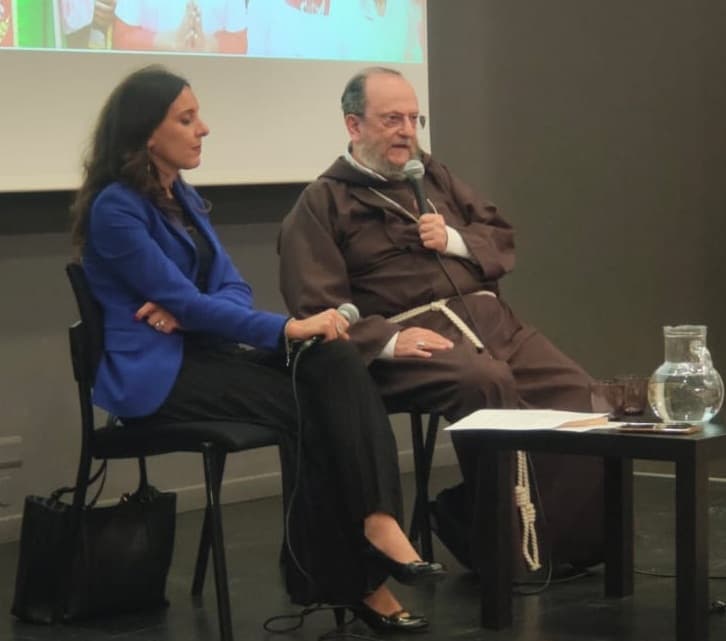
To this end, Card Louis Raphael Sako, Patriarch of Baghdad of the Chaldeans, who is currently in Rome for the conclave to elect Pope Francis’s successor, issued an appeal little over a month ago, emphasising that the current electoral process has failed to guarantee real representation for the Christian minority in parliament.
Behind his words is a very harsh clash with the Babylon Movement, a so-called Christian faction actually linked to pro-Iranian Shia militias active in Iraq and headed by the self-styled Christian leader "Rayan the Chaldean".
In the last election, four of the five seats reserved for Christians in the lower house of parliament, the Council of Representatives, belong to a group that pursues policies and interests far from the needs of the minority.
In his statement, the primate encourages Christians to register and participate in the vote with conviction, but also asks that appropriate measures be taken, because “Our current representation is incorrect, and we refuse to be used as fuel for the interests of others.”
In parliament, nine seats are currently reserved for minorities out of 329, with one seat each for Yazidis, Shabaks, Mandaeans and Feyli Kurds. The five Christian seats are distributed by region between Baghdad, Dohuk, Erbil, Nineveh and Kirkuk, all with sizable Christian communities.
The victory of the Babylon Movement in 2021 was a source of controversy, while the fifth seat went to an independent.
Former MP Joseph Sliwa pointed out that the people who won the election do not represent Christians since 90 per cent of the votes they received came from non-Christians.
Rayan the Chaldean and his loyalists won thanks to the mobilisation of the Shia Coordination Framework, a coalition of Shia Muslim parties.
Card Sako’s appeal is a further confirmation of the importance of Christian representation, a community reduced to a third in the last 20 years because of war and sectarian violence.
GATEWAY TO THE EAST IS THE ASIANEWS NEWSLETTER DEDICATED TO THE MIDDLE EAST. WOULD YOU LIKE TO RECEIVE IT EVERY TUESDAY? TO SUBSCRIBE, CLICK HERE.