Jerusalem (AsiaNews) – Israel is annexing the entire West Bank through “settlement, violence, and the fragmentation” of Palestinian territory, pushing the population into “small, isolated enclaves,” this according to a report published by the Israeli human rights group Yesh Din.
Founded in 2005, the group has been active for years in denouncing settler attacks in the West Bank as well as the complicity of security forces and Israel’s court system.
The report is co-sponsored by Bimkom (Planners for Planning Rights), an Israeli human rights organisation set up by a group of professional planners and architects, and HaMoked, the Center for the Defence of the Individual, an Israel-based human rights organisation that assists Palestinians under Israeli occupation.
The report was released just as 12 countries, led by the United Kingdom, announced yesterday their decision to ban imports of goods produced in Jewish settlements.
This move was welcomed by Yesh Din and B'Tselem, another Israeli human rights group, who note that the occupation is not merely a source of violence and oppression that affects individuals, families, and communities but is part of a “structured, coordinated policy” aimed at driving Palestinians off their land, amounting to actual ethnic cleansing.
The Smotrich's plan
Titled Maximum Territory, Minimum Population, the report analyses specific areas to show how Israel is pursuing a policy of de facto annexation in the West Bank, following a clear "vision" presented last September by Finance Minister Bezalel Smotrich, a leader of Israel’s radical pro-occupation camp.
This plan envisages the annexation of 82 per cent of the total territory. While not yet fully implemented, the former has already comprehensively demonstrated its underlying principles: forcibly displacing Palestinian communities, restricting the spaces where they can move and live, seizing control of open areas, and eliminating territorial contiguity in the West Bank.
When the plan was presented (echoing one from 2017), the minister asserted the “guiding principle” is sovereignty: “maximum territory with minimum population”.
In their study, Yesh Din, Bimkom, and HaMoked do not merely slam the Jewish State’s expansionist policy; they document the daily lives and hardships of the local population.
They begin with the stories of two Palestinian farming families whose land is “trapped” between the Green Line and a separation fence in a stretch of territory Israel has dubbed the “Seam Zone”, or separation zone.
Since October 2023, following the Hamas attack and the outbreak of the war in Gaza, Israel has barred these families from accessing their land, effectively depriving them of their property and turning initial access restrictions (imposed as an emergency response) into a “permanent reality”.
The second part of the report focuses on a Palestinian community living near Jericho in “Area A” (one of the areas that, under previous agreements, is supposed to be under the total control of the Palestinian Authority).
The paper explains how settlers and soldiers work together to extend the apparatus of occupation and pursue forced population displacement in this area as well.
It then presents the case of the town of Sinjil, Ramallah District, which the Israeli government has encircled with a fence, checkpoints, and violent outposts, significantly curtailing the space available to its thousands of residents.
Finally, the third and final part focuses on the Palestinian area in the northern West Bank, where Israeli efforts to establish control are intensifying, leaving the Palestinian population to watch helplessly as their future progressively slips away.
An "integrated mechanism"
The report describes an "integrated mechanism" implemented by Israel, involving "military forces and settlers," backed by government support and law enforcement protection, to annex the West Bank, utilising methods that include the use of weapons and brutal tactics.
It examines in depth three specific tactics heavily relied upon by the Jewish State:
the establishment of government-funded outposts deep within Palestinian areas, legitimised or encouraged by elected officials, aimed at encroaching upon and seizing the land;
acts of severe violence by soldiers and settlers against the population, meant to block access to land or drive people out, often with the connivance of the army and police;
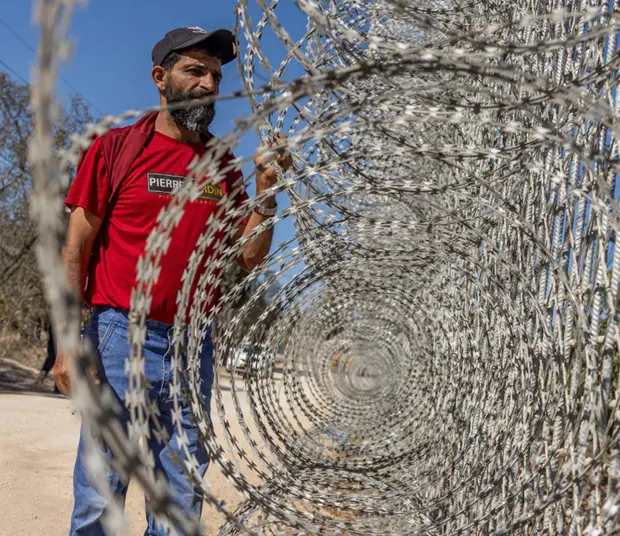
and a draconian regime of movement and access restrictions imposed by the military, including checkpoints, fences, and orders, that specifically targets Palestinians, undermining their livelihoods and curtailing their ability to travel between locations.
The report thus provides further confirmation of the de facto annexation of vast areas of the West Bank by the Jewish State through “settlement, violence, and [. . .] fragmentation," as well as the transformation of a (temporary) state of emergency into a permanent reality of domination and control.
This has intensified since October 2023, driven by a "twisted vision" of emptying the West Bank of millions of Palestinians and annexing the territory to Israel.
This policy, whose core tenets have been incorporated into the government's guiding principles, systematically employs cruel and racist practices.
For this reason, Yesh Din, Bimkom and HaMoked end the report with an appeal to the international community, urging it not to remain passive “in the face of Israel's crimes in the West Bank” but to take effective action in accordance with “international law”.
“Israel,” the report notes, “must fulfill its legal obligation to protect Palestinians living under occupation; guarantee their fundamental rights, with an emphasis on the rights to freedom of movement, property and livelihood; remove outposts and settlements; and hold settlers and soldiers accountable for attacks on Palestinians and their property.”