Milan (AsiaNews) – Drones, remote-controlled balloons, and increasingly sophisticated means are being used to move Captagon, hashish, and methamphetamines from Syria to Gulf markets.
The Syrian-Jordanian border is no longer crossed solely on foot, a lorry, or behind the wheel of an off-road vehicle. Today, it can also be crossed by air.
The latest incident occurred in late August, when the Jordanian army shot down a remote-controlled balloon that had crossed the border carrying a "large quantity" of narcotics. A similar incident had taken place just days earlier. In the preceding months, the military had intercepted other balloons equipped with rudimentary yet efficient navigation systems.
While the use of drones and balloons to move drugs might seem like a mere curiosity, it actually signals how drug trafficking along Jordan's borders is evolving.
Drones have become a permanent fixture in the traffickers’ toolkit. Remote-controlled balloons represent a simpler, cheaper option for crossing the border, bypassing roads, checkpoints, and patrols.
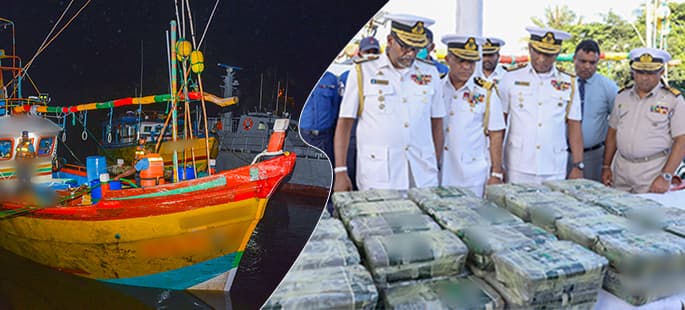
In a statement issued on 7 May, the Jordanian Armed Forces highlighted the scale of the problem: 536 attempts at infiltration and smuggling across the borders were thwarted in 2025. Seizures included 18.9 million narcotic pills, 251 kilograms of narcotic substances, and 14,471 blocks of hashish. Most notably, 89 drones were shot down.
In the first three months of 2026 alone, 156 attempts were intercepted, resulting in the seizure of 9.2 million Captagon pills and the downing of 26 drones, figures that explain why Amman now views the fight against drug trafficking as a matter of national security.
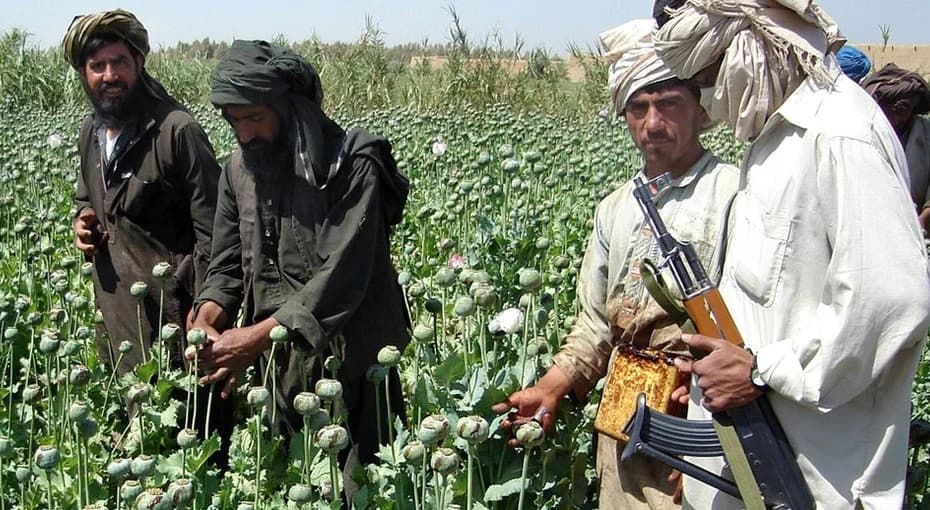
In neighbouring Syria, the fall of Bashar al-Assad’s regime in December 2024 exposed the thorny chapter of combating Captagon, a synthetic amphetamine that, during the civil war, turned the country into one of the world’s major production and trafficking hubs.
The new authorities in Damascus have declared their intention to dismantle the system, targeting laboratories, warehouses, and distribution networks, yielding tangible results with the destruction of certain facilities and seizures. Yet, the battle is far from won.
The proliferation of Captagon is not merely a criminal phenomenon. Under Bashar al-Assad’s regime, its production and trafficking became a source of funding for regime-linked groups and militias, as well as a business run by family networks and clans.
Among those involved were figures close to Maher al-Assad, Bashar’s younger brother and commander of the Fourth Armoured Division.
In effect, Captagon had become a cornerstone of the Syrian war economy. Today, while many laboratories have been abandoned or repurposed, criminal networks have sought out new routes and intermediaries.
To counter these, the security apparatus of the Hashemite Kingdom of Jordan has stepped up technological surveillance using night-vision goggles, thermal imaging systems, drones, satellites, and data analysis tools. Anti-drone systems have also been introduced.
According to the United Nations Office on Drugs and Crime (UNODC), between 2019 and 2023, among seizures where the country of origin could be identified, 82 per cent of the Captagon originated in Syria and 17 per cent in Lebanon.
The market where the drug is ultimately sold is equally clear: the Gulf states, primarily Saudi Arabia, followed by the United Arab Emirates. Large-scale seizures further demonstrate that Jordan has become a strategic hub.
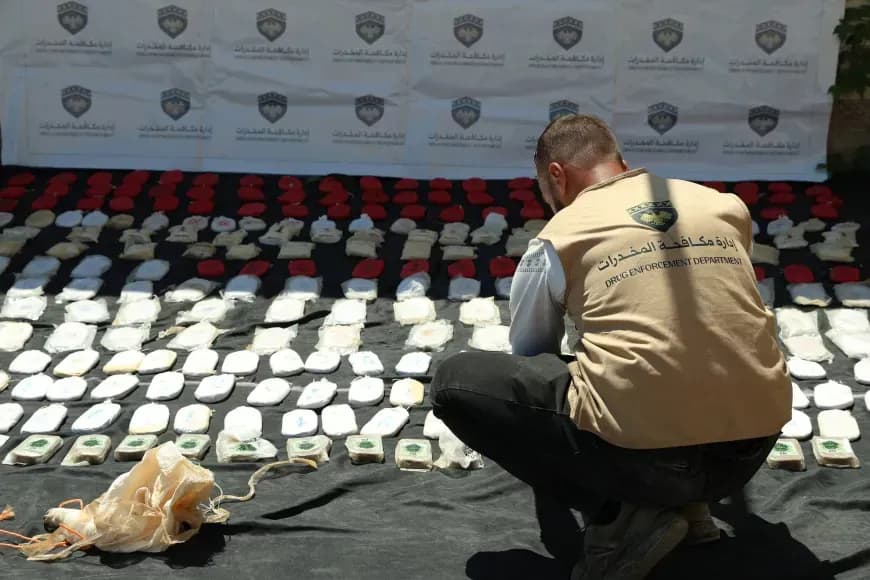
Last April, Jordanian and Syrian authorities intercepted 943 kg of Captagon, equivalent to approximately 5.5 million tablets, hidden in the roof of a refrigerated truck at the Jaber crossing on the border between the two countries.
Captagon remains the best-known name associated with this criminal economy, but it is not the only one.
Seizures in Jordan also include hashish, methamphetamine, synthetic cannabinoids, cocaine, and other substances, such as crystal meth, a highly addictive form of methamphetamine.
Methamphetamine could represent one of the market's future shifts. The World Drug Report 2026 indicates that methamphetamine seizures in the Near and Middle East have risen, while seizures of amphetamines, including Captagon, have dropped compared to previous years.
The UNODC also notes signs of an increasing influx of methamphetamine from Southwest Asia into Middle Eastern markets. The challenge facing Amman cannot be resolved solely through radars, satellites, and anti-drone systems.
The issue also involves the stabilisation of Syria, the fight against criminal groups, and the control of Syrian territory by government forces, which remains elusive in large areas of the country.
In Jordan’s case, the border it must defend is not merely a national boundary; it is a frontier drug traffickers use to generate profits to finance groups and organisations betting on the destabilisation of the Middle East.
Today this route no longer runs only across the desert, but also passes right over the heads of the border guards.