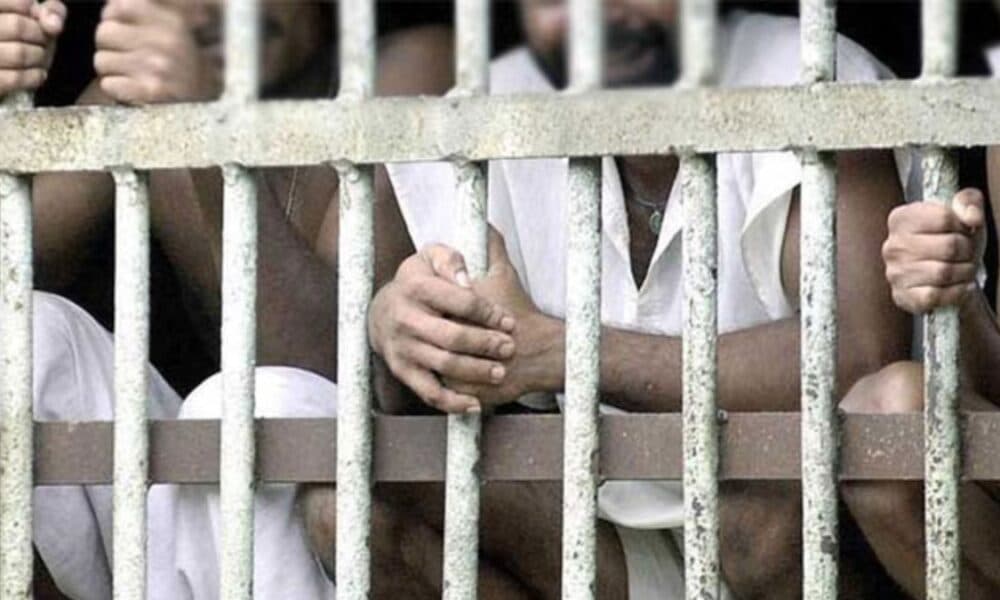
Colombo (AsiaNews) – A total of 1,454 convicted prisoners remain in prisons across Sri Lanka because they are unable to pay court-imposed fines, the Minister for Justice and National Integration, Harshana Nanayakkara, told Parliament yesterday, 21 October.
This is despite the fact that the Prisons Department does not prohibit anyone from paying the fines on behalf of eligible prisoners in order to secure their release.
According to figures presented by the minister, 421 prisoners are unable to pay fines ranging from 10,000 to 15,000 rupees (approximately 26 to 50 euros), whilst 220 prisoners owe sums between 15,000 and 25,000 rupees (approximately 40 to 67 euros).
A further 361 prisoners are unable to settle fines of between 25,000 and 50,000 rupees, whilst 245 prisoners have debts of between 50,000 and 100,000 rupees. A further 207 prisoners remain in custody due to their inability to pay fines exceeding 100,000 rupees.
The Minister of Justice released the figures in response to an oral question tabled by MP Rohitha Abeygunawardena regarding the number of prisoners incarcerated for non-payment of outstanding fines and the measures taken to facilitate their release. The Minister of Justice informed the Assembly that the country’s prisons currently house 10,611 convicted prisoners and 28,408 prisoners on remand.
Possibility of a release mechanism
During the sitting, MP Abeygunawardena sought clarification on whether the government might introduce a mechanism to facilitate the release of prisoners who remain in prison solely because of their inability to pay the fines imposed on them.
In response, Minister Nanayakkara stated that various organisations and institutions are already implementing programmes to pay outstanding fines on behalf of certain prisoners, thereby facilitating their release. “The Prisons Department does not prohibit government or non-governmental organisations from paying fines on behalf of eligible prisoners in order to secure their release, provided that the applicable legal requirements are met,” Minister Nanayakkara further clarified.
High rate of prison overcrowding
Sri Lanka has 60 prison facilities managed by the Prisons Department, including 4 maximum-security prisons (such as Welikada, Mahara, Angunakolapelessa and Boossa), 18 remand centres, 10 labour camps, 2 open prisons, 2 rehabilitation centres for convicted juveniles, a training school for juveniles, a vocational rehabilitation centre and 23 temporary detention centres.
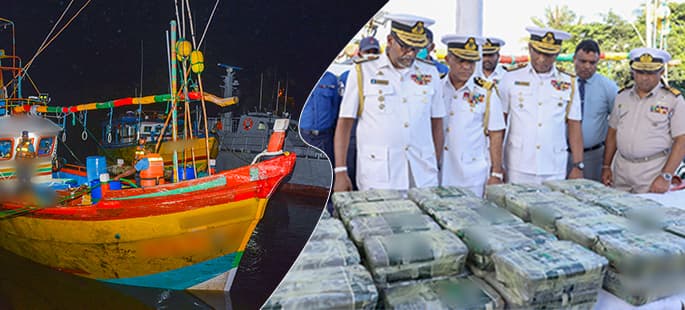
Sri Lanka’s total prison population stands at between approximately 41,000 and 41,250 prisoners, according to figures from the Department of Prisons and the World Prison Brief. Key prison statistics show an official capacity ranging from 10,350 to 13,241 prisoners. This highlights a high rate of overcrowding: from over 300 per cent to nearly 400 per cent of capacity in many facilities. Furthermore, prisoners awaiting trial or who have not been convicted account for around 73 per cent of the total prison population. Meanwhile, the main cause of imprisonment is drug-related offences.