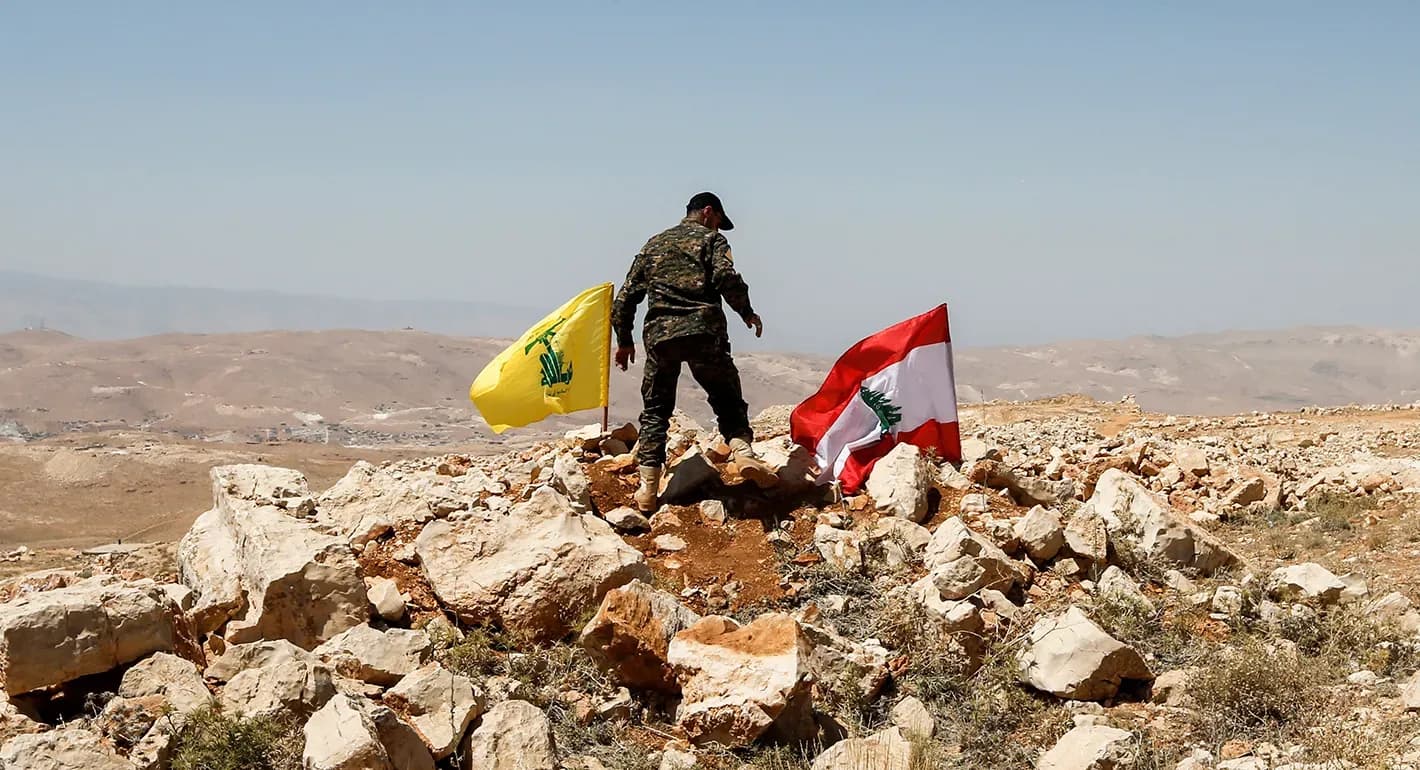
Beirut (AsiaNews) – With crucial elections in Israel and the United States just days away and the UNIFIL mission due to conclude in around two months’ time – alongside increasingly dire economic conditions that have plunged 80 per cent of the population into poverty – Lebanon continues to teeter on the brink. At this stage, the Land of the Cedars is seeking to shield itself from the new regional military escalation feared by many experts and observers [particularly between Riyadh and the Houthis in Yemen and Saudi Arabia], which could prove extremely costly should Hezbollah also become involved. The diplomatic initiative in Doha could offer some respite, although US President Donald Trump’s recent declaration of support for Israeli Prime Minister Benjamin Netanyahu – described as ‘the only candidate who will not leave Washington alone in the fight against Iran’ – is not reassuring.
Domestic escalation
On the domestic front, last-minute efforts and mediation by Qatar have defused an internal conflict that had flared up recently but which risked escalating into a bloody clash between the Lebanese army and the pro-Iranian Shia militia. Tensions rose in early October following the discovery, at a roadblock, of a van carrying half a tonne of explosives (C-4 and TNT) and dozens of kilos of nails. The cargo was being transported from Baalbek to the southern outskirts of Beirut by two militiamen, who were subsequently arrested.
Through MP Hassan Fadlallah, the leadership of the Party of God admitted that the seized explosives belonged to the organisation, demanding “the immediate release of those detained” and “the return of the vehicle and its contents”. In stark contrast to the Shia MP, the Lebanese Minister of Justice, Adel Nassar, argued that the transport of explosives constitutes a case of a crime caught in the act, in breach of the law prohibiting Hezbollah from carrying out military or security-related activities.
Nassar called for the case to be referred to a Court of Justice, a special judicial body whose rulings are final. Meanwhile, 80 per cent of those taking part in a poll, conducted during a talk show presented by journalist Marcel Ghanem on the MTV channel, expressed fears of a resurgence of attacks. The not-so-veiled reference is to past incidents in which the pro-Iranian party had used C-4 explosives.
Alarmed by the threats that accompanied the demand for the return of the consignment, as well as by the deployment of motorised militiamen at the southern and eastern entrances to Beirut, US Secretary of State Marco Rubio contacted President Joseph Aoun on 17 October.
Rubio first and foremost reiterated that returning the consignment to the pro-Iranian party was “out of the question”, and also called for the investigation into the incident not to be limited to the arrest of the two individuals transporting the explosives, but to trace the matter back to those who ordered the attack.
The domestic climate had already deteriorated prior to this incident, following a complaint lodged by a lawyer close to Hezbollah against Lebanon’s ambassador to the United States, Nada Moawad Hamadé. The diplomat was accused of having made contact, “outside the scope of her official duties”, with her Israeli counterpart in Washington, Yechiel Leiter. Hamadé had called her Israeli counterpart to enquire about her son, who had been seriously injured in a vehicle-borne attack in the occupied West Bank. In response, Rubio had called for the repeal of the legislation criminalising relations and contacts with Israelis. However, this request cannot be met without a parliamentary vote and, consequently, without the consent of the Speaker of the House, the Shia Nabih Berry.
Saderat’s licence revoked
In an attempt to cooperate with Washington – which aims to cut off the sources of funding for the extremist Islamic party – the Bank of Lebanon has revoked the licence of the Iranian credit institution Saderat in the country. A few days earlier, Hezbollah had announced that it had $200 million available to compensate families whose homes had been destroyed during the Israeli invasion. Washington, however, believes this to be a bluff.
A willingness to cooperate with Washington was also evident amongst the country’s leadership following the surprise arrival in Lebanon of the Iranian Deputy Foreign Minister, Said Khatibzadeh, who came with the intention of acting as a mediator. No meeting was arranged with either the President of the Republic or Prime Minister Nawaf Salam; only the Speaker of the House, Nabih Berry, received him. According to well-informed sources consulted by AsiaNews, Khatibzadeh was seeking to create the conditions to restart the dialogue between Hezbollah and President Aoun, which had been suspended for several weeks.
Doha’s intervention
Fortunately, the prospect of an internal conflict appears to have receded further thanks to the visit to Lebanon on 15 and 16 October by the Prime Minister of Qatar, Sheikh Mohammad bin Abdulrahman Al Thani, who brought with him a significant diplomatic initiative. Building on the bonds of trust between Doha and Beirut – strengthened by the emirate’s constant and long-standing support for the Lebanese army and other security forces – Qatar has committed, in particular, to taking charge of Lebanon’s electricity sector.
This is a project that can only meet with unanimous approval in a Lebanon that has recently been reduced to having just a few hours of electricity a day. “We have agreed to establish a comprehensive framework for cooperation in the energy sector and to put forward sustainable solutions,” the Prime Minister of the wealthy gas-producing state emphasised to representatives of the local press. This initiative forms part of a “larger investment project”, he added, which will prove “beneficial for the Lebanese economy”.
The project would be based on the BOT (Build, Operate, Transfer) model. Furthermore, this initiative would form part of an overarching vision for reform and, in the long term, the reconstruction of the ‘Land of the Cedars’; Qatar has in fact offered its support, liaising with the United States, to put pressure on Israel to accept a ceasefire, put an end to the attacks and withdraw its forces from southern Lebanon.
Collateral benefits
Qatar’s initiative has been seen by all Lebanese as a rare opportunity that the country could seize to avoid further regional escalation and benefit from a form of diplomatic protection against the Jewish state. One of the ‘collateral’ benefits of the project for the emirate would be to shield itself from Iranian ballistic missiles; indeed, the damage already suffered as a result of Iranian bombardments is estimated at 1.7 billion dollars, according to Ghassan Hajjar, editor-in-chief of the daily newspaper An-Nahar.
Conversely, Israel – whose military ambitions are curbed by the agreement brokered in June by Washington and the Trump administration, which has shielded the southern outskirts of Beirut from bombardment – is accused of seeking any pretext to relaunch its offensive against Lebanon. According to analysts and observers, the slightest miscalculation on the part of Hezbollah could prompt Tel Aviv to launch new large-scale military operations and occupy further territories. In this regard, the recent threatening statements made to the press by Prime Minister Benjamin Netanyahu and Israeli Defence Minister Israel Katz on the matter – although made in an electoral context – are as explicit as can be.
Tomorrow, Lebanon will take part – “merely as a formality”, according to observers – in a meeting with Israeli and US representatives in Tampa, Florida, with the aim of “putting Lebanon’s demands for an end to the Israeli escalation on the table”. However, given the context, no one expects any concrete results on the ground. Washington, in fact, wants the Israeli and Lebanese armies to engage in direct dialogue, categorically rejecting any European mediation and any possible extension of the United Nations mission in the Land of the Cedars.