Beirut (AsiaNews) – All the warning lights are flashing red: the Lebanese population, particularly the middle class, is collapsing.
Albert F.,[*] a Maronite entrepreneur running a small construction business, has his back against the wall. Although he is due to deliver doors and windows for a building under construction, his workshop is on the verge of closing down. The reason: a surge in costs that completely derailed his budget projections. Trapped by a contract he is legally bound to honour, the craftsman is forced to complete the work at a loss.
The down payments received upfront have already been swallowed up by rampant inflation, making the actual cost of the project, which employs six workers, higher than the sums originally paid. As a sign of the family's financial distress, his wife Aline is now reduced to offering her jewellery to a local jeweller in an attempt to save the family business.
Joseph, an unemployed engineer and expert, has to fund his son's engagement. However, faced with the demands of his future in-laws, who insist on the lavish wedding their daughter dreams of, his finances can no longer keep up. To overcome this impasse, he plans to borrow the money from his two brothers.
Every day now, one hears middle-class Lebanese people speaking of their financial struggles. Yet their situation is still far more enviable than that of lower social classes, residents of areas occupied by Israel, or displaced persons. The fact remains that the economic situation in Lebanon is, at this moment, more than just bad, it is catastrophic!
Caught in the crossfire of the Iran-US conflict and hit hard by soaring fuel costs, the Lebanese population is struggling to keep pace with runaway price hikes, most notably for fuel, where the price of a 20-litre canister has more than doubled in six months, rising from US$ 14 to US$ 32. A similar crisis affects heating oil, with the price per tonne jumping from US$ 750 to US$ 1,500.
Illegal logging is rampant, yet even a tonne of firewood remains unaffordable for some. In short, public discontent is mounting. A general strike has been called for next Wednesday; however, given the political divisions stemming from the conflict, while the strike may disrupt traffic across the country, a social explosion appears unlikely.
Average monthly salary
According to Antoine K., an accountant working for a major hospital, the average monthly salary in the country ranges from US$ 500 to US$ 750; however, the vast majority of the population (approximately 60 per cent to 70 per cent of the workforce) lives on an income below or barely equal to this average. Indeed, this average figure is skewed upward by a minority of very high earners and does not reflect the daily reality of the general population.
The World Bank and the United Nations estimate that the monetary poverty rate now affects between 44 per cent and 55 per cent of the population, while multidimensional poverty (regarding access to healthcare, electricity, and education) approaches 80 per cent (the threshold for extreme poverty); overall, more than half of private-sector workers actually earn less than US$ 10,000 per year (or under US$ 830 per month).
The accountant lists, in no particular order, the cutbacks families are making to cope with the high cost of living. He immediately cites the cancellation of subscriptions to neighbourhood generators (which cost between US$ 100 and US$ 250 a month, depending on the standard of living and air-conditioning usage).
For disadvantaged households, this means relying solely on the government power supply (sometimes just two hours a day) and often getting up in the middle of the night to iron clothes or run the washing machine.
Added to this are restrictions on purchasing imported food products and "extras”; limits on using cars for leisure (no more outings to locations far from home); no more new clothes; no more expensive medical treatments; resigning oneself to dying at home; limiting medical consultations (which cost US$ 100) to the bare minimum; entering the workforce early; and, in extreme cases, pulling children out of private schools, despite the high value Lebanese people place on education.
“We pray the car doesn't have any mechanical trouble, so we don't have to go into debt to fix it," adds Antoine K.
Frozen savings
Rising fuel prices, which drive up the cost of consumer goods and essentials, are hitting the Lebanese people at a time when they are already struggling with bank savings frozen in 2019.
Resolving this issue could breathe new life into the country, yet for six years, the banking lobby has fiercely resisted any measure that might force them to relinquish these assets.
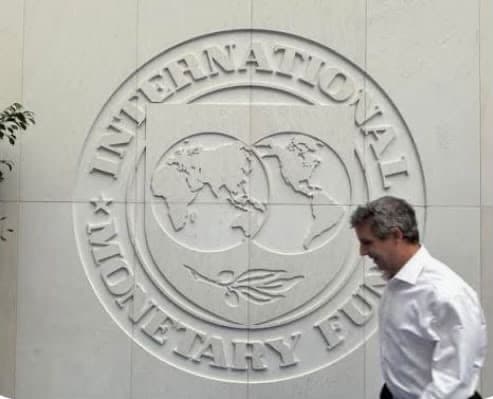
The IMF has conducted over a dozen visits, technical missions, and official consultations in Lebanon without reaching a final agreement, largely due to the Lebanese political and financial elite's strong reluctance to foot the bill or implement the required structural reforms.
The most recent visit (15–18 September), led by Ernesto Ramirez Rigo, ended in another major impasse: none of the country’s roughly 30 banks are willing to submit to an audit, and only the four or five largest banks are solvent enough to repay people, who have spent six years waiting for savings intended to secure a dignified retirement.
The crux of the problem lies not merely in calculating the losses, but in how they are distributed. The number of individuals holding one or more bank accounts in Lebanon is estimated at around 600,000 residents (a figure that rises to between 700,000 and 800,000 when including the diaspora and non-residents).
The distribution of these accounts highlights the level of inequality within the Lebanese banking system in the face of the current financial crisis.
Nearly 90 per cent of bank accounts are classified as small to medium-sized deposits, with balances of US$ 100,000 or less. The governor of the Banque du Liban (BDL) and the IMF regard this vast majority as an "absolute social and economic priority" within restructuring plans.
In reality, however, these small and medium accounts hold only a minor fraction of the total volume of frozen funds.
In fact, a tiny minority of large accounts – comprising high-net-worth individuals, institutions, and trusts, representing about 10 per cent of depositors – holds the bulk of the approximately US$ 85–90 billion in foreign-currency deposits still in the system.
The current political and financial standoff in Lebanon hinges on this imbalance. Successive legislative proposals tried to fully reimburse cash deposits of up to US$ 100,000 to protect the vast majority of small savers (90 per cent of the total), while establishing that the largest accounts must absorb the lion's share of systemic losses.
Removing current management…
During its recent visit, the IMF proposed a radical measure: temporarily removing the current management of most Lebanese banks and appointing independent administrators to audit their assets. Naturally, this proposal met with strong resistance from financial elites and the authorities in Beirut.
The IMF also calls for strict adherence to the “hierarchy of claims”. Under this rule, bank shareholders must absorb losses before depositors. Instead, the banks and the government are trying to shift the burden onto public funds or dilute the losses by large account holders.
The Banque du Liban (BDL) and the IMF also disagree on the restructuring laws required to liquidate or merge insolvent institutions.
Against this background, one can understand the relative indifference by ordinary Lebanese vis-à-vis the formal meetings held in New York between Prime Minister Nawaf Salam and Syrian President Ahmad el-Sharaa, followed by a meeting with Iranian President Masoud Pezeshkian.
These meetings barely mask the Lebanese people's dismay at seeing UNIFIL, the only neutral witness to the trials of Southern Lebanon since 1978, packing up to leave without an alternative force to replace it.
[*] Names have been partially altered.