Manila (AsiaNews) – Cardinal Pablo Virgilio Siongco David, former president of the Catholic Bishops' Conference of the Philippines, is “deeply concerned” by the situation of Philippine migrants in the Middle East, a region gripped by a military and economic crises stemming from multiple ongoing conflicts that are severely affecting workers there, as well as by the growing use of artificial intelligence in warfare.
The prelate voiced these concerns in a social media post published today, underscoring the Philippine Church’s attention to the welfare of migrant workers, particularly those in Gulf nations.
“My apprehension,” writes the prelate, “is not only for the citizens of these Gulf countries, but also for the millions of Filipinos who live and work there,” workers who have contributed to local economic development.
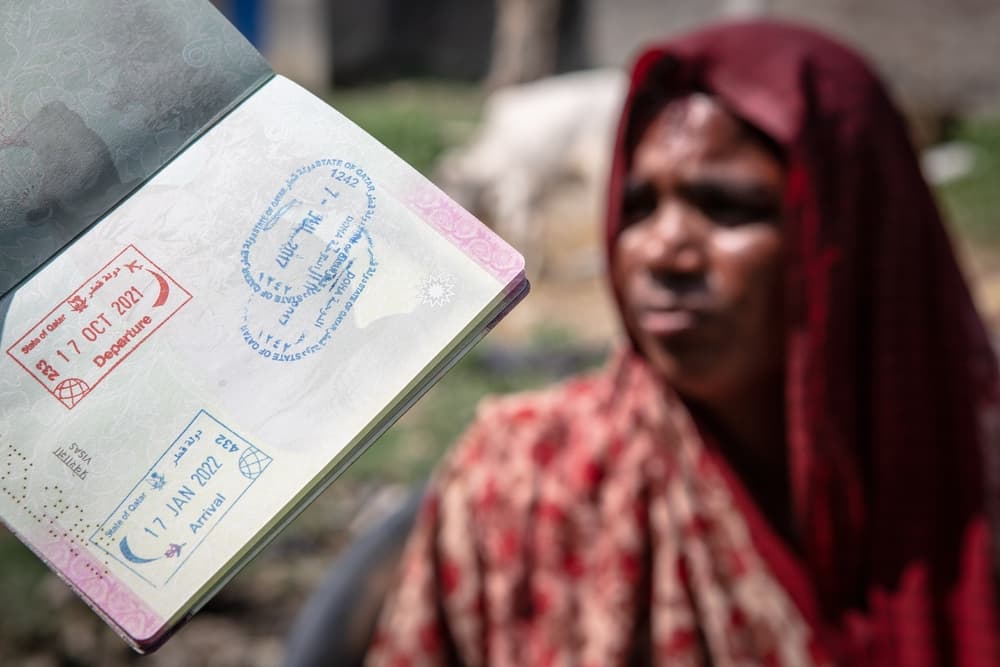
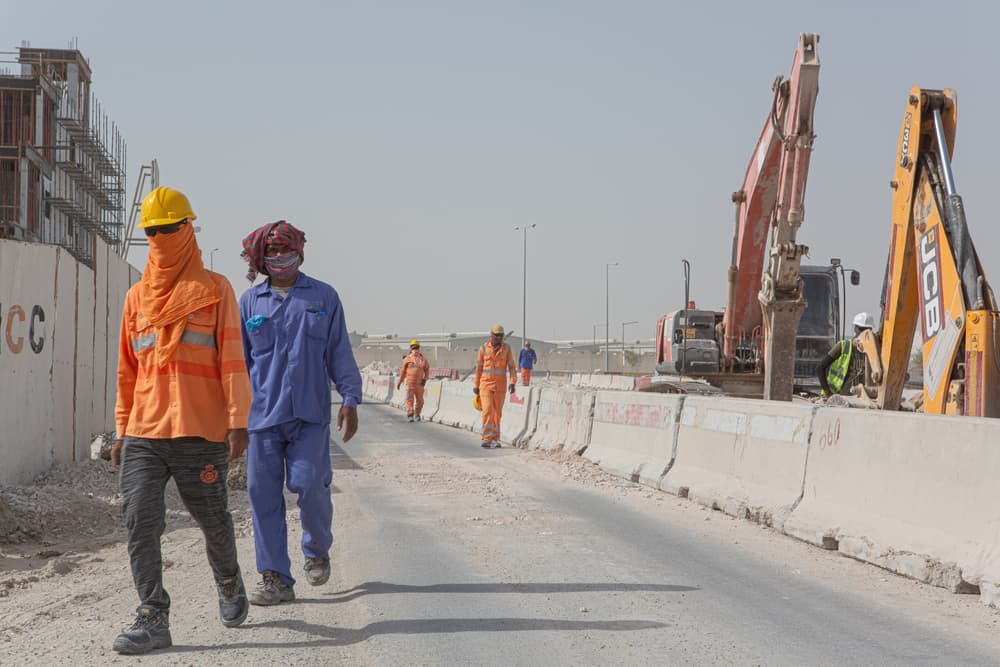
According to Philippine government estimates, updated to March 2026, some 2.35 million Filipinos live in the six Gulf States: 975,000 in the United Arab Emirates (UAE), 813,000 in Saudi Arabia, 250,000 in Qatar, 211,000 in Kuwait, 56,000 in Bahrain and 49,000 in Oman.
“These are our fellow Filipinos who have left their families behind to earn a living abroad. Their safety and welfare must remain a priority for our government,” says the bishop of Kalookan. “The lives of millions of innocent people, including our own Filipino brothers and sisters working in the Middle East, are at stake,” he adds.
Above all, “We cannot afford to leave their future to the logic of war, much less to machines that may one day operate beyond our capacity to understand and control them,” a reference to growing fears surrounding the development of artificial intelligence and robots with increasingly “human” appearances.
In 2025, cash remittances from Overseas Filipino Workers (OFWs) reached an all-time high of US$ 35.63 billion, accounting for approximately 7.3 per cent of the Philippines' Gross Domestic Product (GDP).
The funds migrants sent home rose by 4.2 per cent year-on-year, reaching $3.52 billion in December 2025, a trend driven primarily by a rise in remittances from those working in the agricultural sector, according to data provided by the Bangko Sentral ng Pilipinas (BSP), the country's central bank.
Ongoing wars
In his post, Cardinal David expresses concern over the continuing escalation of the war in the Middle East.
What began with US and Israeli attacks on Iran last February has morphed into a broader regional conflict, with Tehran launching retaliatory strikes against US military installations in several Gulf nations, including the UAE, Qatar, Bahrain, Kuwait, and Oman.
The Islamic Republic maintains that it holds no grievance against its Arab Gulf neighbours and that its targets are primarily US military facilities located within their territories.
However, the consequences of these attacks extend far beyond military bases, endangering civilian lives and threatening strategic infrastructure such as airports, energy facilities, and international maritime shipping.
Saudi Arabia has also been drawn into the conflict, facing fresh missile and drone attacks from Yemen’s Houthi movement, which receives military support from Iran, with strikes reaching as far as Riyadh International Airport last weekend.
There is a danger that countries attempting to avoid direct involvement in the war could nonetheless be dragged into its ever-expanding cycle of violence.
“I am equally troubled by Israel’s continuing involvement in the war against Iran, even as its military operations in Gaza and Lebanon continue,” David writes.
“In Gaza, Palestinians continue to die despite the ceasefire, and families displaced by the war are forced to live amidst the rubble of homes destroyed by bombs, while in Lebanon, fresh Israeli attacks and clashes with Hezbollah threaten to shatter the fragile ceasefire.”
For the cardinal, the suffering of ordinary people is beyond their endurance, and parties involved must seriously commit to peace.
Artificial intelligence and conflicts
Another issue is particularly close to the heart of the bishop of Kalookan, who is also vice-president of the Federation of Asian Bishops’ Conferences (FABC), namely “the growing use of artificial intelligence in modern warfare.”
This stems from findings cited in recent reports indicating that AI-assisted systems have already been used in targeted military operations against Iran, as well as in Gaza and Lebanon.
“These technologies can accelerate the identification and selection of targets, compressing decisions that once took hours into mere minutes or seconds,” David writes.
Meanwhile, leading developers in the field have warned of the increasing difficulty of understanding and controlling the behaviour of increasingly powerful systems.
“This raises a disturbing question: Could AI-assisted military decision-making have contributed to the speed and scale of this recent escalation? We do not yet have sufficient evidence to answer that question. But it is a question that urgently deserves investigation, especially as the race toward artificial superintelligence continues.”
“Are we allowing the development of technologies that can accelerate the machinery of war faster than human wisdom, moral discernment and diplomacy can restrain it?” David goes on to ask.
“I pray that the leaders of the nations involved will find the courage to step back from this dangerous escalation and return to the negotiating table. Peace cannot be achieved simply by developing more sophisticated weapons or by threatening one another with greater destruction."