Jerusalem (AsiaNews) – The Palestinian public healthcare system is in dire straits, close to collapse, this according to the latest study.
Released yesterday by Physicians for Human Rights Israel (PHRI), the study raises the alarm about the situation of medical and healthcare facilities in the occupied West Bank.
The numbers are as follows: Some 447 out of a total of 590 facilities providing comprehensive services under the Ministry of Health have significantly or severely reduced their operations and activities; the debt by the Palestinian Ministry of Health exceeds US$ 1.18 billion; and hundreds of essential medicines are out of stock or about to run out.
Behind this profoundly critical situation lies Israel's recently practice of withholding clearance revenues from the Palestinian Authority (PA), i.e. the tax and customs revenues the Jewish state collects on behalf of the PA on goods and commodities imported into the Palestinian territories through Israeli-controlled crossings or ports.
These revenues constitute approximately two thirds (65-70 per cent) of the PA budget and are used to pay for public salaries and essential services. By withholding funds, Israel is undermining the PA’s ability to fund essential healthcare services.
According to the report, sent to AsiaNews for information, at least 447 of the Palestinian Ministry of Health's 590 offices across the country have drastically reduced their operations to just once or twice a week.
In 2025, only 63 per cent of primary healthcare centres were partially operational, and many of these were accessible to users only one day a week, compared to six days prior to October 2023.
The ministry is also said to be over $1.18 billion in debt to private hospitals and pharmaceutical suppliers.
Of the approximately 1,260 essential medicines normally held in stock, 160 are out of stock, approximately 600 have only a few days' supply, and approximately 250 are available only in limited quantities.
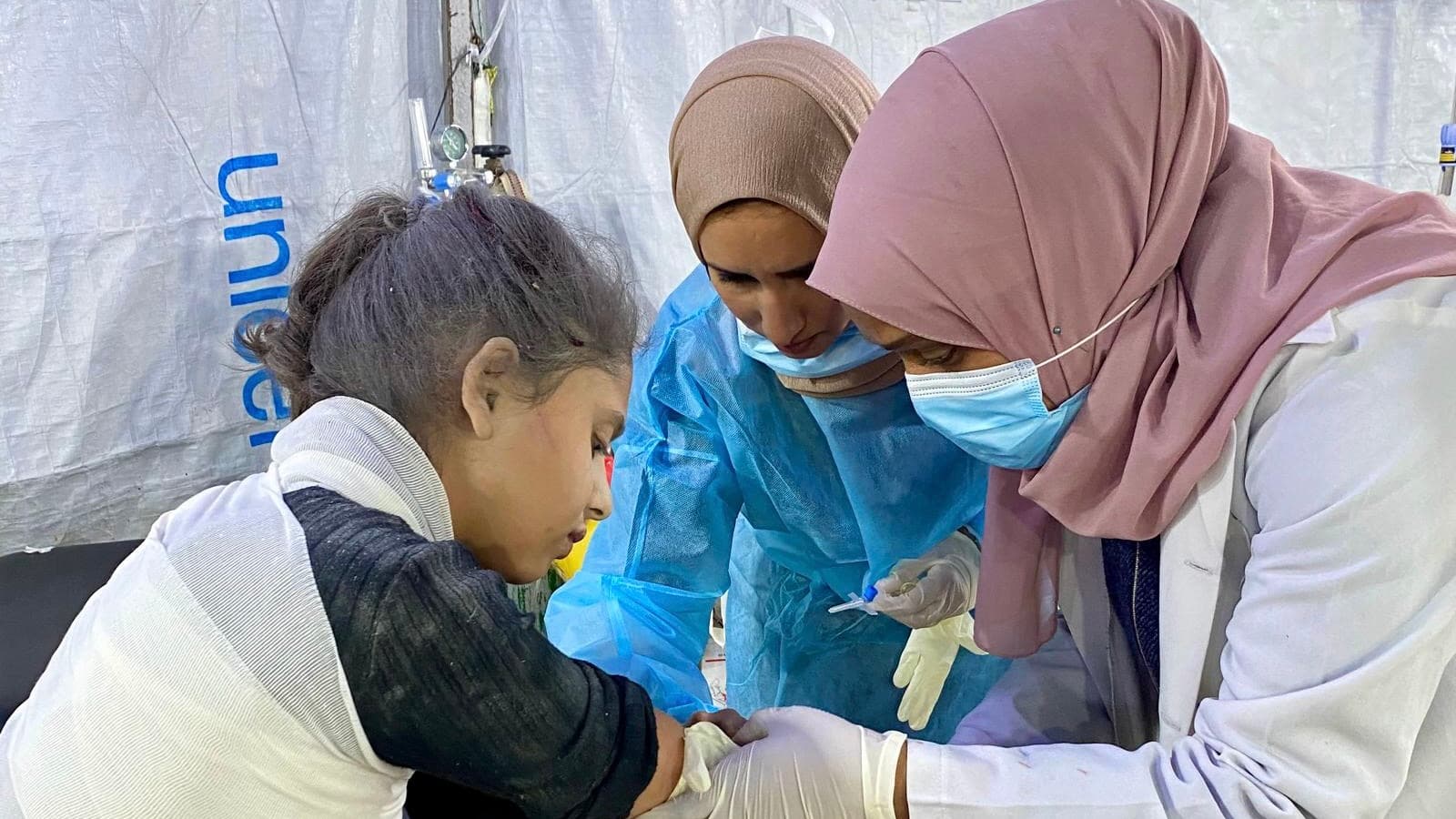
Patients suffering from cancer, kidney disease, diabetes, and other chronic conditions are increasingly struggling to access essential care.
Healthcare workers also receive only a portion of their salaries, often with significant delays. On 9 May, the study notes, Palestinian doctors called an indefinite strike to protest unpaid wages.
The labour action led to the closure of the Ministry of Health's primary care centres and limited public hospital services, primarily to emergency and life-saving care.
Although the Palestinian Medical Association announced a gradual lifting of the strike a month later, staff are currently operating at reduced capacity.
Problems related to medicine shortages, lost salaries, and limitations on activity also remain unchanged.
For the PHRI, Israel's withholding of Palestinian revenues from customs duties is one of the main factors behind the crisis.
This revenue is PA tax revenue collected by Israel under the 1994 Paris Memorandum of Understanding and constitutes a major source of funding for the Authority's public services.
According to the World Bank, since October 2023, Israel's monthly withholdings have increased from approximately NIS 200 million (US$ 66 million) to NIS 500 million (US$ 166 million), reducing the transferred revenues by more than half.
Between February 2019 and July 2024 alone, Israel withheld NIS 3.54 billion (just under US$ 1.2 billion), or about 5 per cent of Palestinian GDP in 2023.
In June 2026, Israel further expanded the mechanism, allowing deductions exceeding 100 per cent of certain PA payments, compared with the previous one-to-one deduction.
The report stresses that the financial crisis is occurring alongside intensifying military operations, closures, and travel restrictions across the West Bank, further weakening health services and limiting patients' ability to access them.
“Israel is withholding Palestinian revenues,” said Milena Ansari, director of the PHRI Occupied Palestinian Territory Department, “while the healthcare system those revenues sustain is collapsing. The consequences are already visible: clinics are closing, doctors are working without full salaries, essential medicines are running out, and patients are being denied the care they need.”
With high-level Israeli ministers openly calling for the “downfall” and the “dismantling” of the Palestinian Authority, the continued withholding of Palestinian revenues cannot be dismissed as a mere technical financial dispute.
For Ansari, “It has become part of a broader policy with direct consequences for civilians.”
Yet, “Israel cannot control Palestinian revenues, borders, movement and access to resources while denying responsibility for the healthcare crisis its policies are helping to create.”
“The withheld revenues must be transferred immediately, and the international community must recognize the collapse of healthcare in the West Bank for what it has become: a public health emergency."
Hence, in a final appeal, Physicians for Human Rights Israel call for the immediate transfer of frozen Palestinian revenues to the PA, urging the international community to intervene to prevent the breakdown of the Palestinian healthcare system, which is on the verge of collapse.