Damascus (AsiaNews) – Muath could not hear the word that could have stopped him. The soldiers had called out to him to stop, but he didn't stop. Then they fired.
In his village, Jamla, being well known by locals and deaf with Down syndrome did not save him. His life ended at a foreign army checkpoint, in a place where he should have been safe, in a place he called home. This is how a Jamla resident describes the death of Muath Salama al-Baeer, at dawn on 22 October.
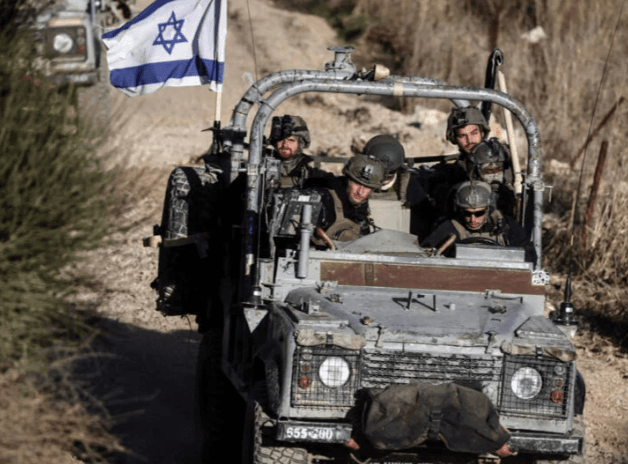
In a videotaped statement, Ahmed Moussa Sbeihi reported that Israeli soldiers entered the village in the Yarmouk basin, west of Daraa, where they searched houses and set up a checkpoint.
The soldiers shot Muath, who had not responded to the order to stop due to his deafness. Residents said he was unarmed and had been living with his sisters since his parents' death.
That same day the village and people from other places in Daraa accompanied him on his final journey. The next day, protests broke out in Damascus, Homs, Hasakah, Quneitra as well as across Damascus province.
Beyond the circumstances of the shooting, Muath’s death raises a question: What must Syrians do to prove that they are civilians walking in their own village, doing so without fear?
In front of the UN offices in Mazzeh, protesters include members of families waiting for news of relatives detained by Israel. In Khan Arnaba, Quneitra, people demanded an end to Israeli raids and the release of the prisoners.
Elsewhere, people with an array of woes come together in a country where borders no longer protect them from soldiers invading their homes.
The house that no longer waits for its residents
Fear did not wait for Muath's death. In a statement to Amnesty International, a woman who was widowed during the war said she lost the house her husband built and the small adjacent plot of land that supported her family.
She lost more than a place to shelter since her husband's work and her family’s means to earn a living were gone. After the arrival of Israeli forces, her home was demolished and her land levelled.
In Rassim al-Rawadi, a man reported that soldiers held him, his wife and three children for six hours before ordering their release. They had to wait 40 days before they could return to their home. Between their detention and their return, the place where they should have resumed their lives had been turned into a pile of rubble.
An investigation released by Amnesty, last May, lists at least 23 civilian structures damaged or destroyed in three villages and nine Israeli bases built in Quneitra and Daraa since December 2024. For the human rights group, the demolitions were devoid of any real military necessity, and deserve to be investigated as war crimes.
These events give a twist to the word “temporary”. When a military presence turns into a base and a house disappears under a bulldozer, it is no longer a patrol that comes and goes. The question is what will be left after troops pull out and whether owners will find a life to return to.
The effects of the raids reach beyond families with demolished homes or detained relatives. Neighbours rethink routes and timetables, parents wonder about the safety of the road to school, a shepherd fears approaching familiar land.
Does going to school or into the fields become a gamble to be decided as a function of patrol schedules? Since when did a public road become a passage where a checkpoint decides who can pass?
In the fields, the question is no longer just hypothetical. Sbeihi, who spoke about Muath’s killing, also spoke about the olive harvest and the difficulty of reaching the trees. He reported requests for papers and photographs to get permits near military positions. A season awaited all year round now depends on an authorisation.
Sovereignty means the possibility to harvest, a home to return to, and the chance of finding out where one’s child is detained. Now the relationship with the land changes before the official map changes. The field remains in the owner's name, but access to it no longer depends solely on him.
The Golan that extends into people's lives
Jamla is a village in Daraa, not another name for the occupied Golan. The distinction explains the nature of the problem.
Israel, which occupied much of the Golan Heights in 1967 and annexed it in 1981 in an act rejected by the United Nations Security Council, advanced into the separation zone and other areas of Syria after Assad's fall on 8 December 2024.
The effects of its military presence are felt well beyond the old lines of occupation.
In September 2026, the UN’s Independent International Commission of Inquiry on the Syrian Arab Republic warned that Israel’s presence had taken root through raids, searches, checkpoints, and fixed infrastructure.
It noted that 49 people, including two minors, arrested in Syria were allegedly moved to Israel, warning that such acts could constitute war crimes.
The Syrian government condemned Muath's killing through the Foreign Ministry, slamming Israel. Justice Minister Mazhar al-Wais praised the 23-October protests as a grassroots and legal response to the attacks.
But the announced reaction remained limited to condemnation and generalities, without a precise plan, deadlines or measures with verifiable results for residents.
The official position appears to be lukewarm given the gravity of the moment. Condemnations follow each other, as do Israeli raids, while the patriotism of the protesters is praised but protection remains half-hearted.
Without explaining what will change after a press release, slamming Israel risks becoming a token gesture, however strong the words. Families want to know what the authorities will do with their anger, as well as expect them to share it.
The question does not require another war in a shattered country. Military confrontation can be rejected in favour of diplomacy in order to produce some results, like information regarding the fate of detainees, access to farmland, stopping attacks and getting a verifiable withdrawal.
Many fear that negotiations will continue while Israel’s presence becomes a permanent security measure.
Words at the UN and the test of action
A little over a month ago, Syrian President Ahmed al-Sharaa spoke before the UN General Assembly. In his address, he emphasised that the Golan was Syrian, calling on Israel to pull back its forces to the positions held prior to 8 December 2024.
At the Atlantic Council, he jokingly asked Donald Trump why he didn’t just give New Jersey to Israel, noting that the United States does not own Syrian land to dispose of as it pleases.
The rejection of any territorial concessions was clear, yet a gap remains between asserting a right and protecting those who should exercise it. Muath’s death and the protests in the south have dropped this issue back into the Syrian president’s lap.
What have these meetings actually achieved, and how do Syrians view their country’s presence on the international stage?
In the UN Secretary-General’s guestbook in New York, Sharaa personally inscribed a verse from Surah 9 of the Quran: “Tell ˹them, O Prophet˺, ‘Do as you will. Your deeds will be observed by Allah, His Messenger, and the believers.’”
The transitional president chose the word "Do”. In the south, people are waiting for something tangible: a home to return to, a safe road to go to school, a harvest that doesn't require permits.
Somewhere between the verse in the guestbook and lives stuck in limbo, the question remains: what will the Syrian people see?