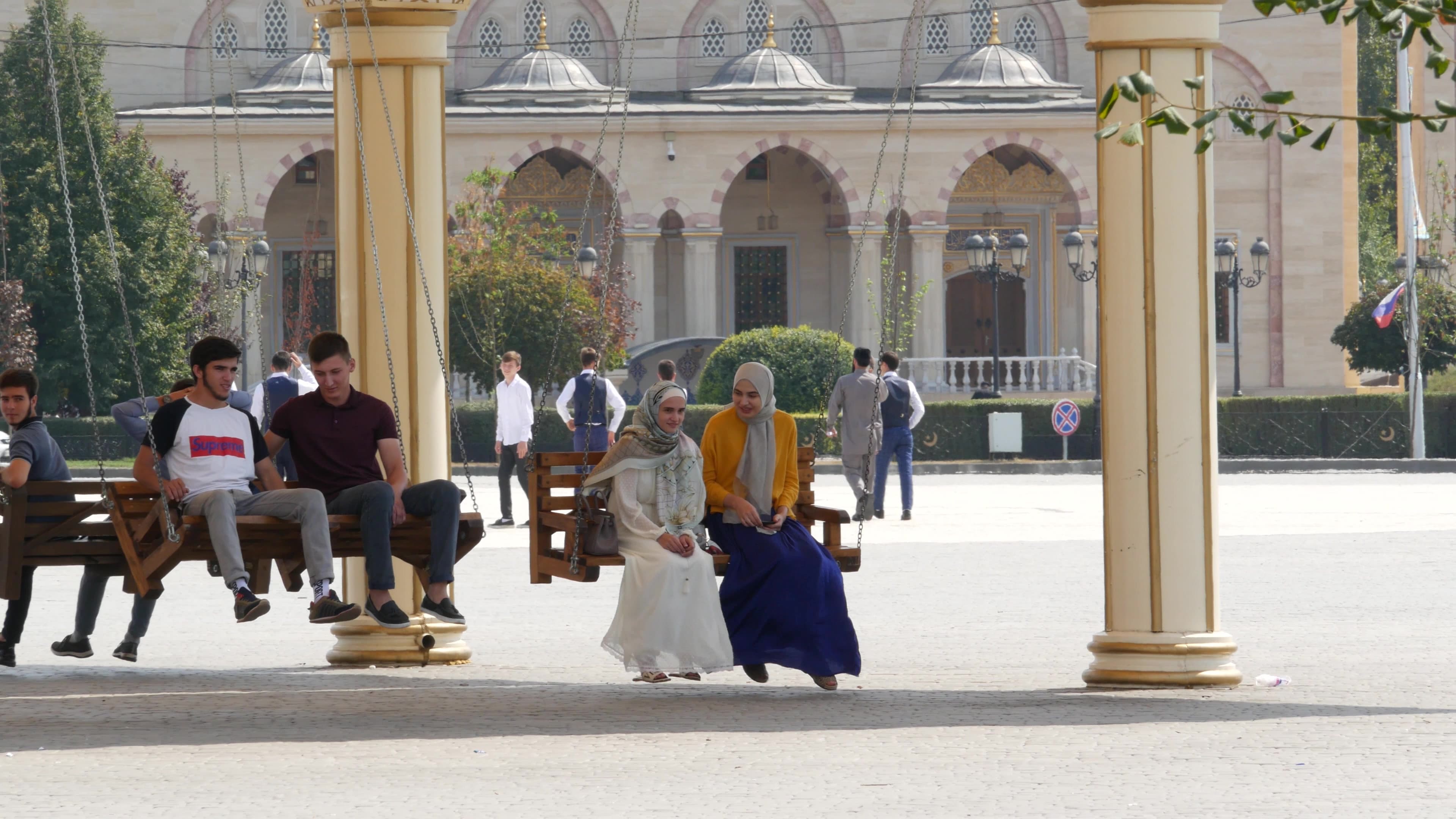
Moscow (AsiaNews) – Disputes over borders, historical memory, cultural heritage and traditions are a daily occurrence in the North Caucasus. On social media and in public debates, a trivial conversation about the authorship of a song or a dance can easily escalate into a conflict.
However, in the face of tragedy, residents of different republics come together to search for the missing, raise funds for charity or help victims of natural disasters. Kavkaz.Realii has explored why a sense of community emerges precisely during crises, and whether this can overcome long-standing grievances.
Debates about the past and the present have long been an integral part of public life in the region. Every year, in the run-up to the anniversary of the 1944 Stalinist deportations, disputes over the Aukhovskiy District in Dagestan flare up with renewed vigour, and territorial disputes between Chechnya and Ingushetia, as well as between Ingushetia and North Ossetia, remain intense.
Despite official agreements and demarcations, these issues remain sensitive for many local residents, regularly giving rise to mutual grievances. Matters relating to cultural heritage are no less controversial: to whom do ancient songs, or the towers, ornaments, elements of national dress or dances belong?
During the war in Chechnya in the 1990s and 2000s, thousands of refugees found shelter with relatives, friends and strangers in Ingushetia, Dagestan, Karachay-Cherkessia and other neighbouring regions.
Despite the difficult circumstances, the people of the Caucasus still remember, above all, the human solidarity: the willingness to share their very last possessions and open the doors of their homes, as was also the case during the 2004 Beslan terrorist attack, when residents of neighbouring republics travelled to North Ossetia, donated blood and collected money and essential supplies for the victims. This tragedy immediately ceased to be a local event: it was felt as a personal sorrow throughout the North Caucasus.
Mutual support was also evident during the recent catastrophic floods in Dagestan: money transfers and humanitarian aid poured in immediately from neighbouring regions, and volunteers travelled to the affected areas to clear the rubble and distribute food.
Bagaudin, a native of Ingushetia, is convinced that Caucasian unity is not a one-off reaction, but a norm of everyday life. It manifests itself not only in emergency situations, but also in everyday life, on the streets and in social interactions. He cites a personal example: recently, whilst trying to pay the bill at a restaurant in Grozny, he discovered that the Chechens sitting at the next table had already paid his as well.
Saikhan Muzaev, head of the information department of the Chechen national liberation movement ‘United Forces’, believes that a shared history inevitably creates a sense of closeness amongst the peoples of the North Caucasus.
In difficult times, people put their differences aside: “This was demonstrated by the search for a drowned Ingush boy, when people of various nationalities rushed to help, and by the funeral of Yusup Temirkhanov, which was attended by representatives of different peoples of the Caucasus. These moments remind us that solidarity is stronger than any dispute,” says Muzaev.
Such processes are characteristic not only of the North Caucasus but also of the entire post-Soviet space, says Emil Aslan, a Caucasus expert and professor at Charles University in Prague: “The legacy of the USSR is still preserved, in particular the idea of a ‘titular nation’ and its special rights to the land within historically established borders”. Valery Dzutsati, an associate professor of political science at the University of Augusta in the US, believes that democratisation, and above all free elections, are fundamental, but will not solve all problems, and the timing and manner of possible changes remain uncertain, even with the end of Russia’s war.