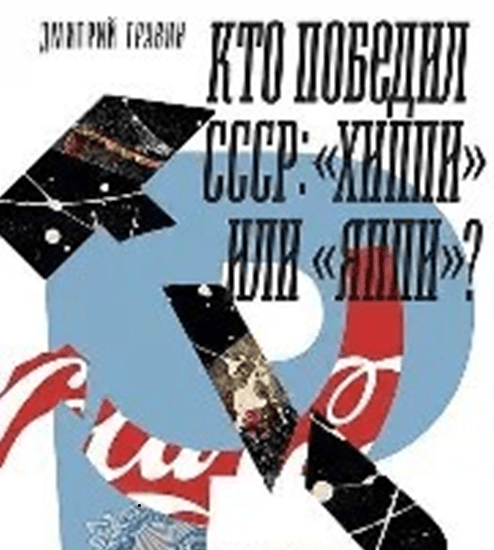
Moscow (AsiaNews) – In a new book published by NLO and entitled “Who Defeated the USSR: Hippie or Yuppie?” Dmitry Travin analyses the development of the generation born in the 1950s and 1960s in Russia, who came of age during the ‘long 1970s’, that is, roughly from the end of Khrushchev’s Thaw to the beginning of Gorbachev’s perestroika.
The study revealed that individual life trajectories, patterns of personality development and the specific paths taken by the 1970s generation could vary considerably, despite common generational traits – a fact particularly evident in the extensive series of interviews the author conducted with prominent members of that generation.
Aleksandr Beljaev, born in 1953, served as chairman of the St Petersburg City Council immediately after the collapse of the USSR (1991–1993), and knew from childhood, thanks to his grandmother, that his family had lived comfortably before the revolution and employed domestic staff (a nanny, a gardener and a stoker).
The other branch of the family were farmers, but a well-to-do lot: his grandfather owned an oil mill. During the Stalinist era, his relatives were subjected to repression and the standard of living of those who survived plummeted, so there was no sympathy for the Soviet system within the family. “I was conceived in the joy of Stalin’s death,” he remarks ironically, commenting on his date of birth (9 December 1953).
His experiences in the army reinforced his critical stance: it became clear to him just how false the propaganda clichés about national harmony were. At university, Beljaev attempted to set up a sort of anti-Soviet organisation, but without success: the pragmatism of the 1970s prevailed. He graduated from university, taught political economy, joined the Communist Party and served as a departmental-level party organiser during perestroika, but he also realised that socialism ran counter to human nature.
During his conversation with Travin, Aleksandr recounts a curious episode. He was on good terms with the daughter of the regional secretary of the CPSU, who once came to visit him at his country dacha. She looked at him and said: “Good for you, it’s your land… I’d lose my ‘vegetable patch’ in the blink of an eye if I were transferred to another post.”
Boris Nemtsov, Deputy Prime Minister of the Russian Federation in 1997–1998, born in 1959 and assassinated in Moscow in 2015 by Chechen hitmen, described himself as “a latent, non-systemic anti-Soviet”. His scepticism towards Soviet power had developed at an early age, influenced in this regard by his uncle – his mother’s brother – and by his mother herself, who had taught him that ‘if they had to choose between a career and integrity, they should choose integrity’.
His father, however, told him the opposite: “Your mother doesn’t know when it’s time to raise her hand.” His father was successful by Soviet standards, whilst his mother was not. Nemtsov maintained a calm and ironic attitude towards his time in the Komsomol, the Communist youth organisation, and acted according to the principle: “The Party would say: ‘We must!’ and the Komsomol would reply: ‘No!’”.
The writer Denis Dragunsky, born in 1950, had developed an early understanding of Soviet inequalities. His family lived in a communal flat, in the basement of an elite Moscow building on Granovskaya Street.
In the courtyard, Denis played with the children of those who ruled the Soviet Union and the Red Army, and listened to stories about the secrets of the elite families, such as how Marshal Semen Budyonny’s wife had committed suicide after catching her husband with his mistress. “I realised,” said Dragunsky, “that the world is made up of princes and janitors; we live in the basement, and they live upstairs.”
Anatoly Chubais, born in 1955 and Deputy Prime Minister of the Russian Government from 1997 to 1998, clearly identified five stages in his intellectual development.
As a secondary school pupil, his views were typical of the 1960s: Lenin was good, Stalin was bad; then, as his knowledge deepened, his ideas became more complex; Lenin during the NEP era was right, but Lenin during the era of war communism was wrong.
The third stage of his development saw the emergence of a sympathy for the idea of ‘socialism with a human face’, until he moved closer to a Western worldview – albeit initially from a left-wing perspective – becoming a supporter of Eurocommunism, and finally developing a tendency to support private property.
Many other figures were interviewed by Dmitry Travin, illustrating the uncertain and contradictory evolution of those who lived through the transition from the Soviet era to the opening up to the Western world, only to sink definitively into Vladimir Putin’s new neo-Soviet Russia, which extinguished the dreams and put an end to the aspirations of those who wanted to build a new country.